


From ISRO to Unicorn: Ex-scientist’s startup eyes historic rocket launch
India’s rapidly evolving private space sector is approaching a defining moment as Hyderabad-based Sky root Aero space prepares for the maiden orbital launch of its Vikram 1 rocket from Sriharikota in the coming weeks as reported by NDTV.
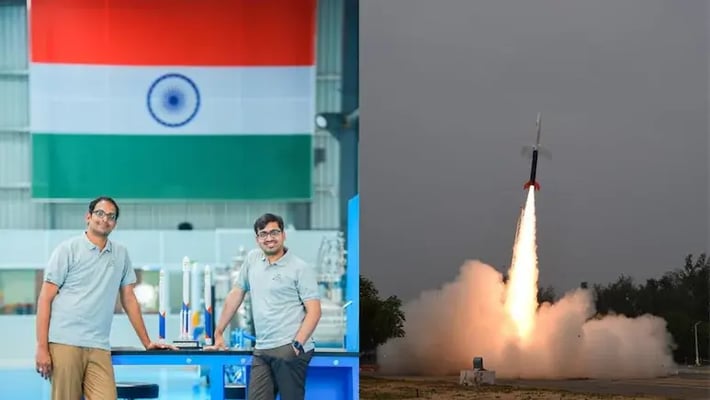
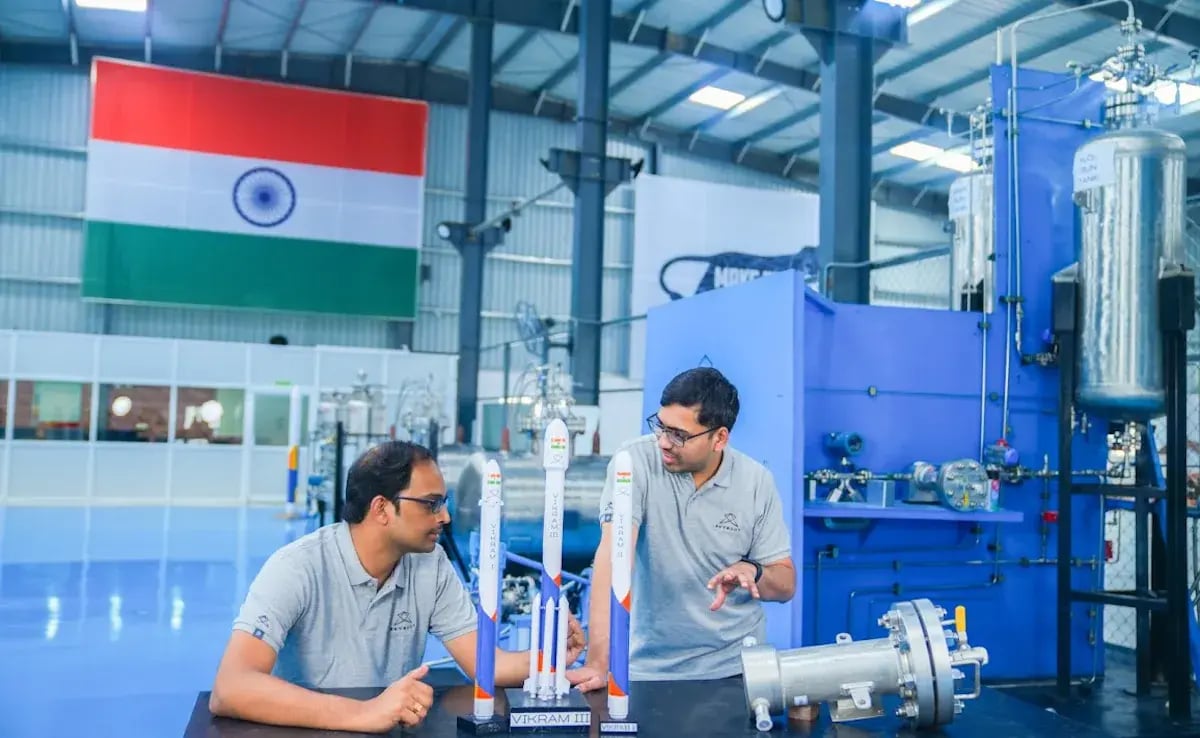
Founded by former ISRO scientist Pawan Kumar Chandana and cofounder Naga Bharath Daka, Skyroot Aerospace has emerged as India’s first private space-tech unicorn.
According to NDTV, the company is now valued at nearly Rs 1,500 crore, marking a remarkable rise just eight years after Chandana left his government job at ISRO, where he earned a monthly salary of Rs 75,000.
Speaking to NDTV, Chandana described the company’s larger vision for the future of space technology and accessibility. "Our mission is to open space for all," he said, envisioning a future where accessing space could become as seamless as booking a cab or chartering a private jet.
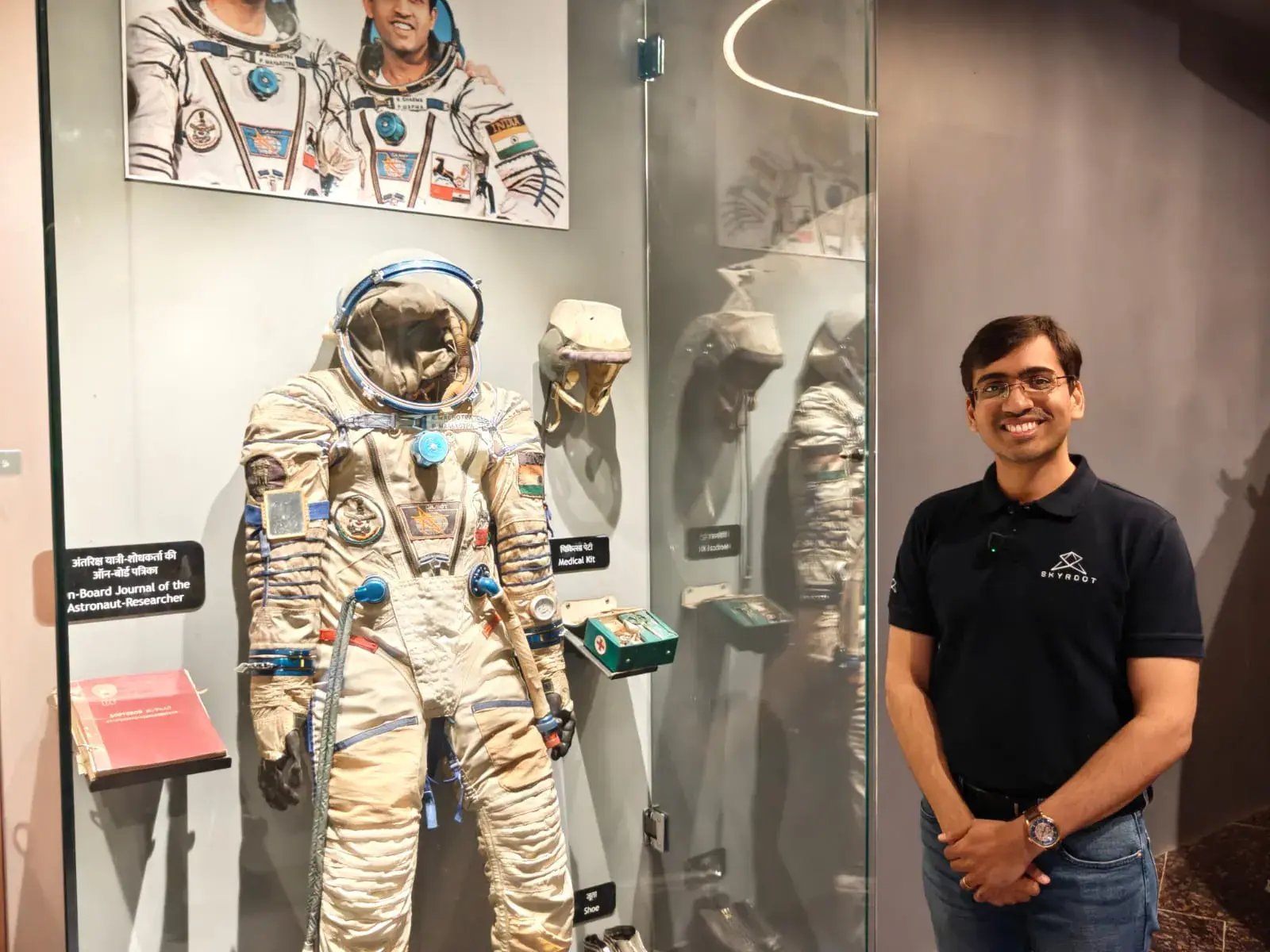
Standing inside Delhi’s Nehru Planetarium, Chandana reflected on the inspiration that led him toward rocket science. A mechanical engineering graduate from IIT Kharagpur, he explained how he became fascinated with rockets early in his career.
"For me it was always a rocket. I was really inspired by launches across the globe. I thought this is my calling; I need to get into the rocket industry," he said.
His journey eventually took him to Indian Space Research Organisation, where he worked on India’s heavy-lift Launch Vehicle Mark-3, popularly referred to as the “Bahubali” rocket.
According to NDTV, Chandana later left his secure government career to pursue entrepreneurship and combine his passion for technology and innovation.
"It became a marriage of two passions, entrepreneurship and rocket science," the 36-year-old entrepreneur said.
India’s First Space Unicorn
Skyroot Aerospace had already made history in November 2022 by launching Vikram S, India’s first private suborbital rocket. NDTV reported that the company has since secured approximately 160 million dollars in funding and crossed a valuation of one billion dollars.
Despite the milestone, Chandana said the company’s journey is only beginning. "It is just still the beginning of a journey," he remarked. "We have to do commercial launches. That is what will truly define us."
The upcoming Vikram 1 rocket represents Skyroot’s next major step. Designed as an orbital launch vehicle, the rocket is currently capable of carrying around 300 kilograms of payload into orbit, with future upgrades expected to increase that capacity to nearly one tonne.
An ‘Uber To Space’ Model
What differentiates Skyroot Aerospace from many traditional launch providers is its business approach. Chandana explained the company’s model using a simple analogy.
"Think of Skyroot's rockets like cabs to go to space. It is like Uber to go to space," he said.
Unlike conventional large-scale rocket launches that carry multiple satellites from different clients simultaneously, Skyroot aims to provide dedicated launch services where customers can select their preferred schedule and orbit.
"It is a premium service. It is a very exclusive service," Chandana explained. "Rather than waiting for launches in a big rocket, you hire your own."
According to NDTV, this approach aligns with growing global demand as more than 90 per cent of satellites launched today reportedly weigh less than 500 kilograms, increasing the need for flexible and customised launch services.
A Growing Space Economy
Chandana also highlighted the expanding opportunities within the global space economy, which continues to witness rising demand for satellite launches and data infrastructure.
"The need for launch keeps increasing every year. Now data centres are set to be in space. Communication, direct to mobile, all these applications are increasing demand," he said.
Smaller satellite constellations are increasingly replacing traditional large satellites, significantly transforming the economics of space operations and opening doors for agile private companies like Skyroot.
Built In India, Designed For The World
One of Skyroot’s biggest strengths, according to Chandana, lies in India’s well-established space ecosystem created through decades of work by ISRO.
NDTV reported that more than 90 per cent of Skyroot’s rocket components are sourced domestically, with over 400 Indian suppliers contributing to the programme.
"What we are today is all because we are operating from India. It is fully designed, developed and manufactured within India, and it is going to go global from India for the world," Chandana stated.
India’s geographic location also provides a strategic advantage for launches, especially with launch facilities close to the Equator and additional infrastructure developing in Tamil Nadu for polar orbit missions.
The Challenge Of Rocket Science
Despite the company’s rapid rise, Chandana admitted that building rockets proved far more difficult than initially expected.
"We thought it was much easier than what it actually is. Then we realised why it is called rocket science," he said.
Skyroot currently employs more than 1,000 people, with a median employee age of just 28 years. Chandana believes managing talent is as important as engineering rockets themselves.
"We do two things at Skyroot, one is rocket engineering, the other is people engineering," he explained.
The company’s young workforce is now playing a central role in India’s ambitions to establish itself as a major player in the global private space industry.
Future Plans: Reusable Rockets And Human Spaceflight
While Skyroot’s immediate focus remains on the Vikram 1 and Vikram 2 launch vehicles, Chandana also outlined future ambitions involving reusable rocket systems and eventually human spaceflight.
"We will have a very good modern architecture for reusability," he said while discussing the company’s long-term roadmap.
Human space missions also remain part of the larger vision, though not an immediate priority. Chandana admitted that he personally dreams of experiencing space one day.
"I would love to personally experience space. I want to watch Earth from space and go for a holiday for sure," he said.
Inspired By India’s Space Legacy
Throughout the conversation, Chandana repeatedly credited India’s space pioneers for laying the foundation that enabled companies like Skyroot to emerge.
He particularly acknowledged the influence of visionary scientist Vikram Sarabhai and astronaut Rakesh Sharma, whose achievements continue to inspire India’s modern space ecosystem.
"Without that ecosystem, we could not have flourished today," Chandana said.
As Skyroot prepares for the crucial Vikram 1 orbital launch, the mission carries significance not just for the company but for India’s entire private space industry.
If successful, the launch could mark the beginning of a new era where private Indian companies play a major role in global space exploration and satellite deployment.
For Chandana, however, the vision remains simple and consistent: "Open space for all."
And if Skyroot’s ambitions succeed, accessing space may someday become as routine as booking a ride on Earth.
India’s rapidly evolving private space sector is approaching a defining moment as Hyderabad-based Sky root Aero space prepares for the maiden orbital launch of its Vikram 1 rocket from Sriharikota in the coming weeks as reported by NDTV.
Founded by former ISRO scientist Pawan Kumar Chandana and...
India’s rapidly evolving private space sector is approaching a defining moment as Hyderabad-based Sky root Aero space prepares for the maiden orbital launch of its Vikram 1 rocket from Sriharikota in the coming weeks as reported by NDTV.
Founded by former ISRO scientist Pawan Kumar Chandana and cofounder Naga Bharath Daka, Skyroot Aerospace has emerged as India’s first private space-tech unicorn.
According to NDTV, the company is now valued at nearly Rs 1,500 crore, marking a remarkable rise just eight years after Chandana left his government job at ISRO, where he earned a monthly salary of Rs 75,000.
Speaking to NDTV, Chandana described the company’s larger vision for the future of space technology and accessibility. "Our mission is to open space for all," he said, envisioning a future where accessing space could become as seamless as booking a cab or chartering a private jet.
Standing inside Delhi’s Nehru Planetarium, Chandana reflected on the inspiration that led him toward rocket science. A mechanical engineering graduate from IIT Kharagpur, he explained how he became fascinated with rockets early in his career.
"For me it was always a rocket. I was really inspired by launches across the globe. I thought this is my calling; I need to get into the rocket industry," he said.
His journey eventually took him to Indian Space Research Organisation, where he worked on India’s heavy-lift Launch Vehicle Mark-3, popularly referred to as the “Bahubali” rocket.
According to NDTV, Chandana later left his secure government career to pursue entrepreneurship and combine his passion for technology and innovation.
"It became a marriage of two passions, entrepreneurship and rocket science," the 36-year-old entrepreneur said.

India’s First Space Unicorn
Skyroot Aerospace had already made history in November 2022 by launching Vikram S, India’s first private suborbital rocket. NDTV reported that the company has since secured approximately 160 million dollars in funding and crossed a valuation of one billion dollars.
Despite the milestone, Chandana said the company’s journey is only beginning. "It is just still the beginning of a journey," he remarked. "We have to do commercial launches. That is what will truly define us."
The upcoming Vikram 1 rocket represents Skyroot’s next major step. Designed as an orbital launch vehicle, the rocket is currently capable of carrying around 300 kilograms of payload into orbit, with future upgrades expected to increase that capacity to nearly one tonne.
An ‘Uber To Space’ Model
What differentiates Skyroot Aerospace from many traditional launch providers is its business approach. Chandana explained the company’s model using a simple analogy.
"Think of Skyroot's rockets like cabs to go to space. It is like Uber to go to space," he said.
Unlike conventional large-scale rocket launches that carry multiple satellites from different clients simultaneously, Skyroot aims to provide dedicated launch services where customers can select their preferred schedule and orbit.
"It is a premium service. It is a very exclusive service," Chandana explained. "Rather than waiting for launches in a big rocket, you hire your own."
According to NDTV, this approach aligns with growing global demand as more than 90 per cent of satellites launched today reportedly weigh less than 500 kilograms, increasing the need for flexible and customised launch services.

A Growing Space Economy
Chandana also highlighted the expanding opportunities within the global space economy, which continues to witness rising demand for satellite launches and data infrastructure.
"The need for launch keeps increasing every year. Now data centres are set to be in space. Communication, direct to mobile, all these applications are increasing demand," he said.
Smaller satellite constellations are increasingly replacing traditional large satellites, significantly transforming the economics of space operations and opening doors for agile private companies like Skyroot.
Built In India, Designed For The World
One of Skyroot’s biggest strengths, according to Chandana, lies in India’s well-established space ecosystem created through decades of work by ISRO.
NDTV reported that more than 90 per cent of Skyroot’s rocket components are sourced domestically, with over 400 Indian suppliers contributing to the programme.
"What we are today is all because we are operating from India. It is fully designed, developed and manufactured within India, and it is going to go global from India for the world," Chandana stated.
India’s geographic location also provides a strategic advantage for launches, especially with launch facilities close to the Equator and additional infrastructure developing in Tamil Nadu for polar orbit missions.
The Challenge Of Rocket Science
Despite the company’s rapid rise, Chandana admitted that building rockets proved far more difficult than initially expected.
"We thought it was much easier than what it actually is. Then we realised why it is called rocket science," he said.
Skyroot currently employs more than 1,000 people, with a median employee age of just 28 years. Chandana believes managing talent is as important as engineering rockets themselves.
"We do two things at Skyroot, one is rocket engineering, the other is people engineering," he explained.
The company’s young workforce is now playing a central role in India’s ambitions to establish itself as a major player in the global private space industry.
Future Plans: Reusable Rockets And Human Spaceflight
While Skyroot’s immediate focus remains on the Vikram 1 and Vikram 2 launch vehicles, Chandana also outlined future ambitions involving reusable rocket systems and eventually human spaceflight.
"We will have a very good modern architecture for reusability," he said while discussing the company’s long-term roadmap.
Human space missions also remain part of the larger vision, though not an immediate priority. Chandana admitted that he personally dreams of experiencing space one day.
"I would love to personally experience space. I want to watch Earth from space and go for a holiday for sure," he said.
Inspired By India’s Space Legacy
Throughout the conversation, Chandana repeatedly credited India’s space pioneers for laying the foundation that enabled companies like Skyroot to emerge.
He particularly acknowledged the influence of visionary scientist Vikram Sarabhai and astronaut Rakesh Sharma, whose achievements continue to inspire India’s modern space ecosystem.
"Without that ecosystem, we could not have flourished today," Chandana said.
As Skyroot prepares for the crucial Vikram 1 orbital launch, the mission carries significance not just for the company but for India’s entire private space industry.
If successful, the launch could mark the beginning of a new era where private Indian companies play a major role in global space exploration and satellite deployment.
For Chandana, however, the vision remains simple and consistent: "Open space for all."
And if Skyroot’s ambitions succeed, accessing space may someday become as routine as booking a ride on Earth.




Leave a Comment