








There exists a striking divide between the outrage people express online over littering and the actual effort they put into addressing it on the ground. Reported by The Indian Express
Cleanfluencers—content creators who document themselves cleaning public spaces—are attempting to bridge this gap, often at great personal cost.
“They make fun of me, call me crazy. Some of them tell me to clean their drains. Some call me ‘naala saaf karne wala’.”
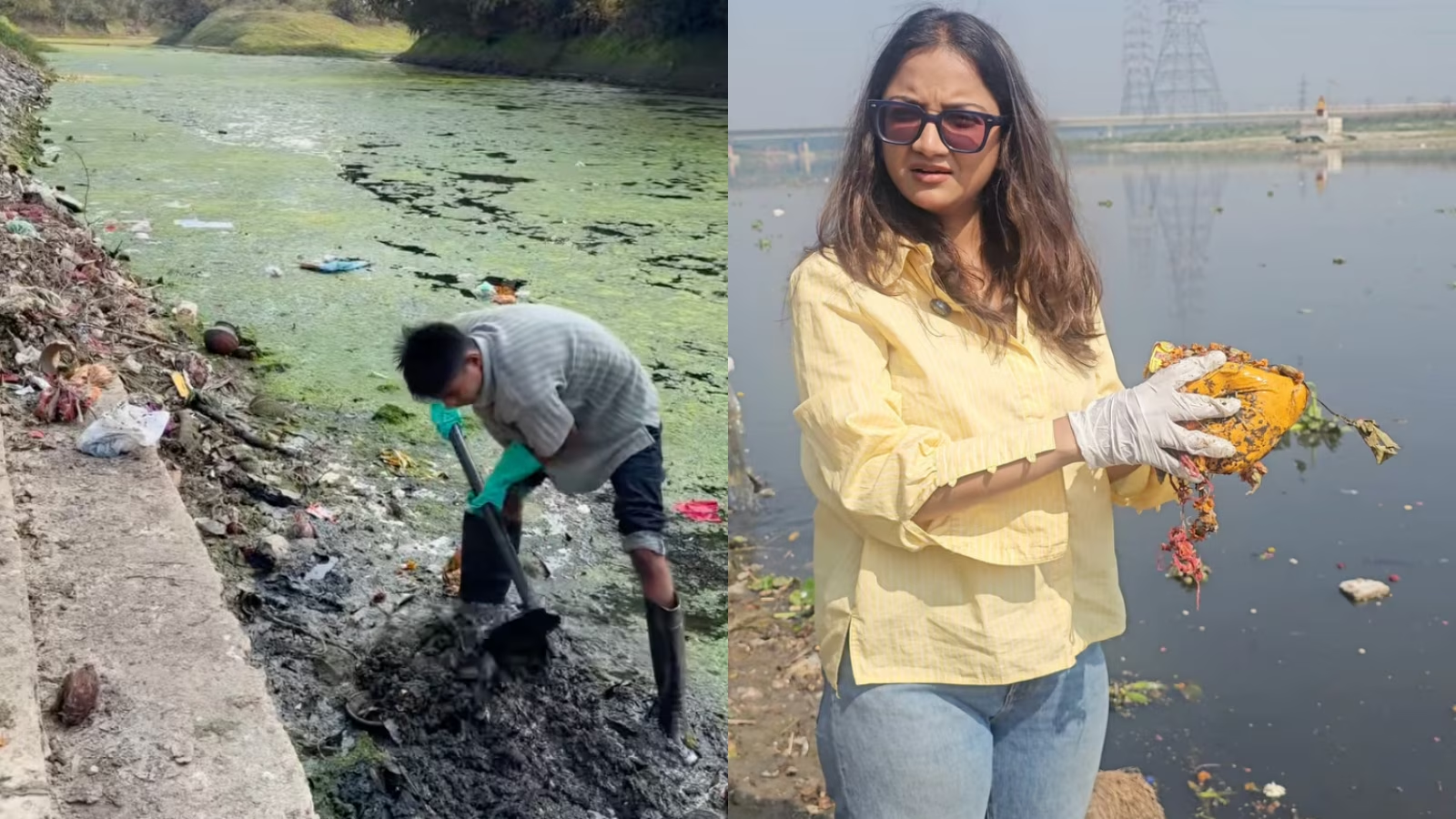
According to The Indian Express For Bittu from Biawara in Madhya Pradesh, this is not an occasional experience but part of his daily life. Known locally as Bittu Tabahi, the 20-year-old gained attention on social media after a video of him stepping into the polluted Ajanar river and removing waste with his bare hands went viral.
Despite the recognition online, his offline reality is far less encouraging. Whenever he ventures out to clean polluted areas, he often becomes the subject of ridicule for the very people he is trying to help. “Whenever I sit by the river, they throw garbage right in front of me,” he says. “If I stop them, they are ready to fight.”
The emergence of cleanfluencers in India has made this contradiction even more apparent. These individuals film themselves cleaning rivers, ghats, streets, and parks, creating visually compelling content that often highlights dramatic transformations.
While such videos receive widespread appreciation online, they also reveal a deeper discomfort within society toward individuals who take responsibility for public spaces.
Bittu’s journey began on January 26, when he decided to stop waiting for authorities to act and instead take matters into his own hands.
“I wanted to make a machine to clean the river, but I didn’t have the money. I am a student,” he says. “So I thought, I will clean as much as I can with my own hands.”
Since then, he has devoted hours every day to clearing a 500-metre stretch of the river, often without even basic protective equipment. The work has taken a serious toll on his health. “I got infections. The skin on my hands and feet started coming off,” he tells indianexpress.com.
Support for his efforts, however, has been minimal. “We haven’t received any help,” he says. “People don’t stop littering. I have even put a dustbin there, but they don’t use it.” Instead, he frequently encounters disbelief and mockery. “They say, what is this river to you? Why are you doing this?”
The viral video
Despite these challenges, his work recently gained wider recognition when industrialist Anand Mahindra shared a video of him on social media platform X. The clip, which showed Bittu wading through polluted water and pulling out plastic, algae, and debris, quickly went viral, earning admiration from viewers across the country.
Yet, the attention also reignited a familiar criticism—that his efforts were motivated by the pursuit of “likes and views.”
In a country where civic sense is frequently debated online, this contradiction becomes even more evident. Videos capturing people littering or damaging public property often spark widespread outrage.
Trends criticising the lack of civic sense regularly dominate digital spaces. However, when individuals attempt to address these very issues in real life, they are often met with scepticism or hostility.
Delhi-based environmental content creator Sonali Singh experiences this paradox firsthand. For her, documenting clean-up drives is not about chasing motivation but expressing frustration.
“When I see people doing visarjan in Yamuna Ghat and leaving statues there, I feel bad,” she says. “People don’t think, ‘I should do my part.’ If one person throws garbage, ten others follow.”
Her work focuses on challenging these normalised behaviours and encouraging people to reconsider their actions. “I am trying to tell people that this is not even respecting your religion,” she explains.
However, like Bittu, she too faces trolling. Much of the criticism comes from individuals who perceive environmental concerns as attacks on cultural or religious practices. “People start calling me anti-this or anti-that,” she says. “But if you are on the internet, you have to be ready for it.”
Scepticism around cleanfluencers
The scepticism surrounding cleanfluencers is not purely cultural; it also has psychological roots. According to psychologist Dr Rimpa Das, such content evokes complex emotional reactions.
“These videos highlight action in a space where many people feel passive,” she explains. While viewers may feel inspired, they can also experience discomfort when comparing the creators’ actions with their own inaction. Labelling such efforts as performative becomes a way to cope with that discomfort.
In today’s digital age, where visibility often defines value, any action captured on camera is subject to scrutiny. Questions inevitably arise: are these creators genuinely committed to the cause, or are they simply seeking attention?
Aryan Anurag, co-founder of Binge Labs, believes that regardless of intent, the format itself plays a crucial role in the success of such content. “Before-and-after videos work because they show clear change,” he says. “It’s a complete narrative, from problem to resolution.” This clarity makes the content engaging and highly shareable.
He also points out that cleanfluencing is not a new phenomenon. What has changed is its scale and visibility. As conversations around sustainability grow louder, such content resonates more strongly with audiences. “The behaviour was always there,” he notes. “It’s just getting more attention now.”
This increased visibility can also translate into real-world impact. Sawan Kanojia, founder of an environmental NGO in Meerut, believes that influencer-led initiatives can strengthen grassroots efforts. “When influencers show this work, it encourages others to participate,” he says. He adds that such visibility can also create pressure on authorities to take action.
There is also a behavioural aspect to consider. Clean environments tend to remain clean. “When a place looks clean, people are less likely to litter,” Kanojia explains. Over time, this can create a positive cycle where visible improvements influence community behaviour.
The ground reality
For individuals like Bittu, however, these broader impacts often feel distant. On the ground, the challenges remain immediate and deeply personal. Despite his viral fame, he continues to fund his efforts independently. “I have spent Rs 30,000 to 40,000,” he says. There has been little response from local authorities and minimal change in public behaviour. “People still throw garbage like before,” he adds.
Even within his own home, his work remains largely unknown. “They don’t know about social media,” he says of his family. “If they knew, they wouldn’t let me do it.”
This detail highlights a significant gap between digital recognition and real-world support.
The rise of cleanfluencers in India is more than just a social media trend. It exposes a deeper tension between awareness and action—between what people express online and what they practise in their daily lives. Civic sense may be widely discussed, but it remains inconsistently applied.
And within this gap, individuals like Bittu, Sonali, and many others continue their work—often alone, often ridiculed, and often misunderstood.



ISSUE

Leave a Comment