




India's negotiators threatened to walk out of trade talks with New Zealand, official reveals
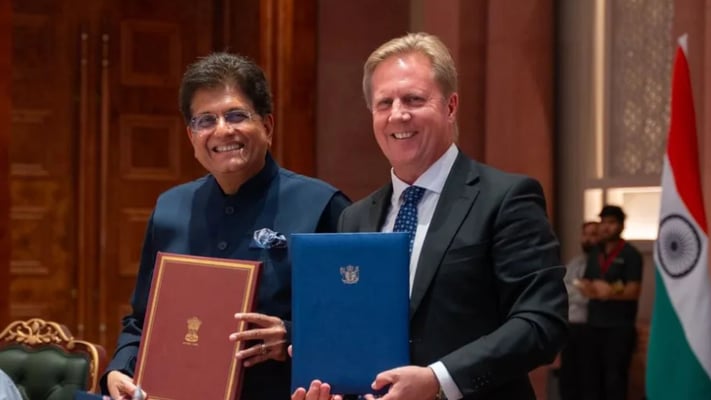



Indian negotiators threatened to walk out of trade talks with New Zealand over its persistent efforts to include dairy, New Zealand's chief trade official says.
Vangelis Vitalis revealed the detail to MPs on Thursday to help explain the "big disappointment" of the Indian free trade agreement (FTA), that being the limited gains for the dairy sector.
Appearing before Parliament's trade select committee, Vitalis said India "flatly refused to even engage" on typically orthodox elements of trade negotiations, like butter, cheese and milk powders.
"There were moments when there were threatened walkouts, including at ministerial level, when we persisted in seeking an outcome for dairy."
Vitalis said the talks were "extremely difficult" on that point, noting that no other country had ever secured access for those products.
He said New Zealand did manage to eliminate tariffs on bulk infant formula and some protein-based products. "It's not nothing."
Vitalis also talked up the gains in other areas, noting progress on products which were "super sensitive" in India, like apples, kiwifruit and honey. All three products will face reduced tariffs up to a certain quota under the deal.
He said the deal also put New Zealand on "even footing" with its key competitors like Australia, which had pulled ahead of New Zealand in key products like sheep meat since securing its own agreement in 2022.
Before then, New Zealand accounted for 85 percent of India's imports of sheep meat. That had since dwindled to just 9 percent.
Vitalis said the FTA would give New Zealand exporters greater options in an increasingly challenging environment.
"The jungle is certainly growing back. Things are becoming more turbulent, more uncertain, and all of the major trading blocs in the world are increasingly ignoring or breaking those international trade rules on which we've relied for so long.
"The system is battered and bruised... but it is not yet broken."
Questions about migration, investment
Vitalis also faced questions from MPs on two key aspects of the FTA which have proved contentious across Parliament.
New Zealand First triggered the coalition's agree-to-disagree clause, allowing it to oppose the deal, arguing it would have "ludicrous immigration implications".
With encouragement from National MP Tim Costley, Vitalis stressed the FTA contained "important safeguards" around migration.
The FTA introduces a dedicated pathway for up to 5000 Indian professionals over three years through Temporary Employment Entry (TEE) visas.
Vitalis said those applicants had to undergo all the usual character and health tests, and find work only in areas with a "genuine shortage" of workers. There was also no pathway to permanent residence or citizenship - and a three year stand-down.
"After you've had your visa for three years, you must leave, and you cannot reapply for three years."
Vitalis also played down any changes around student benefits, saying Indian students were currently allowed to work 25 hours a week while they studied. He said the agreement included an guarantee that would never fall below 20 hours.
Both Labour and NZ First have also expressed concern about a commitment to promote up to US$20 billion of New Zealand private sector investment in India over 15 years.
Vitalis said the commitment was "very carefully drafted" and India "well understood" that it related only to promotion.
"It is not to reach the target.... We do need to show and demonstrate to India that we are promoting investment there. But it is clear that the New Zealand government cannot give or invest 20 billion US dollars."
Asked whether India could revoke concessions if it deemed New Zealand had not lived up to its obligations, Vitalis said he did not believe that would occur.
"If we were in that situation, then, more fundamentally, the bilateral relationship with India is in serious trouble."
Indian negotiators threatened to walk out of trade talks with New Zealand over its persistent efforts to include dairy, New Zealand's chief trade official says.
Vangelis Vitalis revealed the detail to MPs on Thursday to help explain the "big disappointment" of the Indian free trade agreement (FTA),...
Indian negotiators threatened to walk out of trade talks with New Zealand over its persistent efforts to include dairy, New Zealand's chief trade official says.
Vangelis Vitalis revealed the detail to MPs on Thursday to help explain the "big disappointment" of the Indian free trade agreement (FTA), that being the limited gains for the dairy sector.
Appearing before Parliament's trade select committee, Vitalis said India "flatly refused to even engage" on typically orthodox elements of trade negotiations, like butter, cheese and milk powders.
"There were moments when there were threatened walkouts, including at ministerial level, when we persisted in seeking an outcome for dairy."
Vitalis said the talks were "extremely difficult" on that point, noting that no other country had ever secured access for those products.
He said New Zealand did manage to eliminate tariffs on bulk infant formula and some protein-based products. "It's not nothing."
Vitalis also talked up the gains in other areas, noting progress on products which were "super sensitive" in India, like apples, kiwifruit and honey. All three products will face reduced tariffs up to a certain quota under the deal.
He said the deal also put New Zealand on "even footing" with its key competitors like Australia, which had pulled ahead of New Zealand in key products like sheep meat since securing its own agreement in 2022.
Before then, New Zealand accounted for 85 percent of India's imports of sheep meat. That had since dwindled to just 9 percent.
Vitalis said the FTA would give New Zealand exporters greater options in an increasingly challenging environment.
"The jungle is certainly growing back. Things are becoming more turbulent, more uncertain, and all of the major trading blocs in the world are increasingly ignoring or breaking those international trade rules on which we've relied for so long.
"The system is battered and bruised... but it is not yet broken."
Questions about migration, investment
Vitalis also faced questions from MPs on two key aspects of the FTA which have proved contentious across Parliament.
New Zealand First triggered the coalition's agree-to-disagree clause, allowing it to oppose the deal, arguing it would have "ludicrous immigration implications".
With encouragement from National MP Tim Costley, Vitalis stressed the FTA contained "important safeguards" around migration.
The FTA introduces a dedicated pathway for up to 5000 Indian professionals over three years through Temporary Employment Entry (TEE) visas.
Vitalis said those applicants had to undergo all the usual character and health tests, and find work only in areas with a "genuine shortage" of workers. There was also no pathway to permanent residence or citizenship - and a three year stand-down.
"After you've had your visa for three years, you must leave, and you cannot reapply for three years."
Vitalis also played down any changes around student benefits, saying Indian students were currently allowed to work 25 hours a week while they studied. He said the agreement included an guarantee that would never fall below 20 hours.
Both Labour and NZ First have also expressed concern about a commitment to promote up to US$20 billion of New Zealand private sector investment in India over 15 years.
Vitalis said the commitment was "very carefully drafted" and India "well understood" that it related only to promotion.
"It is not to reach the target.... We do need to show and demonstrate to India that we are promoting investment there. But it is clear that the New Zealand government cannot give or invest 20 billion US dollars."
Asked whether India could revoke concessions if it deemed New Zealand had not lived up to its obligations, Vitalis said he did not believe that would occur.
"If we were in that situation, then, more fundamentally, the bilateral relationship with India is in serious trouble."



Related Posts
ISSUE

Leave a Comment