

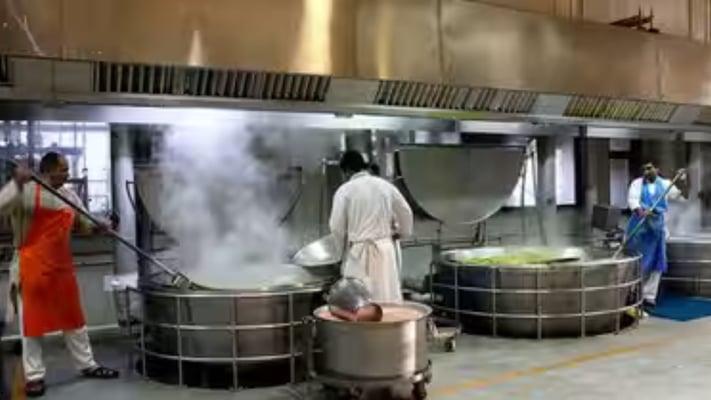

Feeding 50,000 without LPG or firewood
High in the Aravalli Hills of Mount Abu, Rajasthan, an extraordinary kitchen is turning sunlight into thousands of hot vegetarian meals every day, as reported by TOI.
At the Brahma Kumaris’ Shantivan Complex, a massive solar-powered cooking system uses concentrated sunlight to generate steam, which is then used to prepare food for as many as 50,000 people.
According to TOI, the facility is an unusual example of renewable energy being used at an enormous scale. Instead of depending primarily on conventional fuel for its cooking operations, the kitchen harnesses solar thermal energy, using large mirrors to capture and concentrate the sun’s heat.
The result is a remarkable combination of technology, sustainability and large-scale community service.
The kitchen that runs on sunlight
Unlike conventional solar installations that primarily use photovoltaic panels to generate electricity, the Shantivan kitchen uses solar thermal technology. TOI describes a system in which large mirrors concentrate sunlight to create extremely high temperatures.
The facility has 84 massive Scheffler reflectors, each measuring about 9.2 square metres. Mounted on rotating frames, the reflectors follow the movement of the sun throughout the day. Their curved surfaces capture sunlight and focus the rays onto a specific point, producing intense heat.
Under ideal conditions, the concentrated solar energy can reach temperatures of around 800°C. According to TOI, this heat is central to the kitchen’s operation, allowing sunlight to be converted into steam that can then be used for cooking on a massive scale.
The concentrated rays from the reflectors are directed towards 42 specially designed steel receivers. These receivers heat water and generate more than 3,500 kilograms of steam every day.
The steam is then collected through insulated header pipes and transferred into a central drum before being sent to large cooking vessels inside the kitchen.
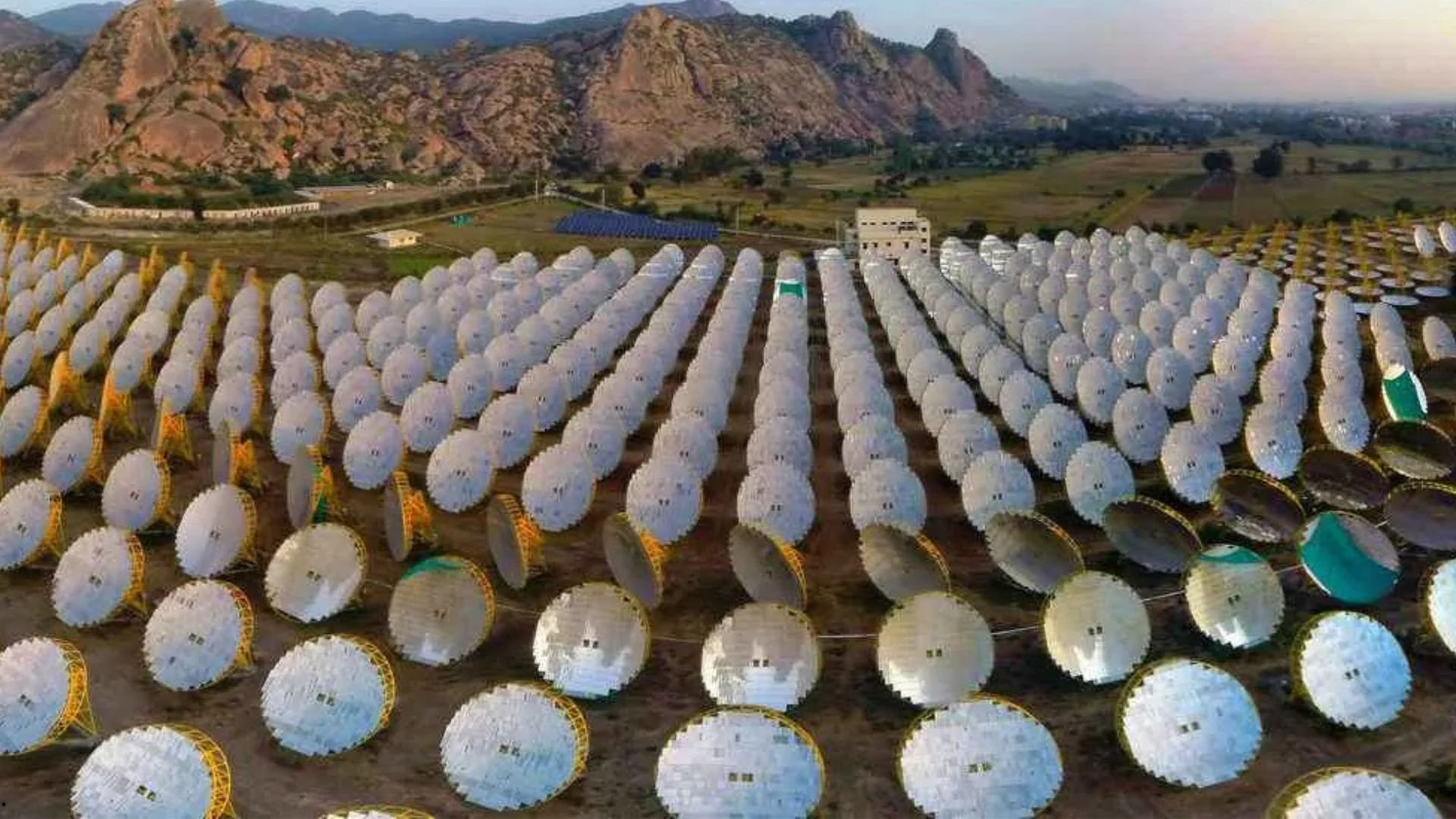
How sunlight becomes lunch
This is where the solar technology meets everyday Indian cooking. TOI reports that the steam generated by the system is used for preparing a wide variety of food, including dal, rice and curries, as well as beverages.
The system is also used for other essential activities within the complex, including sterilising water and washing utensils. This allows the enormous kitchen to use the same renewable-energy system for more than simply cooking meals.
The operation is carefully automated. Every morning, the large reflectors adjust their position to follow the sun, ensuring that they remain aligned with its changing position throughout the day.
By evening, a photovoltaic-powered timer resets the system so that it can begin tracking the sun again the following morning.
TOI also highlights several supporting systems that help the solar kitchen operate efficiently. These include a water-softening unit designed to prevent scale buildup and a pressure reducer that helps maintain a consistent steam flow.
There is also a diesel backup system. It is used during periods when sunlight is insufficient, particularly during the monsoon or on heavily overcast days, ensuring that the kitchen can continue supplying food even when solar conditions are poor.
From an idea to an international model
The solar kitchen’s journey began in the late 1990s. According to TOI, when the facility first became operational in 1998, it was designed to prepare around 20,000 meals a day.
Over the years, upgrades and expansion increased its capacity substantially. The kitchen can now cater to around 50,000 residents, students, volunteers and visitors.
That scale makes the facility particularly remarkable. It is effectively preparing enough food every day to feed a community comparable in size to a large sports stadium — while using the sun as its primary source of cooking energy.
The project was developed with support from India’s Ministry of New and Renewable Energy and has attracted international attention for its unusual approach to large-scale food preparation.
TOI notes that the kitchen has been recognised internationally, including through coverage by BBC World Service, which described it as the largest solar kitchen on Earth.
The facility has also received attention for the distinctive way in which renewable-energy technology has been incorporated into the daily functioning of the spiritual complex.
A kitchen that saves more than fuel
The environmental impact of the project extends beyond its ability to replace conventional cooking fuel.
According to TOI, the solar kitchen saves more than 1.18 lakh litres of diesel every year. By reducing the need for diesel, the system also helps cut carbon emissions and lower the operating costs associated with running a kitchen of such enormous capacity.
Another major benefit is the reduction in smoke and soot that would normally accompany large-scale cooking using conventional fuels.
The result is a kitchen where sustainability is not an additional feature but an integral part of everyday operations.
What began as an experiment in the early 1990s has evolved into a large-scale demonstration of how renewable energy can be integrated into community infrastructure. TOI highlights the Shantivan complex as an example of how technology and traditional practices can work together to address practical needs.
The project also offers a broader lesson: renewable energy does not necessarily have to remain limited to electricity generation. Solar heat itself can be harnessed directly for applications such as cooking, provided the infrastructure is designed appropriately.
India’s light for the world
For the Brahma Kumaris, the solar kitchen represents more than an engineering achievement. It reflects an approach in which human needs are aligned with natural resources.
The kitchen’s daily rhythm follows the movement of the sun, with its reflectors automatically turning towards the changing position of sunlight. Instead of relying entirely on generators and conventional fuels, the facility uses concentrated solar energy to produce the steam required for its enormous cooking operation.
TOI’s account of the Shantivan kitchen illustrates how an ancient natural resource — sunlight — can be combined with modern engineering to serve a very practical purpose.
In an era when large kitchens consume significant quantities of gas, electricity and fuel, the Mount Abu facility offers a striking alternative. Its story demonstrates that sustainable technology can be designed not just for laboratories or small-scale experiments, but also for everyday needs at the scale of an entire community.
Sometimes, a solution to a modern energy challenge can begin with something remarkably simple: mirrors, sunlight and the willingness to build a system around them.
High in the Aravalli Hills of Mount Abu, Rajasthan, an extraordinary kitchen is turning sunlight into thousands of hot vegetarian meals every day, as reported by TOI.
At the Brahma Kumaris’ Shantivan Complex, a massive solar-powered cooking system uses concentrated sunlight to generate steam,...
High in the Aravalli Hills of Mount Abu, Rajasthan, an extraordinary kitchen is turning sunlight into thousands of hot vegetarian meals every day, as reported by TOI.
At the Brahma Kumaris’ Shantivan Complex, a massive solar-powered cooking system uses concentrated sunlight to generate steam, which is then used to prepare food for as many as 50,000 people.
According to TOI, the facility is an unusual example of renewable energy being used at an enormous scale. Instead of depending primarily on conventional fuel for its cooking operations, the kitchen harnesses solar thermal energy, using large mirrors to capture and concentrate the sun’s heat.
The result is a remarkable combination of technology, sustainability and large-scale community service.
The kitchen that runs on sunlight
Unlike conventional solar installations that primarily use photovoltaic panels to generate electricity, the Shantivan kitchen uses solar thermal technology. TOI describes a system in which large mirrors concentrate sunlight to create extremely high temperatures.
The facility has 84 massive Scheffler reflectors, each measuring about 9.2 square metres. Mounted on rotating frames, the reflectors follow the movement of the sun throughout the day. Their curved surfaces capture sunlight and focus the rays onto a specific point, producing intense heat.
Under ideal conditions, the concentrated solar energy can reach temperatures of around 800°C. According to TOI, this heat is central to the kitchen’s operation, allowing sunlight to be converted into steam that can then be used for cooking on a massive scale.
The concentrated rays from the reflectors are directed towards 42 specially designed steel receivers. These receivers heat water and generate more than 3,500 kilograms of steam every day.
The steam is then collected through insulated header pipes and transferred into a central drum before being sent to large cooking vessels inside the kitchen.

How sunlight becomes lunch
This is where the solar technology meets everyday Indian cooking. TOI reports that the steam generated by the system is used for preparing a wide variety of food, including dal, rice and curries, as well as beverages.
The system is also used for other essential activities within the complex, including sterilising water and washing utensils. This allows the enormous kitchen to use the same renewable-energy system for more than simply cooking meals.
The operation is carefully automated. Every morning, the large reflectors adjust their position to follow the sun, ensuring that they remain aligned with its changing position throughout the day.
By evening, a photovoltaic-powered timer resets the system so that it can begin tracking the sun again the following morning.
TOI also highlights several supporting systems that help the solar kitchen operate efficiently. These include a water-softening unit designed to prevent scale buildup and a pressure reducer that helps maintain a consistent steam flow.
There is also a diesel backup system. It is used during periods when sunlight is insufficient, particularly during the monsoon or on heavily overcast days, ensuring that the kitchen can continue supplying food even when solar conditions are poor.
From an idea to an international model
The solar kitchen’s journey began in the late 1990s. According to TOI, when the facility first became operational in 1998, it was designed to prepare around 20,000 meals a day.
Over the years, upgrades and expansion increased its capacity substantially. The kitchen can now cater to around 50,000 residents, students, volunteers and visitors.
That scale makes the facility particularly remarkable. It is effectively preparing enough food every day to feed a community comparable in size to a large sports stadium — while using the sun as its primary source of cooking energy.
The project was developed with support from India’s Ministry of New and Renewable Energy and has attracted international attention for its unusual approach to large-scale food preparation.
TOI notes that the kitchen has been recognised internationally, including through coverage by BBC World Service, which described it as the largest solar kitchen on Earth.
The facility has also received attention for the distinctive way in which renewable-energy technology has been incorporated into the daily functioning of the spiritual complex.
A kitchen that saves more than fuel
The environmental impact of the project extends beyond its ability to replace conventional cooking fuel.
According to TOI, the solar kitchen saves more than 1.18 lakh litres of diesel every year. By reducing the need for diesel, the system also helps cut carbon emissions and lower the operating costs associated with running a kitchen of such enormous capacity.
Another major benefit is the reduction in smoke and soot that would normally accompany large-scale cooking using conventional fuels.
The result is a kitchen where sustainability is not an additional feature but an integral part of everyday operations.
What began as an experiment in the early 1990s has evolved into a large-scale demonstration of how renewable energy can be integrated into community infrastructure. TOI highlights the Shantivan complex as an example of how technology and traditional practices can work together to address practical needs.
The project also offers a broader lesson: renewable energy does not necessarily have to remain limited to electricity generation. Solar heat itself can be harnessed directly for applications such as cooking, provided the infrastructure is designed appropriately.
India’s light for the world
For the Brahma Kumaris, the solar kitchen represents more than an engineering achievement. It reflects an approach in which human needs are aligned with natural resources.
The kitchen’s daily rhythm follows the movement of the sun, with its reflectors automatically turning towards the changing position of sunlight. Instead of relying entirely on generators and conventional fuels, the facility uses concentrated solar energy to produce the steam required for its enormous cooking operation.
TOI’s account of the Shantivan kitchen illustrates how an ancient natural resource — sunlight — can be combined with modern engineering to serve a very practical purpose.
In an era when large kitchens consume significant quantities of gas, electricity and fuel, the Mount Abu facility offers a striking alternative. Its story demonstrates that sustainable technology can be designed not just for laboratories or small-scale experiments, but also for everyday needs at the scale of an entire community.
Sometimes, a solution to a modern energy challenge can begin with something remarkably simple: mirrors, sunlight and the willingness to build a system around them.





Leave a Comment