
Non-white candidates face rising online racism ahead of NZ election
Non-white political candidates in New Zealand are reporting increasing levels of online racial abuse and threats as the election campaign continues. An ACT candidate says the harassment has forced him to change the way he campaigns, while a firm monitoring online abuse says racism has become the most common form of hate directed at politicians.
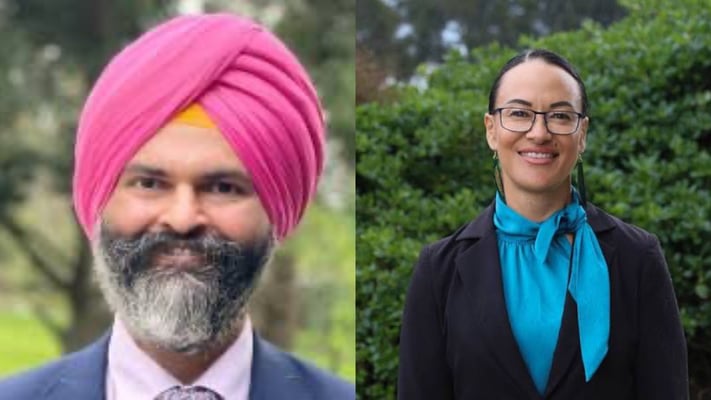
Malkiat Singh, a licensed immigration adviser contesting the Papakura seat for ACT, received racist messages and death threats against himself and his family in June. He reported the matter to police, whose investigation remains ongoing.
Singh told 1News that the abuse intensified rapidly, targeting his ethnicity and religious identity.
"I started receiving these messages which were pretty dark, making comments about my racial ethnicity and telling me to go back to my country and people telling me to remove the nappy on my head, as quoted by 1News.
"Then suddenly people started telling me if I knock on their doors they'll make me disappear and people telling me they'll shoot my brains out and that they know where I live," 1News has quoted.
Recent posts on his social media included demands that he should not be involved in government because he was not born in New Zealand, along with comments telling him to remove his turban before representing the country.
Singh said the repeated abuse had taken an emotional toll despite his normally courageous nature.
"I must admit, even though I'm a pretty brave person normally, it has affected me and it has affected me emotionally", as quoted by 1News.
The threats have also affected his campaigning approach, with Singh now choosing to knock on doors only when accompanied by others.
Māori Candidate Reports Racial and Sexual Abuse
According to 1News, Green Party candidate for Waiariki Tania Waikato has also faced death threats and estimates that racial abuse accounts for around 20% of the comments posted on her social media accounts.
She said the abuse includes racist slurs and sexualised attacks targeting her as a Māori woman. However, she noted that stereotypical remarks were more widespread.
"As well as the sort of very lowbrow, abusive ones, we get a lot of stereotype racist comments. So, things like, 'Oh, Māori can't feed their own kids. You didn't earn your degrees, 1News has quoted.
"You know, just a lot of what I would call casual racism that's become more and more acceptable", as quoted by 1News.
Racism Emerges as the Leading Form of Online Hate
Technology company Areto has been engaged by 35 political candidates, including some sitting MPs, to help protect them from online abuse. Over the past six months, approximately 30% of the comments it analysed had to be hidden because they were considered too offensive.
Areto founder and chief product officer Jacqueline Comer said racial abuse represented the largest category of hateful content.
"In New Zealand it is a bit of a sad state of affairs that the highest slice of the abuse is actually racial abuse and that's general racism, xenophobia, anti-Semitism, Islamophobia and racial microaggressions, 1News has quoted.
"That's what we're seeing is bubbling up as the worst type of abuse and second to that is sexist or gender-based abuse," as quoted by 1News.
Online Racism Becoming Increasingly Normalised
Research monitored by Massey University professor Mohan Dutta, director of the university's Centre for Culture-Centred Approach to Research and Evaluation, indicates that online anti-Indian racism has tripled over the past year. Anti-Māori racism has also risen.
Dutta said the increase reflected a broader trend rather than a temporary spike. He argued that political rhetoric was contributing to the normalisation of racist attitudes, 1News has quoted.
He linked the growing hostility to economic pressures, including rising living costs, limited employment opportunities and increasing wealth inequality. According to Dutta, migrants and Māori were increasingly being blamed for wider social and economic problems.
"It's a political recruitment tool and in that sense the rhetoric drives political campaigns and that's how it dangerously becomes mainstreamed," as quoted by 1News.
Singh also expressed concern about the influence of political leaders' statements on public behaviour, noting that supporters could interpret their words in ways that encouraged hostility.
"When you see some examples set by our political leaders, they may not have meant it in the manner it comes across to their followers. Sometimes their followers will interpret their words differently and it has a trickle-down effect in the streets.
"I think situations, incidents, little moments like these, they all collectively have an impact on our society," 1News has quoted.
Non-white political candidates in New Zealand are reporting increasing levels of online racial abuse and threats as the election campaign continues. An ACT candidate says the harassment has forced him to change the way he campaigns, while a firm monitoring online abuse says racism has become the...
Non-white political candidates in New Zealand are reporting increasing levels of online racial abuse and threats as the election campaign continues. An ACT candidate says the harassment has forced him to change the way he campaigns, while a firm monitoring online abuse says racism has become the most common form of hate directed at politicians.
Malkiat Singh, a licensed immigration adviser contesting the Papakura seat for ACT, received racist messages and death threats against himself and his family in June. He reported the matter to police, whose investigation remains ongoing.
Singh told 1News that the abuse intensified rapidly, targeting his ethnicity and religious identity.
"I started receiving these messages which were pretty dark, making comments about my racial ethnicity and telling me to go back to my country and people telling me to remove the nappy on my head, as quoted by 1News.
"Then suddenly people started telling me if I knock on their doors they'll make me disappear and people telling me they'll shoot my brains out and that they know where I live," 1News has quoted.
Recent posts on his social media included demands that he should not be involved in government because he was not born in New Zealand, along with comments telling him to remove his turban before representing the country.
Singh said the repeated abuse had taken an emotional toll despite his normally courageous nature.
"I must admit, even though I'm a pretty brave person normally, it has affected me and it has affected me emotionally", as quoted by 1News.
The threats have also affected his campaigning approach, with Singh now choosing to knock on doors only when accompanied by others.
Māori Candidate Reports Racial and Sexual Abuse
According to 1News, Green Party candidate for Waiariki Tania Waikato has also faced death threats and estimates that racial abuse accounts for around 20% of the comments posted on her social media accounts.
She said the abuse includes racist slurs and sexualised attacks targeting her as a Māori woman. However, she noted that stereotypical remarks were more widespread.
"As well as the sort of very lowbrow, abusive ones, we get a lot of stereotype racist comments. So, things like, 'Oh, Māori can't feed their own kids. You didn't earn your degrees, 1News has quoted.
"You know, just a lot of what I would call casual racism that's become more and more acceptable", as quoted by 1News.
Racism Emerges as the Leading Form of Online Hate
Technology company Areto has been engaged by 35 political candidates, including some sitting MPs, to help protect them from online abuse. Over the past six months, approximately 30% of the comments it analysed had to be hidden because they were considered too offensive.
Areto founder and chief product officer Jacqueline Comer said racial abuse represented the largest category of hateful content.
"In New Zealand it is a bit of a sad state of affairs that the highest slice of the abuse is actually racial abuse and that's general racism, xenophobia, anti-Semitism, Islamophobia and racial microaggressions, 1News has quoted.
"That's what we're seeing is bubbling up as the worst type of abuse and second to that is sexist or gender-based abuse," as quoted by 1News.
Online Racism Becoming Increasingly Normalised
Research monitored by Massey University professor Mohan Dutta, director of the university's Centre for Culture-Centred Approach to Research and Evaluation, indicates that online anti-Indian racism has tripled over the past year. Anti-Māori racism has also risen.
Dutta said the increase reflected a broader trend rather than a temporary spike. He argued that political rhetoric was contributing to the normalisation of racist attitudes, 1News has quoted.
He linked the growing hostility to economic pressures, including rising living costs, limited employment opportunities and increasing wealth inequality. According to Dutta, migrants and Māori were increasingly being blamed for wider social and economic problems.
"It's a political recruitment tool and in that sense the rhetoric drives political campaigns and that's how it dangerously becomes mainstreamed," as quoted by 1News.
Singh also expressed concern about the influence of political leaders' statements on public behaviour, noting that supporters could interpret their words in ways that encouraged hostility.
"When you see some examples set by our political leaders, they may not have meant it in the manner it comes across to their followers. Sometimes their followers will interpret their words differently and it has a trickle-down effect in the streets.
"I think situations, incidents, little moments like these, they all collectively have an impact on our society," 1News has quoted.


Leave a Comment