

Google illegally cuts down 250,000 trees in Finland for data centre project
Google has faced widespread criticism in Finland after clearing large areas of forest for planned datacentres without completing the required environmental impact assessments. The incident has raised concerns about environmental protection, local communities and the rapid expansion of artificial intelligence infrastructure.
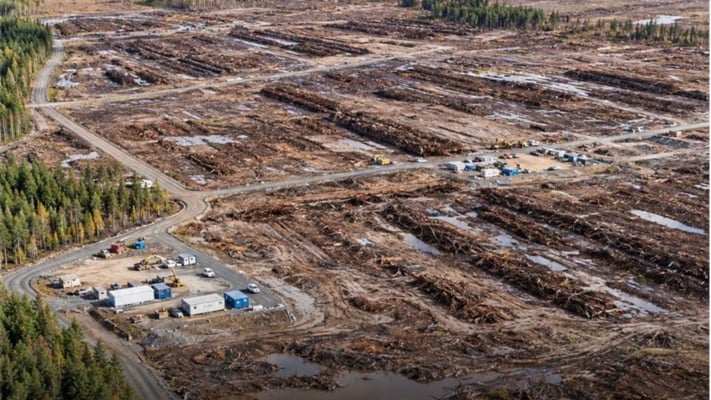
According to a report by The Guardian, at Muhos, a town in northern Finland, an estimated 250,000 trees were removed from 330 hectares of forest. The land has been left covered in mud, exposed roots, branches and machinery tracks. Residents have also reported brown water flowing from the site into a stream connected to the Oulujoki River.
“It doesn’t end. It goes on and on,” said Mari Annala, an ecologist with the Finnish Association for Nature Conservation (SLL), while viewing aerial footage of the cleared land, as quoted by The Guardian.
The Finnish Licensing and Supervision Authority (LVV) recently ordered Google to temporarily halt work at the Muhos site and another proposed data centre location in Otanmäki, approximately 100 kilometres to the south-east. The order followed the company's failure to complete the necessary environmental impact assessments before clearing the land.
According to The Guardian, Annala estimates that a further 150,000 trees were cut down at Otanmäki. She said that because the clearances were carried out illegally, the timber from both sites could not be sold to wood-processing plants.
Growing concerns over Finland's datacentre expansion
Finland has become an attractive destination for technology companies seeking locations for datacentres. Its cool climate, abundant land and relative geopolitical and geological stability make it suitable for large computing facilities. Around 145 new datacentres are at various stages of planning across the country.
Google's proposed developments at Muhos and Otanmäki form part of a €13 billion AI infrastructure investment. The project is the largest of its kind in Finland and has also attracted criticism from US President Donald Trump, who has argued that such facilities should be built in the United States, The Guardian has reported.
The Finnish government has welcomed the investment amid substantial public spending cuts. Prime Minister Petteri Orpo previously described attracting investment as a “top priority” and said the agreement would “deliver lasting benefits for both parties”, as quoted by The Guardian.
However, the forest-clearing controversy has intensified public debate about whether the economic benefits of data centres justify their environmental impact. Concerns include rising household energy costs, the use of renewable electricity by international corporations and the consequences for surrounding communities.
More than 93,000 people have signed a petition calling for stricter datacentre regulations and financial compensation for communities affected by environmental damage. Orpo has described the events at Muhos as a “cold shower”, The Guardian has reported.
Hanna Halmeenpää, chair of the SLL board, said she was shocked by the company's actions.
“At first I couldn’t believe it,” she said. “I have never heard that any company has done anything like this in Finland”, as quoted by The Guardian.
She argued that Finland's system relied heavily on trust, which she believes Google had taken advantage of. “They bought the vast land area and they just started to cut it, just like that,” she said. “It’s pure arrogance and it’s amazing.”
Halmeenpää added that the rapid pace of development had left many people questioning whether Finland should continue accepting such projects.
Questions about economic benefits
The economic value of datacentres has also come under scrutiny. Jussi Kangasharju, head of computer science at the University of Helsinki, said the facilities could provide some local employment and economic activity but offered limited benefits to Finland as a whole.
“Really, for Finland, there are no benefits,” he said. “They are international companies serving international customers. Very little corporate taxes go to Finland. Datacentres ultimately have very little benefit for others except the datacentre operator,” The Guardian has quoted.
Some experts and campaigners have called for a central authority to coordinate datacentre development, rather than leaving decisions largely to municipalities that may prioritise local jobs and tax revenue.
Although Finnish legislation has yet to fully catch up with the expansion of the sector, the government says it is monitoring developments. Veli-Matti Uski, director general of the Ministry of the Environment, said the government was “monitoring the general development of the [datacentre] sector, [and the] application of its legislation, and is prepared to propose legislative amendments as necessary”, as quoted by The Guardian.
Local communities face environmental disruption
In Muhos, resident Antti Jakonen criticised the way the forest had been cleared, even though the affected area represents only a small proportion of Finland's total forest cover.
“It has been done in the wrong way. American style. No sense. No sense at all,” he said, The Guardian has quoted.
Jakonen, a former entrepreneur and fisher, wants Google to contribute to restoring the area's salmon population, which was destroyed decades ago by hydropower development.
In Otanmäki, residents have raised concerns about wildlife displacement, noise and changes to their surroundings. Anni Ranta, 53, whose family has lived in the village for generations, said wolves had entered the settlement after losing their forest habitat.
“We had wolves coming into the village because all the wild animals moved out of the forest,” said Ranta. “They fled. What worries me about the data centres is also the noise because this is hardrock soil. Even when we are standing here talking,” she added, stamping her feet, “it’s like a drum”, as quoted by The Guardian.
Ranta said the development had made her consider leaving the village. She also expressed concern that the facilities could make the area a potential target for Russia, with which Finland shares a long border.
“I don’t want them here,” she said of Google. “I don’t want them in Finland at all. I don’t like the whole idea of AI and the world changing and the way it’s changing. It’s going too fast, too soon,” The Guardian has quoted.
Her father, Pentti Korhonen, a retired wilderness guide, said the water in a nearby stream had turned brown since the forest was cleared. He questioned the need for such facilities in the country.
Vesa Hyyryläinen, chair of the local SLL district, said three-toed woodpeckers that had nested in the forest had been displaced. He also expressed concern about the broader environmental consequences of the projects, as reported by The Guardian.
However, Hyyryläinen acknowledged that the region needed investment and employment opportunities, particularly as its population aged and younger residents moved to larger cities abroad.
“Young people go to Helsinki and Berlin and Paris,” he said. “There are so few people. We have to sacrifice”, as quoted by The Guardian.
Google responds to criticism
Google's Finland country manager, Antti Järvinen, apologised for the forest clearances but said the company had acted “on the best understanding we had of the legislation at the time”.
According to The Guardian, Google has said it is taking steps to protect water quality at Muhos and plans to plant trees across 130 hectares of the site. Conservationists argue that the proposed replanting would be insufficient to offset the environmental damage caused by removing the existing forest.
In a statement, a Google spokesperson said: “We have operated in Finland for 15 years and have always worked to meet or exceed zoning, environmental, health and safety requirements.
“After receiving the LVV letters on 6 October, we stopped preparatory works at Muhos and Kajaani [where the Otanmäki site is located] and have submitted a formal response to LVV confirming this.
“We will fully comply with LVV’s requests in this matter. We look forward to maintaining an active, open dialogue with all authorities to strengthen our partnership with Finland and local organisations,” as quoted by The Guardian.
The controversy has prompted a wider national debate about the balance between economic investment, technological development and environmental conservation. With Finland's next election scheduled for April, the future regulation of data centres is expected to become an important public issue.
Google has faced widespread criticism in Finland after clearing large areas of forest for planned datacentres without completing the required environmental impact assessments. The incident has raised concerns about environmental protection, local communities and the rapid expansion of artificial...
Google has faced widespread criticism in Finland after clearing large areas of forest for planned datacentres without completing the required environmental impact assessments. The incident has raised concerns about environmental protection, local communities and the rapid expansion of artificial intelligence infrastructure.
According to a report by The Guardian, at Muhos, a town in northern Finland, an estimated 250,000 trees were removed from 330 hectares of forest. The land has been left covered in mud, exposed roots, branches and machinery tracks. Residents have also reported brown water flowing from the site into a stream connected to the Oulujoki River.
“It doesn’t end. It goes on and on,” said Mari Annala, an ecologist with the Finnish Association for Nature Conservation (SLL), while viewing aerial footage of the cleared land, as quoted by The Guardian.
The Finnish Licensing and Supervision Authority (LVV) recently ordered Google to temporarily halt work at the Muhos site and another proposed data centre location in Otanmäki, approximately 100 kilometres to the south-east. The order followed the company's failure to complete the necessary environmental impact assessments before clearing the land.
According to The Guardian, Annala estimates that a further 150,000 trees were cut down at Otanmäki. She said that because the clearances were carried out illegally, the timber from both sites could not be sold to wood-processing plants.
Growing concerns over Finland's datacentre expansion
Finland has become an attractive destination for technology companies seeking locations for datacentres. Its cool climate, abundant land and relative geopolitical and geological stability make it suitable for large computing facilities. Around 145 new datacentres are at various stages of planning across the country.
Google's proposed developments at Muhos and Otanmäki form part of a €13 billion AI infrastructure investment. The project is the largest of its kind in Finland and has also attracted criticism from US President Donald Trump, who has argued that such facilities should be built in the United States, The Guardian has reported.
The Finnish government has welcomed the investment amid substantial public spending cuts. Prime Minister Petteri Orpo previously described attracting investment as a “top priority” and said the agreement would “deliver lasting benefits for both parties”, as quoted by The Guardian.
However, the forest-clearing controversy has intensified public debate about whether the economic benefits of data centres justify their environmental impact. Concerns include rising household energy costs, the use of renewable electricity by international corporations and the consequences for surrounding communities.
More than 93,000 people have signed a petition calling for stricter datacentre regulations and financial compensation for communities affected by environmental damage. Orpo has described the events at Muhos as a “cold shower”, The Guardian has reported.
Hanna Halmeenpää, chair of the SLL board, said she was shocked by the company's actions.
“At first I couldn’t believe it,” she said. “I have never heard that any company has done anything like this in Finland”, as quoted by The Guardian.
She argued that Finland's system relied heavily on trust, which she believes Google had taken advantage of. “They bought the vast land area and they just started to cut it, just like that,” she said. “It’s pure arrogance and it’s amazing.”
Halmeenpää added that the rapid pace of development had left many people questioning whether Finland should continue accepting such projects.
Questions about economic benefits
The economic value of datacentres has also come under scrutiny. Jussi Kangasharju, head of computer science at the University of Helsinki, said the facilities could provide some local employment and economic activity but offered limited benefits to Finland as a whole.
“Really, for Finland, there are no benefits,” he said. “They are international companies serving international customers. Very little corporate taxes go to Finland. Datacentres ultimately have very little benefit for others except the datacentre operator,” The Guardian has quoted.
Some experts and campaigners have called for a central authority to coordinate datacentre development, rather than leaving decisions largely to municipalities that may prioritise local jobs and tax revenue.
Although Finnish legislation has yet to fully catch up with the expansion of the sector, the government says it is monitoring developments. Veli-Matti Uski, director general of the Ministry of the Environment, said the government was “monitoring the general development of the [datacentre] sector, [and the] application of its legislation, and is prepared to propose legislative amendments as necessary”, as quoted by The Guardian.
Local communities face environmental disruption
In Muhos, resident Antti Jakonen criticised the way the forest had been cleared, even though the affected area represents only a small proportion of Finland's total forest cover.
“It has been done in the wrong way. American style. No sense. No sense at all,” he said, The Guardian has quoted.
Jakonen, a former entrepreneur and fisher, wants Google to contribute to restoring the area's salmon population, which was destroyed decades ago by hydropower development.
In Otanmäki, residents have raised concerns about wildlife displacement, noise and changes to their surroundings. Anni Ranta, 53, whose family has lived in the village for generations, said wolves had entered the settlement after losing their forest habitat.
“We had wolves coming into the village because all the wild animals moved out of the forest,” said Ranta. “They fled. What worries me about the data centres is also the noise because this is hardrock soil. Even when we are standing here talking,” she added, stamping her feet, “it’s like a drum”, as quoted by The Guardian.
Ranta said the development had made her consider leaving the village. She also expressed concern that the facilities could make the area a potential target for Russia, with which Finland shares a long border.
“I don’t want them here,” she said of Google. “I don’t want them in Finland at all. I don’t like the whole idea of AI and the world changing and the way it’s changing. It’s going too fast, too soon,” The Guardian has quoted.
Her father, Pentti Korhonen, a retired wilderness guide, said the water in a nearby stream had turned brown since the forest was cleared. He questioned the need for such facilities in the country.
Vesa Hyyryläinen, chair of the local SLL district, said three-toed woodpeckers that had nested in the forest had been displaced. He also expressed concern about the broader environmental consequences of the projects, as reported by The Guardian.
However, Hyyryläinen acknowledged that the region needed investment and employment opportunities, particularly as its population aged and younger residents moved to larger cities abroad.
“Young people go to Helsinki and Berlin and Paris,” he said. “There are so few people. We have to sacrifice”, as quoted by The Guardian.
Google responds to criticism
Google's Finland country manager, Antti Järvinen, apologised for the forest clearances but said the company had acted “on the best understanding we had of the legislation at the time”.
According to The Guardian, Google has said it is taking steps to protect water quality at Muhos and plans to plant trees across 130 hectares of the site. Conservationists argue that the proposed replanting would be insufficient to offset the environmental damage caused by removing the existing forest.
In a statement, a Google spokesperson said: “We have operated in Finland for 15 years and have always worked to meet or exceed zoning, environmental, health and safety requirements.
“After receiving the LVV letters on 6 October, we stopped preparatory works at Muhos and Kajaani [where the Otanmäki site is located] and have submitted a formal response to LVV confirming this.
“We will fully comply with LVV’s requests in this matter. We look forward to maintaining an active, open dialogue with all authorities to strengthen our partnership with Finland and local organisations,” as quoted by The Guardian.
The controversy has prompted a wider national debate about the balance between economic investment, technological development and environmental conservation. With Finland's next election scheduled for April, the future regulation of data centres is expected to become an important public issue.


Leave a Comment