

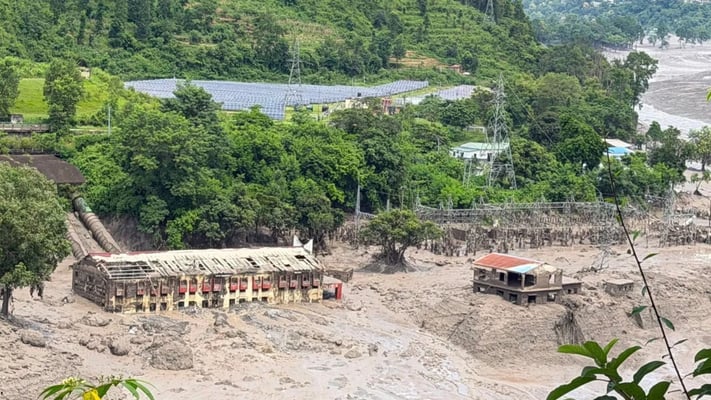

More than 600 killed in flash floods on Nepal-Tibet border
More than 600 people have reportedly been killed following devastating flash floods and mudslides along the Nepal-Tibet border, while continuing rain and difficult terrain are making rescue and recovery operations increasingly challenging.
The disaster has affected mountainous areas near the Nepal-Tibet border, with villages, roads and bridges swept away by powerful floodwaters. Rescue teams on both sides of the border are continuing efforts to locate missing people and assist those stranded in the affected areas.
According to the BBC, the Nepal Tourism Board has confirmed that 184 foreign nationals have so far been rescued following the flash floods. Of those rescued, 114 are Indian nationals.
The tourism authorities also said they remain in communication with one person from Belgium and two people from Spain.
In its latest update at 13:30 local time, the Nepal Tourism Board said another 420 tourists were still unaccounted for, highlighting the scale of the emergency and the difficulties faced by rescue teams working in the region.
What happened in Nepal?
At around 8:40am local time on Wednesday, flash floods and mudslides swept through mountainous areas along the Nepal-Tibet border.
As reported by the BBC, a massive surge of water, mud and rocks rushed through the Lhende Khola river valley, overwhelming villages and destroying homes and vital infrastructure.
The force of the flooding caused widespread destruction across the region. At least 19 bridges and around 40 kilometres of roads were washed away, making it extremely difficult for rescue teams to reach communities that have been cut off.

The destruction of roads and bridges has also disrupted access to some of the worst-affected areas, while continuing rainfall and high river levels have created additional risks for rescue workers and people still waiting for assistance.
Nepalese soldiers and rescue teams have been deployed to the affected areas. Helicopters, drones and search dogs are being used as part of the rescue operation, but damaged infrastructure, unstable terrain, heavy mud and rising river levels have complicated efforts.
According to the BBC, rescue teams are facing particularly difficult conditions as they attempt to reach people who remain stranded or missing following the floods.
On Friday, Nepal News reported that the Nepali Army had rescued around 350 workers and residents who had become trapped inside a tunnel at the Upper Trishuli hydropower project. The rescue operation was carried out amid poor weather conditions and high river flows.
Across the border in Tibet, rescue efforts have also been affected. Deep layers of sediment have reportedly delayed Chinese rescue teams attempting to reach the border zone and assist with the response.
‘My mother was left trapped after floods, 56 hours later I managed to speak to her’
The disaster has left families desperately searching for relatives and loved ones, with many relying on social media and information from people on the ground because communication and transport links have been severely disrupted.
The BBC spoke to Rajendra Pudasaini, President of the Non-Resident Nepali Association in the UK, who described the uncertainty surrounding his own family members and neighbours.
Pudasaini said he was initially unsure what had happened to several members of his family. His wife's aunt and uncle, their granddaughter and her husband, as well as his godson, were among those reported missing.
Speaking to the BBC on Thursday evening, Pudasaini described the situation faced by people living near the Nepal-Tibet border and the uncertainty surrounding those caught in the disaster.
He later spoke to BBC Breakfast on Saturday morning and explained that he had finally managed to speak to his mother, 56 hours after the tragedy.
His mother had been travelling to hospital when the river collapsed. Pudasaini said the destruction caused a bridge to be “blown away”, leaving his mother trapped at the hospital along with several other relatives.
The BBC reported that Pudasaini's mother and the other relatives were eventually rescued by the Nepali Army.
The nurse, who lives in Essex, said he had been depending heavily on neighbours and friends sharing updates on social media to try to establish what had happened to people affected by the floods.
The scale of the destruction has left many communities struggling to access basic necessities, with people desperately waiting for assistance as rescue teams continue their operations.
"People are crying for food, clothes and medicine and support and hope," he says.
As reported by the BBC, the continuing weather conditions and destruction of essential infrastructure remain major obstacles for emergency teams working to reach those who are still stranded or unaccounted for.
The situation remains fluid, with rescue operations continuing as authorities attempt to locate missing people, evacuate those trapped in affected areas and provide food, clothing, medicine and other essential support to communities impacted by the devastating floods.
More than 600 people have reportedly been killed following devastating flash floods and mudslides along the Nepal-Tibet border, while continuing rain and difficult terrain are making rescue and recovery operations increasingly challenging.
{% module_block module...More than 600 people have reportedly been killed following devastating flash floods and mudslides along the Nepal-Tibet border, while continuing rain and difficult terrain are making rescue and recovery operations increasingly challenging.
The disaster has affected mountainous areas near the Nepal-Tibet border, with villages, roads and bridges swept away by powerful floodwaters. Rescue teams on both sides of the border are continuing efforts to locate missing people and assist those stranded in the affected areas.
According to the BBC, the Nepal Tourism Board has confirmed that 184 foreign nationals have so far been rescued following the flash floods. Of those rescued, 114 are Indian nationals.
The tourism authorities also said they remain in communication with one person from Belgium and two people from Spain.
In its latest update at 13:30 local time, the Nepal Tourism Board said another 420 tourists were still unaccounted for, highlighting the scale of the emergency and the difficulties faced by rescue teams working in the region.
What happened in Nepal?
At around 8:40am local time on Wednesday, flash floods and mudslides swept through mountainous areas along the Nepal-Tibet border.
As reported by the BBC, a massive surge of water, mud and rocks rushed through the Lhende Khola river valley, overwhelming villages and destroying homes and vital infrastructure.
The force of the flooding caused widespread destruction across the region. At least 19 bridges and around 40 kilometres of roads were washed away, making it extremely difficult for rescue teams to reach communities that have been cut off.

The destruction of roads and bridges has also disrupted access to some of the worst-affected areas, while continuing rainfall and high river levels have created additional risks for rescue workers and people still waiting for assistance.
Nepalese soldiers and rescue teams have been deployed to the affected areas. Helicopters, drones and search dogs are being used as part of the rescue operation, but damaged infrastructure, unstable terrain, heavy mud and rising river levels have complicated efforts.
According to the BBC, rescue teams are facing particularly difficult conditions as they attempt to reach people who remain stranded or missing following the floods.
On Friday, Nepal News reported that the Nepali Army had rescued around 350 workers and residents who had become trapped inside a tunnel at the Upper Trishuli hydropower project. The rescue operation was carried out amid poor weather conditions and high river flows.
Across the border in Tibet, rescue efforts have also been affected. Deep layers of sediment have reportedly delayed Chinese rescue teams attempting to reach the border zone and assist with the response.
‘My mother was left trapped after floods, 56 hours later I managed to speak to her’
The disaster has left families desperately searching for relatives and loved ones, with many relying on social media and information from people on the ground because communication and transport links have been severely disrupted.
The BBC spoke to Rajendra Pudasaini, President of the Non-Resident Nepali Association in the UK, who described the uncertainty surrounding his own family members and neighbours.
Pudasaini said he was initially unsure what had happened to several members of his family. His wife's aunt and uncle, their granddaughter and her husband, as well as his godson, were among those reported missing.
Speaking to the BBC on Thursday evening, Pudasaini described the situation faced by people living near the Nepal-Tibet border and the uncertainty surrounding those caught in the disaster.
He later spoke to BBC Breakfast on Saturday morning and explained that he had finally managed to speak to his mother, 56 hours after the tragedy.
His mother had been travelling to hospital when the river collapsed. Pudasaini said the destruction caused a bridge to be “blown away”, leaving his mother trapped at the hospital along with several other relatives.
The BBC reported that Pudasaini's mother and the other relatives were eventually rescued by the Nepali Army.
The nurse, who lives in Essex, said he had been depending heavily on neighbours and friends sharing updates on social media to try to establish what had happened to people affected by the floods.
The scale of the destruction has left many communities struggling to access basic necessities, with people desperately waiting for assistance as rescue teams continue their operations.
"People are crying for food, clothes and medicine and support and hope," he says.
As reported by the BBC, the continuing weather conditions and destruction of essential infrastructure remain major obstacles for emergency teams working to reach those who are still stranded or unaccounted for.
The situation remains fluid, with rescue operations continuing as authorities attempt to locate missing people, evacuate those trapped in affected areas and provide food, clothing, medicine and other essential support to communities impacted by the devastating floods.


Leave a Comment