




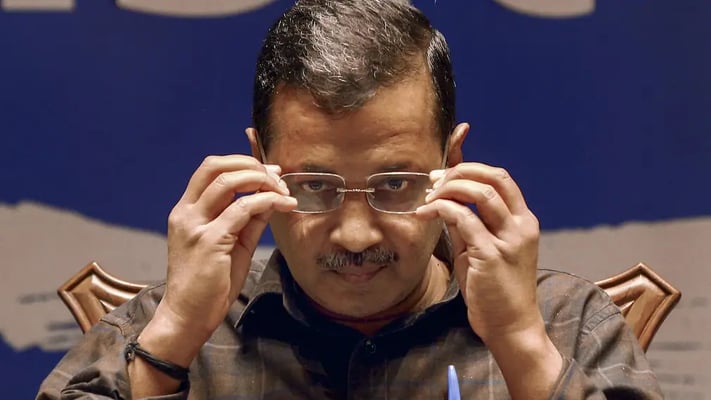



After months of political upheaval and legal battles, Aam Aadmi Party (AAP) chief Arvind Kejriwal and senior leader Manish Sisodia were on Friday cleared of corruption and conspiracy charges linked to the Delhi liquor excise policy case. Reported by Chandrashekar Srinivasan from NDTV.

The court ruled, "There was no overarching conspiracy or criminal intent in the policy," and also criticised the Central Bureau of Investigation (CBI) for attempting to construct a case largely on the basis of statements made by other accused.
Outside the courtroom, an emotional Kejriwal recalled his arrest in March 2024. "I always used to say that the truth is with us. A sitting Chief Minister was dragged out of his home and thrown into jail. Mud was flung at us," he said.
His arrest had triggered months of intense political drama. The AAP alleged medical negligence during his incarceration and accused the BJP of targeting him politically. Sources close to Kejriwal had earlier told NDTV that his decision to eventually resign as Chief Minister was a matter of principle, taken amid mounting allegations of corruption and wrongdoing.
Bail was granted in September 2024 after the Supreme Court intervened, observing that "prolonged incarceration amounts to unjust deprivation of liberty." Days later, Kejriwal stepped down as Delhi Chief Minister — a post he had held onto following his arrest.
Temporary reliefs along the way have now culminated in what his party views as a final vindication.
The Political Fallout and the 2025 Delhi Election
In the intervening period, the political landscape shifted dramatically. The BJP intensified its campaign against Kejriwal and the AAP, attacking both their governance record and personal credibility.
The 2025 Delhi Assembly election proved decisive. The BJP secured 48 out of 70 seats, reclaiming power in the national capital for the first time in nearly 30 years.
Kejriwal and Sisodia both suffered personal defeats — setbacks widely interpreted as a rejection of the AAP’s leadership. The party’s fall from power after 11 years marked a significant turning point.
The excise policy controversy became central to the BJP’s narrative against Kejriwal, which also included the “sheeshmahal” allegations and branding him as a “kattar beiman.” The AAP consistently denied all charges, stating that no money trail or documentary evidence was found despite multiple raids and investigations.
However, prolonged legal proceedings and high-profile arrests — including that of Rajya Sabha MP Sanjay Singh — kept the party in defensive mode throughout the campaign.

Other factors also contributed to the electoral defeat, including anti-incumbency sentiment and friction with the Congress, an on-paper ally. The AAP saw a seven per cent drop in vote share.
Still, the liquor policy case remained particularly damaging because it directly targeted Kejriwal, whose political identity has long been built on an image of integrity, middle-class values, and anti-corruption activism.
Extended time in jail also allowed opponents to question and critique key welfare schemes, including reforms in government schools overseen by Sisodia during his tenure as Education Minister.
What Was the Liquor Policy Case?
In November 2021, the Kejriwal government introduced a revamped liquor excise policy. The state withdrew from retail liquor sales, allowing private licensees to operate stores. The move was presented as an effort to curb black-market activity, boost government revenue, and modernise the retail experience.
The new framework permitted extended shop hours and promotional discounts. Liquor sales surged, and the government reported a 27 per cent increase in revenue.
However, the BJP accused the AAP of promoting a “liquor culture” and permitting stores in residential neighbourhoods.
In July 2022, then-Delhi Chief Secretary Naresh Kumar flagged alleged “gross violations” in the policy, including claims of illegal rebates in licence fees during the pandemic. This prompted investigations by the Enforcement Directorate and the CBI — agencies that opposition parties have repeatedly alleged are used to target political adversaries.
With the court’s verdict now clearing Kejriwal and Sisodia, the case that once reshaped Delhi’s political landscape has taken a dramatic turn.


ISSUE


Leave a Comment