

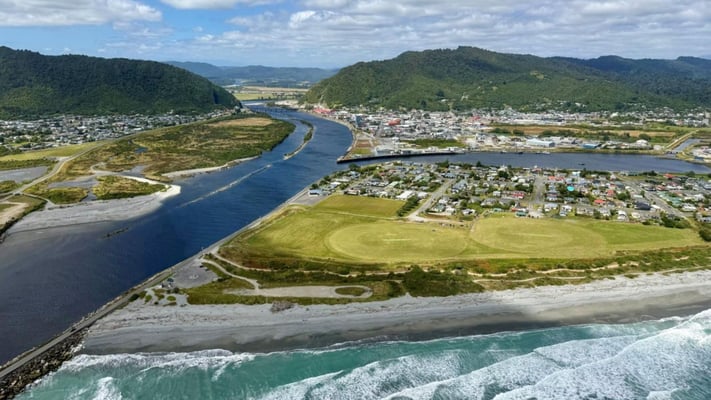

Coastal town sees house values double amid ongoing boom
Nestled where the Grey River meets the Tasman Sea, Greymouth has long been known for its rugged coastline, dense bush and steady rainfall. Traditionally viewed as a quiet and remote West Coast town, it is now experiencing significant change driven by population growth, economic momentum and a booming housing market.
According to a report by Stuff, since the Covid-19 pandemic, property prices in the Grey District have surged dramatically. According to Quotable Value (QV), average home values have climbed more than 93 percent since March 2020, rising from $238,951 to approximately $462,444 today. Local QV registered valuer Rod Thornton described the increase as a “dramatic lift”.
The rise in house prices has coincided with an influx of new residents seeking affordability, lifestyle and work opportunities outside New Zealand’s larger cities.
Among them is Richard Pauldhas, who moved to Greymouth from Nelson after arriving in New Zealand in 2019. The 36-year-old admitted he knew little about the town before accepting a job there, Stuff has reported.
“I had no idea where Greymouth was. I only knew Auckland, Christchurch and Wellington.
“I had spent time in Dubai before, so Greymouth felt very quiet when I came here. I thought, how am I going to live here?”, as quoted by Stuff.
Years later, Pauldhas has firmly settled into life on the West Coast. He purchased his first home in 2023 for around $530,000 and is now building a second property to accommodate his growing family.
“Even though prices have increased now, it’s still affordable.”
He credits the welcoming nature of the local community for helping him establish roots in the town.
“The reason I’m staying here is because of the community. From day one, people were caring. If you need help, you ask anyone,” Stuff has quoted.
Working in healthcare, Pauldhas said Greymouth offers a lifestyle difficult to find in larger urban centres.
“In Auckland or Christchurch, people are waking up very early just to commute. Here, you leave home five minutes before work. There is no stress, and great work-life balance.”
He said the town’s outdoor spaces and family-friendly environment have been ideal for raising his young son.
“There are good parks here and cycling practice areas as well. He goes out, he plays and enjoys it a lot,” as quoted by Stuff.
Greymouth’s changing demographic profile is also becoming more noticeable. Andrew Ross, who moved from the United Kingdom to New Zealand four years ago, now lives in the town with his husband, Andrew Harrison. The couple were drawn by affordability, space and lifestyle.
Ross described Greymouth as a place that reveals more depth over time.
“The community is great here. There are lots of artists, lots of music and lots of people making things. It’s an amazing place to live.”
He also highlighted the diversity emerging within the community.
“At first it looks quite Pākehā but actually there are South African, American, Asian communities, Indian, Pakistani and Muslim communities. You see people from everywhere once you are involved,” Stuff has quoted.
Economic activity has played a key role in the town’s revival. Hospitality worker Alan Monk said industries such as mining have contributed to stronger business conditions in recent years.
“Everything revolves around economic activity. A lot of it is gold or mining-related and it’s been great for the hospitality industry,” he said.
Development West Coast economic development manager Fiona Hill said the region has reversed years of population decline.
“We have around 2300 more people living on the coast since then, including 850 more in the Grey District.”
Hill attributed the turnaround to strength in sectors including mining, agriculture and tourism.
“The West Coast economy has had some good momentum over the past few years, particularly with the resurgence in the minerals sector, continued strength in agriculture, and tourism bouncing back.
“That has been flowing through into confidence, and you are seeing that reflected in things like property values,” as quoted by Stuff.
She added that Greymouth’s central business district is also seeing renewed investment, including several large-scale projects such as a new library.
Grey District Mayor Tania Gibson said the growth is encouraging, though it also brings challenges for local infrastructure and housing supply.
“It’s great if you already own property, but it does make it a bit harder for people trying to get into the market. That said, it’s still achievable here in many cases,” Stuff has quoted.
Gibson said regional migration accelerated after the pandemic as more people left major cities in search of a different lifestyle. Workforce demand in industries such as healthcare and mining has further strengthened that trend, with mining developments expected to create around 1,200 new jobs, as reported by Stuff.
However, she warned that expansion must be managed carefully.
“We need more housing and more infrastructure, and that does put pressure on councils. It’s costly to get subdivisions up and running, and it takes time.
“We need the growth and we need the industry. We’re excited about the future but we also have to manage it carefully,” Stuff has quoted.
Nestled where the Grey River meets the Tasman Sea, Greymouth has long been known for its rugged coastline, dense bush and steady rainfall. Traditionally viewed as a quiet and remote West Coast town, it is now experiencing significant change driven by population growth, economic momentum and a...
Nestled where the Grey River meets the Tasman Sea, Greymouth has long been known for its rugged coastline, dense bush and steady rainfall. Traditionally viewed as a quiet and remote West Coast town, it is now experiencing significant change driven by population growth, economic momentum and a booming housing market.
According to a report by Stuff, since the Covid-19 pandemic, property prices in the Grey District have surged dramatically. According to Quotable Value (QV), average home values have climbed more than 93 percent since March 2020, rising from $238,951 to approximately $462,444 today. Local QV registered valuer Rod Thornton described the increase as a “dramatic lift”.
The rise in house prices has coincided with an influx of new residents seeking affordability, lifestyle and work opportunities outside New Zealand’s larger cities.
Among them is Richard Pauldhas, who moved to Greymouth from Nelson after arriving in New Zealand in 2019. The 36-year-old admitted he knew little about the town before accepting a job there, Stuff has reported.
“I had no idea where Greymouth was. I only knew Auckland, Christchurch and Wellington.
“I had spent time in Dubai before, so Greymouth felt very quiet when I came here. I thought, how am I going to live here?”, as quoted by Stuff.
Years later, Pauldhas has firmly settled into life on the West Coast. He purchased his first home in 2023 for around $530,000 and is now building a second property to accommodate his growing family.
“Even though prices have increased now, it’s still affordable.”
He credits the welcoming nature of the local community for helping him establish roots in the town.
“The reason I’m staying here is because of the community. From day one, people were caring. If you need help, you ask anyone,” Stuff has quoted.
Working in healthcare, Pauldhas said Greymouth offers a lifestyle difficult to find in larger urban centres.
“In Auckland or Christchurch, people are waking up very early just to commute. Here, you leave home five minutes before work. There is no stress, and great work-life balance.”
He said the town’s outdoor spaces and family-friendly environment have been ideal for raising his young son.
“There are good parks here and cycling practice areas as well. He goes out, he plays and enjoys it a lot,” as quoted by Stuff.
Greymouth’s changing demographic profile is also becoming more noticeable. Andrew Ross, who moved from the United Kingdom to New Zealand four years ago, now lives in the town with his husband, Andrew Harrison. The couple were drawn by affordability, space and lifestyle.
Ross described Greymouth as a place that reveals more depth over time.
“The community is great here. There are lots of artists, lots of music and lots of people making things. It’s an amazing place to live.”
He also highlighted the diversity emerging within the community.
“At first it looks quite Pākehā but actually there are South African, American, Asian communities, Indian, Pakistani and Muslim communities. You see people from everywhere once you are involved,” Stuff has quoted.
Economic activity has played a key role in the town’s revival. Hospitality worker Alan Monk said industries such as mining have contributed to stronger business conditions in recent years.
“Everything revolves around economic activity. A lot of it is gold or mining-related and it’s been great for the hospitality industry,” he said.
Development West Coast economic development manager Fiona Hill said the region has reversed years of population decline.
“We have around 2300 more people living on the coast since then, including 850 more in the Grey District.”
Hill attributed the turnaround to strength in sectors including mining, agriculture and tourism.
“The West Coast economy has had some good momentum over the past few years, particularly with the resurgence in the minerals sector, continued strength in agriculture, and tourism bouncing back.
“That has been flowing through into confidence, and you are seeing that reflected in things like property values,” as quoted by Stuff.
She added that Greymouth’s central business district is also seeing renewed investment, including several large-scale projects such as a new library.
Grey District Mayor Tania Gibson said the growth is encouraging, though it also brings challenges for local infrastructure and housing supply.
“It’s great if you already own property, but it does make it a bit harder for people trying to get into the market. That said, it’s still achievable here in many cases,” Stuff has quoted.
Gibson said regional migration accelerated after the pandemic as more people left major cities in search of a different lifestyle. Workforce demand in industries such as healthcare and mining has further strengthened that trend, with mining developments expected to create around 1,200 new jobs, as reported by Stuff.
However, she warned that expansion must be managed carefully.
“We need more housing and more infrastructure, and that does put pressure on councils. It’s costly to get subdivisions up and running, and it takes time.
“We need the growth and we need the industry. We’re excited about the future but we also have to manage it carefully,” Stuff has quoted.




Leave a Comment