




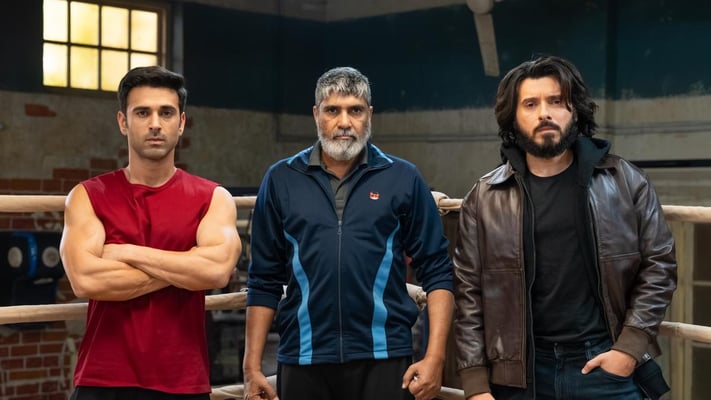



Karan Anshuman’s Glory fits comfortably into the now-familiar OTT storytelling format where a murder mystery becomes the doorway into a larger exploration of society, its conflicts, and deeply rooted cultural structures as reported by The Hindu .
According to The Hindu, the series moves beyond a conventional whodunit and attempts to examine the emotional and social costs tied to ambition, honour, and power.
As the memory of Kohrra still lingers in the OTT landscape, Karan Anshuman shifts focus to neighbouring Haryana, crafting a story around the state’s intense boxing culture and the patriarchy that surrounds it.

Known for exposing the darker realities behind cricket in Inside Edge and the politics of power in Mirzapur, Anshuman combines sports drama with crime thriller elements to create a gritty narrative that is compelling, though not always consistent in execution.
The plot begins with the mysterious murder of a promising Olympic boxing contender and the brutal assault on his partner in Shaktigarh, a fictional boxing hub in Haryana inspired by Bhiwani, often referred to as “mini-Cuba” by boxing enthusiasts.
From there, the narrative evolves into more than just an investigation into the identity of the killer. As noted by The Hindu, the series dives into the harsh ecosystem surrounding competitive boxing, touching upon themes such as parental pressure, fractured families, toxic masculinity, and the dangerous obsession with achieving sporting glory at any cost.
The attack on their sister Gudiya (Jannat) compels estranged brothers Dev (Divyenndu) and Ravi (Pulkit Samrat) to return to their hometown. There, they are forced to confront their father, Raghubir Singh (Suvinder Vicky), a respected but authoritarian boxing coach whose relentless Olympic ambitions have damaged the family over the years.
Raghubir had invested all his hopes in Nihal, but his sudden murder shifts the power dynamics within the boxing circuit and opens the door for rival coach Viju Sangwan (Ashutosh Rana) to position his academy for the Olympic berth. Simultaneously, the investigation uncovers deeper social evils beneath the surface of caste pride and community honour.
The inspector leading the investigation is married to a woman from Bihar (played by Kashmira Pardeshi), who was effectively bought as a bride to address social pressures caused by the skewed sex ratio.
Carrying resentment and emotional scars, she becomes a significant presence within the story. Community leaders defend honour killings in the name of preserving “genetic purity”, while figures such as a khap leader (Yashpal Sharma), a compromised police officer (Zakir Hussain), and a flamboyant mining mafia operator (Sikandar Kher) expand the web of suspicion and corruption.
The Hindu particularly highlights the performances of Suvinder Vicky and Pulkit Samrat, noting the contrast in their acting styles. While Pulkit delivers a more expressive and crowd-friendly performance, Suvinder Vicky brings a restrained and grounded intensity to the role.
Divyenndu, portraying the elder brother who resents the violent nature of boxing, carries emotional vulnerability beneath his bitter and revenge-driven personality.
However, the review also points out that Divyenndu’s popular Mirzapur persona continues to shadow his performance. Though not necessarily a weakness, the contrast becomes more noticeable when placed alongside the nuanced realism of Suvinder Vicky. The series appears to intentionally create this contrast, but over time it begins to feel overly theatrical.
Despite a strong and genuinely surprising central revelation, Glory eventually retreats from the bold risks hinted at in its early episodes.
According to The Hindu, the show opts for a safer and more formulaic resolution, where the killer’s motivations are only loosely connected to the layered social issues the narrative initially attempts to unpack.
Visually, the series captures the atmosphere of boxing effectively. Sweat-soaked training halls, brutal punches, and intense fight choreography create a grounded sporting environment, while John Stewart Eduri’s energetic background score adds emotional weight and urgency. However, the creators also take dramatic liberties with amateur boxing rules and regulations in order to heighten cinematic impact.
Amid the violence, revenge, and emotional fractures within the family, Kashmira Pardeshi’s performance stands out for its quiet strength and directness. Yet, as The Hindu observes, the writing eventually pushes her character into an exaggerated “look-at-me” persona that weakens the subtlety she initially brings to the role.
The review concludes that the makers appear divided between two creative approaches. On one hand, they attempt to explore the realities of caste, patriarchy, and social violence in rural India. On the other, they rely heavily on familiar Bollywood-style tropes such as “behen ka badla”, larger-than-life villains, and underground fighting circuits.
This combination of grounded realism and exaggerated drama often feels uneven. Excessive gore and graphic violence, which have increasingly become common in Indian noir thrillers, are used more for spectacle and binge appeal than meaningful storytelling.
Ultimately, while Glory contains several strong performances, compelling moments, and powerful themes, the lack of tonal balance and narrative cohesion prevents it from fully achieving the emotional and thematic impact it aims for.


ISSUE


Leave a Comment