

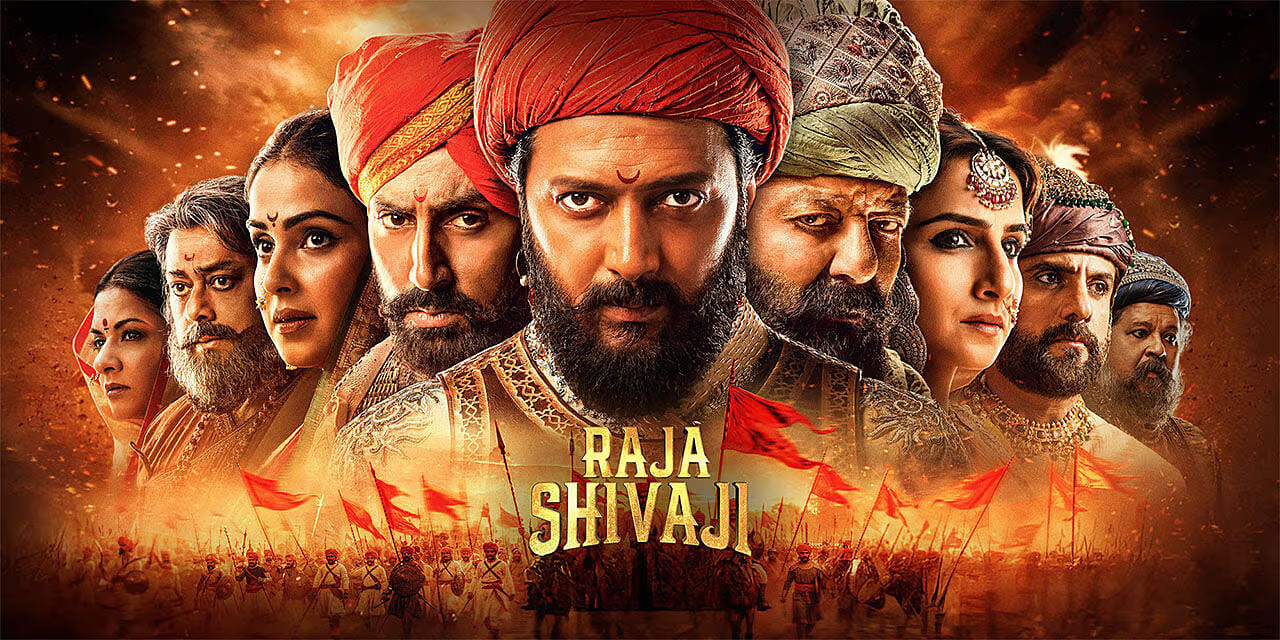

Raja Shivaji review: Hits hard, but not always sharp
Raja Shivaji, a Marathi-Hindi bilingual film written, directed, and headlined by Riteish Deshmukh, brings to the screen a far more significant chapter of Maratha history than recent films like Tanhaji - The Unsung Warriorand Chhaava, as reported by NDTV.
While those films leaned heavily on textbook narratives and heightened them for mass appeal, Raja Shivajitakes a more measured approach while still aiming to engage a wide audience.
The film does not shy away from spectacle—there are elaborate battle sequences, intense duels, and moments of high drama—but these are handled with restraint compared to the overtly stylised action seen in similar historicals. This approach helps the film stand apart, although at times it slightly reduces the larger-than-life impact expected from an epic.
NDTV reports that Raja Shivaji focuses on a crucial phase in the 17th century—the rise of Chhatrapati Shivaji Maharajand the establishment of “Hindavi Swarajya,” a movement that challenged the might of the Mughal Empire.
The narrative spans from 1629, a year before Shivaji’s birth, to 1659, the year of Afzal Khan’s death. As highlighted by NDTV, the film begins with a disclaimer acknowledging that certain elements are not historically accurate, a common practice in Mumbai-made historical dramas.
Rather than portraying Shivaji as an invincible superhero, the film presents him as a layered and human character. He is shown as a son, brother, husband, and ruler dealing with personal struggles while striving to rally support for Swarajya. Although the narrative grants him a divine aura, it ensures he remains grounded and relatable.
Shivaji’s primary adversary is Afzal Khan, portrayed by Sanjay Dutt, a formidable Bijapur commander intent on halting the Maratha rise. The film, however, avoids framing the conflict along purely religious lines. Instead, it focuses on oppression and injustice, even depicting antagonists from Shivaji’s own faith when they align with tyranny.
The narrative highlights Shivaji’s mission to free his people, protect their land and language, and establish self-rule. Figures like Mohammad Adil Shah (Amole Gupte) and Emperor Shah Jahan (Fardeen Khan) appear but remain in the background, as the story stays centred on the looming threat posed by Afzal Khan.
The build-up to the climactic encounter between Shivaji and Afzal Khan is effectively handled, with sharp editing maintaining tension. Supporting performances by Sachin Khedekar, Jitendra Joshi, and Mohit Takalkar add depth, particularly during the negotiation sequences leading up to the final confrontation.
Visually, the film benefits from the work of cinematographer Santosh Sivan, marking his Marathi cinema debut. However, the narrative does not always flow smoothly, with certain sections feeling uneven and some Hindi dialogues lacking impact.
According to NDTV, performances by Riteish Deshmukh and Abhishek Bachchan (who plays Shivaji’s elder brother Sambhaji) hold the film together despite initial doubts about casting. NDTV observes that both actors deliver controlled performances that align with the film’s restrained tone rather than opting for exaggerated dramatics.
The film also gives due importance to its female characters. Vidya Balan, Bhagyashree as Jijabai, and Genelia Deshmukhas Saibai are all given meaningful roles, ensuring they are not sidelined as is often the case in historical epics.
In the end, Raja Shivaji may not always be as sharp as the iconic wagh nakh associated with its protagonist, but it delivers several impactful moments. It chooses restraint over spectacle, raising a key question—whether modern audiences still have the patience for a historical drama that prioritises nuance over noise.
Raja Shivaji, a Marathi-Hindi bilingual film written, directed, and headlined by Riteish Deshmukh, brings to the screen a far more significant chapter of Maratha history than recent films like Tanhaji - The Unsung Warriorand Chhaava, as reported by NDTV.
While those films leaned heavily on textbook...
Raja Shivaji, a Marathi-Hindi bilingual film written, directed, and headlined by Riteish Deshmukh, brings to the screen a far more significant chapter of Maratha history than recent films like Tanhaji - The Unsung Warriorand Chhaava, as reported by NDTV.
While those films leaned heavily on textbook narratives and heightened them for mass appeal, Raja Shivajitakes a more measured approach while still aiming to engage a wide audience.
The film does not shy away from spectacle—there are elaborate battle sequences, intense duels, and moments of high drama—but these are handled with restraint compared to the overtly stylised action seen in similar historicals. This approach helps the film stand apart, although at times it slightly reduces the larger-than-life impact expected from an epic.
NDTV reports that Raja Shivaji focuses on a crucial phase in the 17th century—the rise of Chhatrapati Shivaji Maharajand the establishment of “Hindavi Swarajya,” a movement that challenged the might of the Mughal Empire.
The narrative spans from 1629, a year before Shivaji’s birth, to 1659, the year of Afzal Khan’s death. As highlighted by NDTV, the film begins with a disclaimer acknowledging that certain elements are not historically accurate, a common practice in Mumbai-made historical dramas.
Rather than portraying Shivaji as an invincible superhero, the film presents him as a layered and human character. He is shown as a son, brother, husband, and ruler dealing with personal struggles while striving to rally support for Swarajya. Although the narrative grants him a divine aura, it ensures he remains grounded and relatable.
Shivaji’s primary adversary is Afzal Khan, portrayed by Sanjay Dutt, a formidable Bijapur commander intent on halting the Maratha rise. The film, however, avoids framing the conflict along purely religious lines. Instead, it focuses on oppression and injustice, even depicting antagonists from Shivaji’s own faith when they align with tyranny.
The narrative highlights Shivaji’s mission to free his people, protect their land and language, and establish self-rule. Figures like Mohammad Adil Shah (Amole Gupte) and Emperor Shah Jahan (Fardeen Khan) appear but remain in the background, as the story stays centred on the looming threat posed by Afzal Khan.
The build-up to the climactic encounter between Shivaji and Afzal Khan is effectively handled, with sharp editing maintaining tension. Supporting performances by Sachin Khedekar, Jitendra Joshi, and Mohit Takalkar add depth, particularly during the negotiation sequences leading up to the final confrontation.
Visually, the film benefits from the work of cinematographer Santosh Sivan, marking his Marathi cinema debut. However, the narrative does not always flow smoothly, with certain sections feeling uneven and some Hindi dialogues lacking impact.
According to NDTV, performances by Riteish Deshmukh and Abhishek Bachchan (who plays Shivaji’s elder brother Sambhaji) hold the film together despite initial doubts about casting. NDTV observes that both actors deliver controlled performances that align with the film’s restrained tone rather than opting for exaggerated dramatics.
The film also gives due importance to its female characters. Vidya Balan, Bhagyashree as Jijabai, and Genelia Deshmukhas Saibai are all given meaningful roles, ensuring they are not sidelined as is often the case in historical epics.
In the end, Raja Shivaji may not always be as sharp as the iconic wagh nakh associated with its protagonist, but it delivers several impactful moments. It chooses restraint over spectacle, raising a key question—whether modern audiences still have the patience for a historical drama that prioritises nuance over noise.




Leave a Comment