

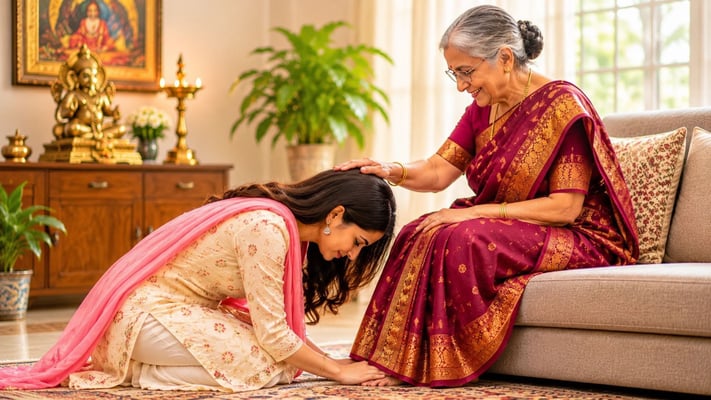

Why do Indians fold their hands and touch elders' feet- The science behind these rituals
From folding hands in Namaste to bowing before elders, India's everyday gestures carry centuries of cultural meaning. But what do these traditions really signify?
In India, respect is often expressed without saying a word. A simple joining of palms, a gentle bow of the head or touching an elder's feet can communicate emotions that go far beyond an ordinary greeting.
These gestures are deeply woven into Indian culture and traditions. Known as Namaskara and Charanasparsha, they represent respect, humility, reverence and the recognition of wisdom.
While these practices may appear simple, their meanings are rooted in centuries of social customs, spiritual beliefs and human relationships.
Namaste: More Than Just a Greeting
The familiar gesture of joining both palms in front of the chest is known as Namaskara or Namaste. Across India, it is used to greet people, welcome guests and offer prayers to deities.
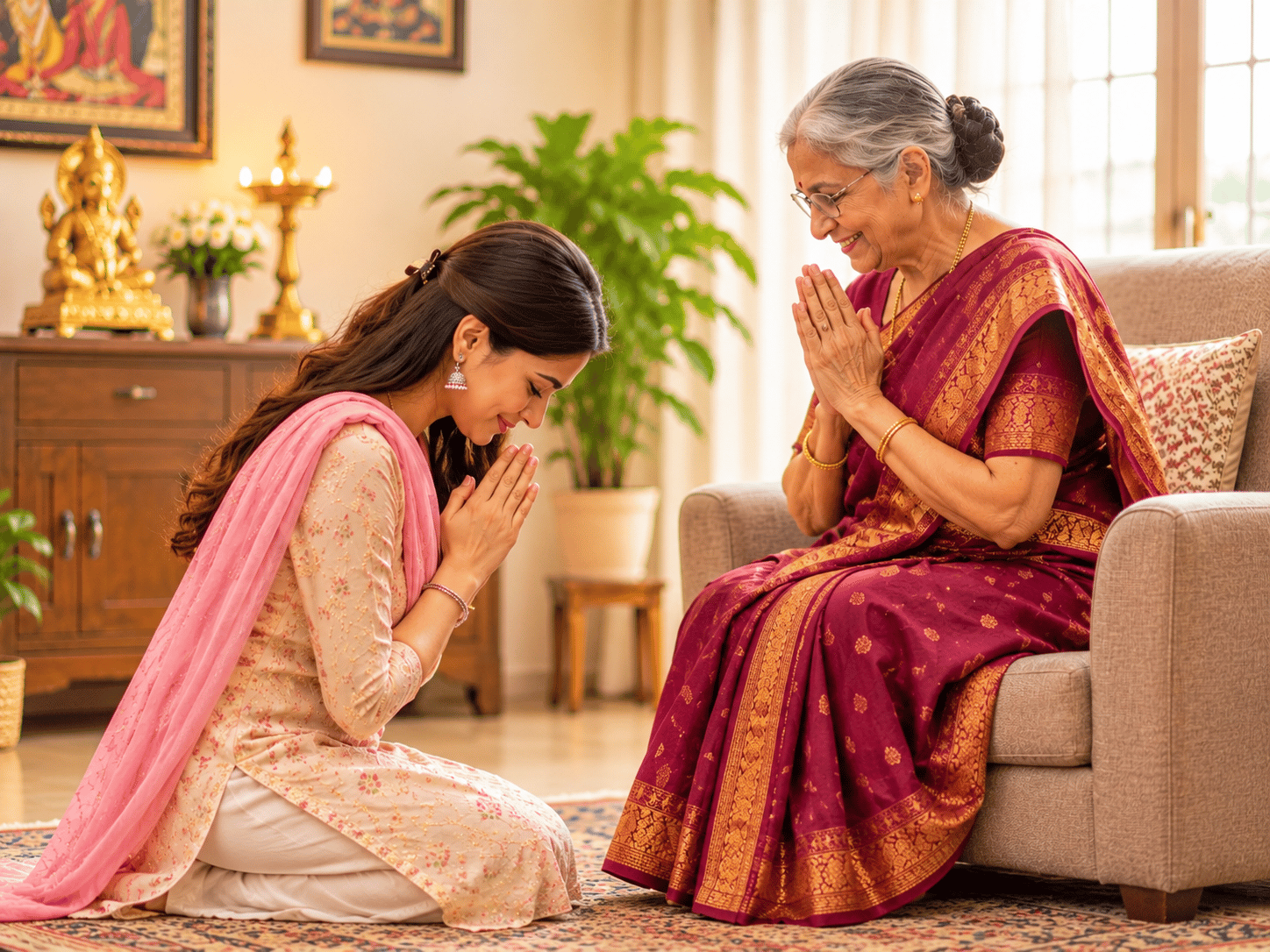
The word Namaste comes from Sanskrit, combining 'Namaha', meaning obeisance or reverence, and 'Te', meaning you. In essence, it conveys the sentiment of offering respect to another person.
Unlike a handshake, Namaste does not require physical contact. It communicates warmth, acknowledgement, friendship and respect through a simple gesture.
The position of the hands and the accompanying body language can also change its meaning. A slight bow of the head can express a warm greeting, while raising the joined palms towards the forehead can convey deeper reverence.
In Indian classical dance, hand gestures known as Hastamudras are used to communicate different emotions, expressions and stories. Namaskara is among the familiar gestures within this rich tradition.
The gesture also has several variations. A Namaste accompanied by a smile conveys warmth and welcome, while a deeper bow can express devotion or gratitude. The Uddanda Namaskara, performed by lying face down with the body stretched out, represents a profound expression of reverence before a deity.
Interestingly, even the way people smile, move their heads or position their hands while greeting someone can add a personal touch to this age-old practice.
Charanasparsha: Why Do Indians Touch the Feet of Elders?
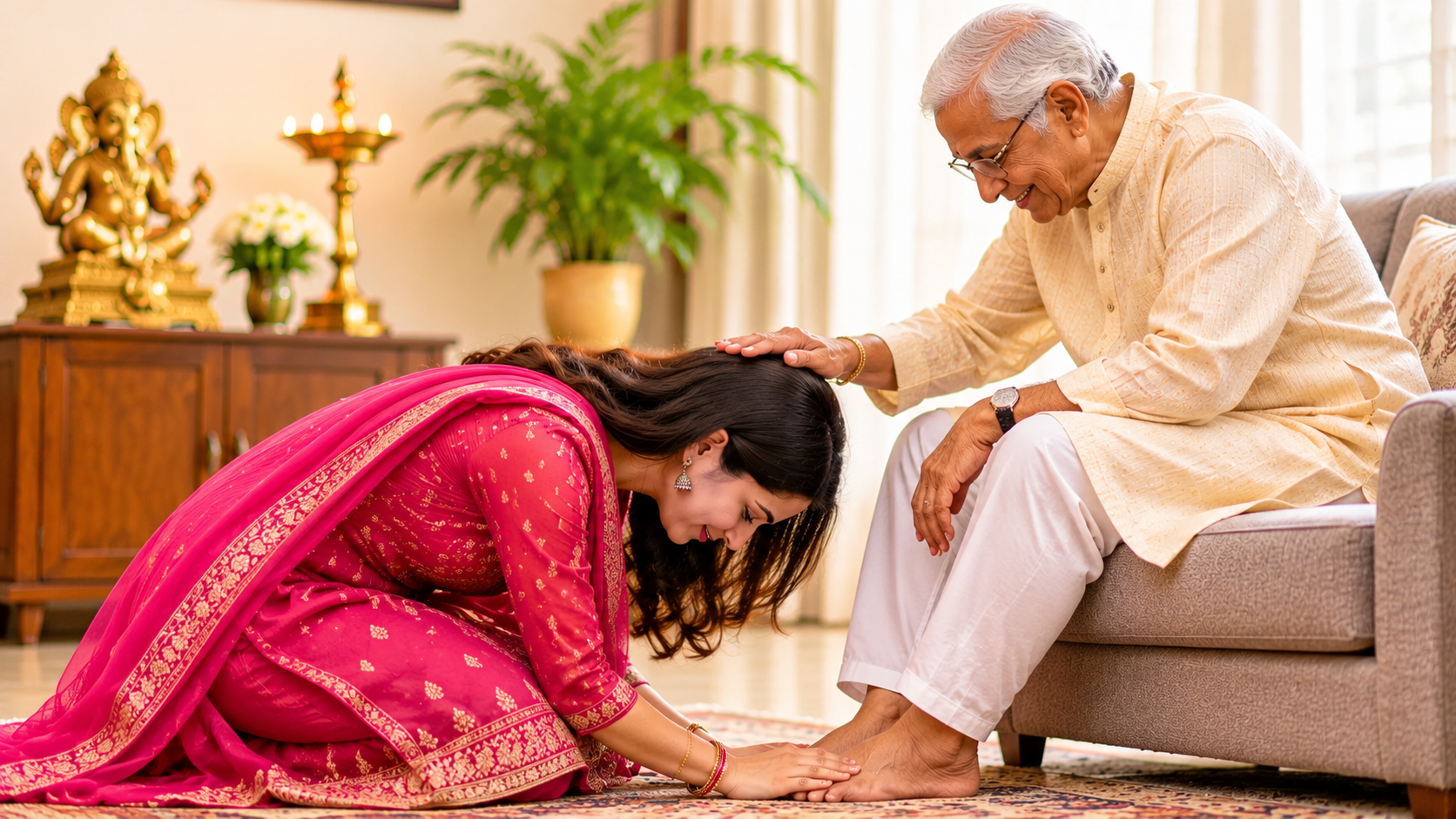
One of the most recognisable Indian traditions is Charanasparsha, the act of bending down to touch the feet of elders.
But why do people follow this practice?
At its heart lies the belief that wisdom is not measured merely by education, wealth or social position. It is also shaped by age, experience and the many lessons life offers along the way.
In traditional Indian society, elders are respected for the experiences they have gathered over the years. Touching their feet is a way of acknowledging that experience, expressing humility and seeking their blessings.
The feet also carry symbolic significance. They represent the journey a person has travelled through life, the experiences encountered and the lessons gathered along the way.
The gesture is not simply about physical submission. For many families, it is an expression of affection, gratitude and a connection between generations.
In certain spiritual traditions, the practice extends beyond family relationships. A spiritually revered person or saint may receive Charanasparsha from devotees, while their Paduka, or sacred footwear, may continue to be respected and worshipped even after their passing.
Is Touching Feet a Sign of Inequality?
Not everyone interprets Charanasparsha in the same way. Some question whether bowing before another individual contradicts the idea that all human beings are equal.
However, within the traditional cultural understanding, the gesture is generally intended to express respect rather than establish superiority.
Interestingly, gestures of bowing and lowering the body to acknowledge another individual are also observed in different animal species and human societies. Across cultures, such gestures have often been associated with respect, submission or recognition of authority.
In India, Charanasparsha has developed a distinct cultural and emotional meaning, particularly within family relationships and religious practices.
Traditions That Continue to Connect Generations
Namaste and Charanasparsha may appear to be ordinary gestures, but they represent a much larger cultural philosophy.
One communicates respect through folded hands, while the other expresses humility through a bow. Both reflect the importance Indian traditions place on acknowledging others, valuing experience and maintaining relationships.
These practices continue across generations and are found in different communities and religious traditions throughout India.
As lifestyles evolve and social customs adapt to changing times, the gestures remain familiar reminders of the values that connect families and communities.
Sometimes, the deepest expressions of respect do not need words. They are simply found in a pair of folded hands or a gentle bow before someone who has walked the path of life before us.
From folding hands in Namaste to bowing before elders, India's everyday gestures carry centuries of cultural meaning. But what do these traditions really signify?
In India, respect is often expressed without saying a word. A simple joining of palms, a gentle bow of the head or touching an elder's...
From folding hands in Namaste to bowing before elders, India's everyday gestures carry centuries of cultural meaning. But what do these traditions really signify?
In India, respect is often expressed without saying a word. A simple joining of palms, a gentle bow of the head or touching an elder's feet can communicate emotions that go far beyond an ordinary greeting.
These gestures are deeply woven into Indian culture and traditions. Known as Namaskara and Charanasparsha, they represent respect, humility, reverence and the recognition of wisdom.
While these practices may appear simple, their meanings are rooted in centuries of social customs, spiritual beliefs and human relationships.
Namaste: More Than Just a Greeting
The familiar gesture of joining both palms in front of the chest is known as Namaskara or Namaste. Across India, it is used to greet people, welcome guests and offer prayers to deities.

The word Namaste comes from Sanskrit, combining 'Namaha', meaning obeisance or reverence, and 'Te', meaning you. In essence, it conveys the sentiment of offering respect to another person.
Unlike a handshake, Namaste does not require physical contact. It communicates warmth, acknowledgement, friendship and respect through a simple gesture.
The position of the hands and the accompanying body language can also change its meaning. A slight bow of the head can express a warm greeting, while raising the joined palms towards the forehead can convey deeper reverence.
In Indian classical dance, hand gestures known as Hastamudras are used to communicate different emotions, expressions and stories. Namaskara is among the familiar gestures within this rich tradition.
The gesture also has several variations. A Namaste accompanied by a smile conveys warmth and welcome, while a deeper bow can express devotion or gratitude. The Uddanda Namaskara, performed by lying face down with the body stretched out, represents a profound expression of reverence before a deity.
Interestingly, even the way people smile, move their heads or position their hands while greeting someone can add a personal touch to this age-old practice.
Charanasparsha: Why Do Indians Touch the Feet of Elders?

One of the most recognisable Indian traditions is Charanasparsha, the act of bending down to touch the feet of elders.
But why do people follow this practice?
At its heart lies the belief that wisdom is not measured merely by education, wealth or social position. It is also shaped by age, experience and the many lessons life offers along the way.
In traditional Indian society, elders are respected for the experiences they have gathered over the years. Touching their feet is a way of acknowledging that experience, expressing humility and seeking their blessings.
The feet also carry symbolic significance. They represent the journey a person has travelled through life, the experiences encountered and the lessons gathered along the way.
The gesture is not simply about physical submission. For many families, it is an expression of affection, gratitude and a connection between generations.
In certain spiritual traditions, the practice extends beyond family relationships. A spiritually revered person or saint may receive Charanasparsha from devotees, while their Paduka, or sacred footwear, may continue to be respected and worshipped even after their passing.
Is Touching Feet a Sign of Inequality?
Not everyone interprets Charanasparsha in the same way. Some question whether bowing before another individual contradicts the idea that all human beings are equal.
However, within the traditional cultural understanding, the gesture is generally intended to express respect rather than establish superiority.
Interestingly, gestures of bowing and lowering the body to acknowledge another individual are also observed in different animal species and human societies. Across cultures, such gestures have often been associated with respect, submission or recognition of authority.
In India, Charanasparsha has developed a distinct cultural and emotional meaning, particularly within family relationships and religious practices.
Traditions That Continue to Connect Generations
Namaste and Charanasparsha may appear to be ordinary gestures, but they represent a much larger cultural philosophy.
One communicates respect through folded hands, while the other expresses humility through a bow. Both reflect the importance Indian traditions place on acknowledging others, valuing experience and maintaining relationships.
These practices continue across generations and are found in different communities and religious traditions throughout India.
As lifestyles evolve and social customs adapt to changing times, the gestures remain familiar reminders of the values that connect families and communities.
Sometimes, the deepest expressions of respect do not need words. They are simply found in a pair of folded hands or a gentle bow before someone who has walked the path of life before us.


Leave a Comment