

The India we carry in our suitcases: What Independence means when home is far away
Every Indian who has moved abroad knows that a suitcase rarely contains just clothes.
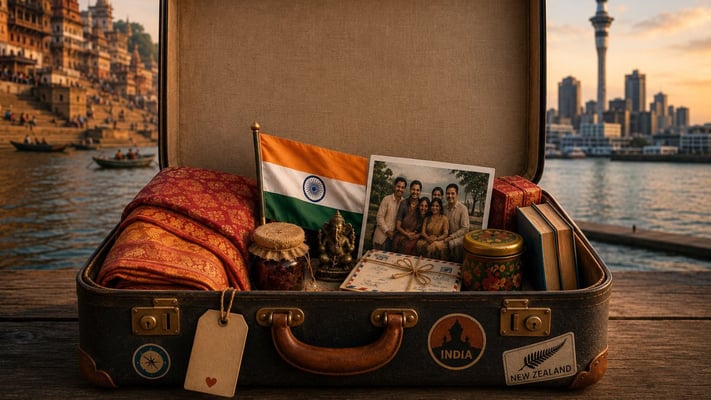
Between the neatly folded outfits, books, medicines and carefully packed snacks are pieces of a life left behind, a packet of masala, a jar of pickle, photographs of family, a favourite dupatta, a pressure cooker, a small idol, perhaps even a steel container that has travelled farther than anyone expected.
These objects may seem ordinary, but for Indians living away from home, they often carry something much larger: memory, identity and belonging.
As India celebrates its Independence Day, the familiar images of the tricolour, flag-hoisting ceremonies and patriotic songs take on a different meaning for the Indian diaspora. Thousands of kilometres away from India, Independence Day can become a moment to ask a deeply personal question: What part of India do we carry with us when we leave?
More than a country, a collection of memories
For someone living in New Zealand, India may no longer be a place they wake up in every morning. It becomes a collection of moments.
It is the smell of chai in the kitchen. The sound of a mother calling from another room. The neighbourhood shopkeeper who knew exactly what you wanted. The chaos of a railway station. The first bite of pani puri. Festivals that seemed to transform entire streets overnight.
And sometimes, it is something as simple as hearing your mother tongue unexpectedly in a supermarket in Auckland or Wellington.
Distance has a strange way of making ordinary things precious.
The foods we once took for granted become comfort. Languages become connections. Festivals become occasions to recreate home. Family recipes become traditions worth preserving.
The suitcase tells a story
Ask an Indian family what they carried when they moved abroad, and the answers can be surprisingly revealing.
Some brought spices that were difficult to find overseas. Others packed wedding clothes, religious items, books, photographs or childhood keepsakes. Many carried recipes in their memory rather than on paper.
A suitcase therefore becomes more than luggage. It becomes an informal archive of identity.
For first-generation migrants, these objects can provide continuity, a reminder of who they were before migration changed their surroundings.
For their children, they can become bridges to a country they may know primarily through stories, family photographs, food and annual visits.
Independence, beyond borders
Independence Day is traditionally associated with India's freedom from British rule in 1947. But for Indians living abroad, the occasion can also inspire a more contemporary reflection on what freedom means.
Freedom can mean the ability to build a life somewhere new without abandoning where you came from.
It can mean speaking Hindi, Punjabi, Tamil, Telugu, Gujarati or any other Indian language at home while navigating life in another country.
It can mean teaching children why their grandparents celebrate certain festivals, why particular foods are prepared on special occasions or why a particular song makes the entire family stop and listen.
For the diaspora, cultural identity does not necessarily have to remain frozen in the past. It can evolve.
Indian identity in New Zealand, for instance, can be simultaneously Indian and Kiwi, shaped by two homes, two cultures and multiple generations.
What do we pass on?
Perhaps the most important things Indians carry abroad cannot fit into a suitcase.
They are habits and values.
The instinct to offer food to a guest. The importance placed on family. The tradition of celebrating festivals together. The stories grandparents tell. The songs parents grew up with. The recipes passed from one generation to another.
These are forms of cultural inheritance.
And they become especially important for families raising children abroad.
A child born in New Zealand may grow up surrounded by a different cultural environment from their parents. Yet a simple family dinner, a Diwali celebration, a Bollywood song or a conversation in an Indian language can create a connection to a heritage that exists across generations.
Home can travel
Migration changes the meaning of home.
For some, home remains the house they left behind in India. For others, it becomes the place where their children were born and their new life was built.
For many, it becomes both.
That is perhaps the most beautiful thing about the Indian diaspora: home does not necessarily disappear when you leave it. It travels with you.
It sits in kitchen cupboards, lives in family WhatsApp groups, appears on dinner tables and comes alive during festivals. It survives in accents, memories, photographs and stories.
And once a year, when the Indian flag rises on Independence Day, those memories become part of a larger celebration.
Because independence is not only about remembering where India came from.
For Indians living abroad, it can also be about recognising what India has given them, and what they continue to carry forward.
Sometimes, all of that fits inside a suitcase.
Every Indian who has moved abroad knows that a suitcase rarely contains just clothes.
Between the neatly folded outfits, books, medicines and carefully packed snacks are pieces of a life left behind, a packet of masala, a jar of pickle, photographs of family, a favourite dupatta, a pressure cooker,...
Every Indian who has moved abroad knows that a suitcase rarely contains just clothes.
Between the neatly folded outfits, books, medicines and carefully packed snacks are pieces of a life left behind, a packet of masala, a jar of pickle, photographs of family, a favourite dupatta, a pressure cooker, a small idol, perhaps even a steel container that has travelled farther than anyone expected.
These objects may seem ordinary, but for Indians living away from home, they often carry something much larger: memory, identity and belonging.
As India celebrates its Independence Day, the familiar images of the tricolour, flag-hoisting ceremonies and patriotic songs take on a different meaning for the Indian diaspora. Thousands of kilometres away from India, Independence Day can become a moment to ask a deeply personal question: What part of India do we carry with us when we leave?
More than a country, a collection of memories
For someone living in New Zealand, India may no longer be a place they wake up in every morning. It becomes a collection of moments.
It is the smell of chai in the kitchen. The sound of a mother calling from another room. The neighbourhood shopkeeper who knew exactly what you wanted. The chaos of a railway station. The first bite of pani puri. Festivals that seemed to transform entire streets overnight.
And sometimes, it is something as simple as hearing your mother tongue unexpectedly in a supermarket in Auckland or Wellington.
Distance has a strange way of making ordinary things precious.
The foods we once took for granted become comfort. Languages become connections. Festivals become occasions to recreate home. Family recipes become traditions worth preserving.
The suitcase tells a story
Ask an Indian family what they carried when they moved abroad, and the answers can be surprisingly revealing.
Some brought spices that were difficult to find overseas. Others packed wedding clothes, religious items, books, photographs or childhood keepsakes. Many carried recipes in their memory rather than on paper.
A suitcase therefore becomes more than luggage. It becomes an informal archive of identity.
For first-generation migrants, these objects can provide continuity, a reminder of who they were before migration changed their surroundings.
For their children, they can become bridges to a country they may know primarily through stories, family photographs, food and annual visits.
Independence, beyond borders
Independence Day is traditionally associated with India's freedom from British rule in 1947. But for Indians living abroad, the occasion can also inspire a more contemporary reflection on what freedom means.
Freedom can mean the ability to build a life somewhere new without abandoning where you came from.
It can mean speaking Hindi, Punjabi, Tamil, Telugu, Gujarati or any other Indian language at home while navigating life in another country.
It can mean teaching children why their grandparents celebrate certain festivals, why particular foods are prepared on special occasions or why a particular song makes the entire family stop and listen.
For the diaspora, cultural identity does not necessarily have to remain frozen in the past. It can evolve.
Indian identity in New Zealand, for instance, can be simultaneously Indian and Kiwi, shaped by two homes, two cultures and multiple generations.
What do we pass on?
Perhaps the most important things Indians carry abroad cannot fit into a suitcase.
They are habits and values.
The instinct to offer food to a guest. The importance placed on family. The tradition of celebrating festivals together. The stories grandparents tell. The songs parents grew up with. The recipes passed from one generation to another.
These are forms of cultural inheritance.
And they become especially important for families raising children abroad.
A child born in New Zealand may grow up surrounded by a different cultural environment from their parents. Yet a simple family dinner, a Diwali celebration, a Bollywood song or a conversation in an Indian language can create a connection to a heritage that exists across generations.
Home can travel
Migration changes the meaning of home.
For some, home remains the house they left behind in India. For others, it becomes the place where their children were born and their new life was built.
For many, it becomes both.
That is perhaps the most beautiful thing about the Indian diaspora: home does not necessarily disappear when you leave it. It travels with you.
It sits in kitchen cupboards, lives in family WhatsApp groups, appears on dinner tables and comes alive during festivals. It survives in accents, memories, photographs and stories.
And once a year, when the Indian flag rises on Independence Day, those memories become part of a larger celebration.
Because independence is not only about remembering where India came from.
For Indians living abroad, it can also be about recognising what India has given them, and what they continue to carry forward.
Sometimes, all of that fits inside a suitcase.





Leave a Comment