

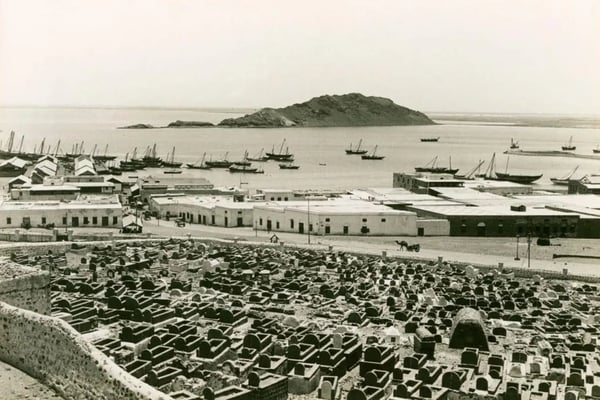

When Dubai almost became a part of India
In the winter of 1956, British journalist David Holden arrived in Bahrain, then a British protectorate, expecting to cover the Gulf region. According to the BBC, what he encountered instead was a world that still carried unmistakable echoes of British India, despite being hundreds of miles away from the subcontinent.
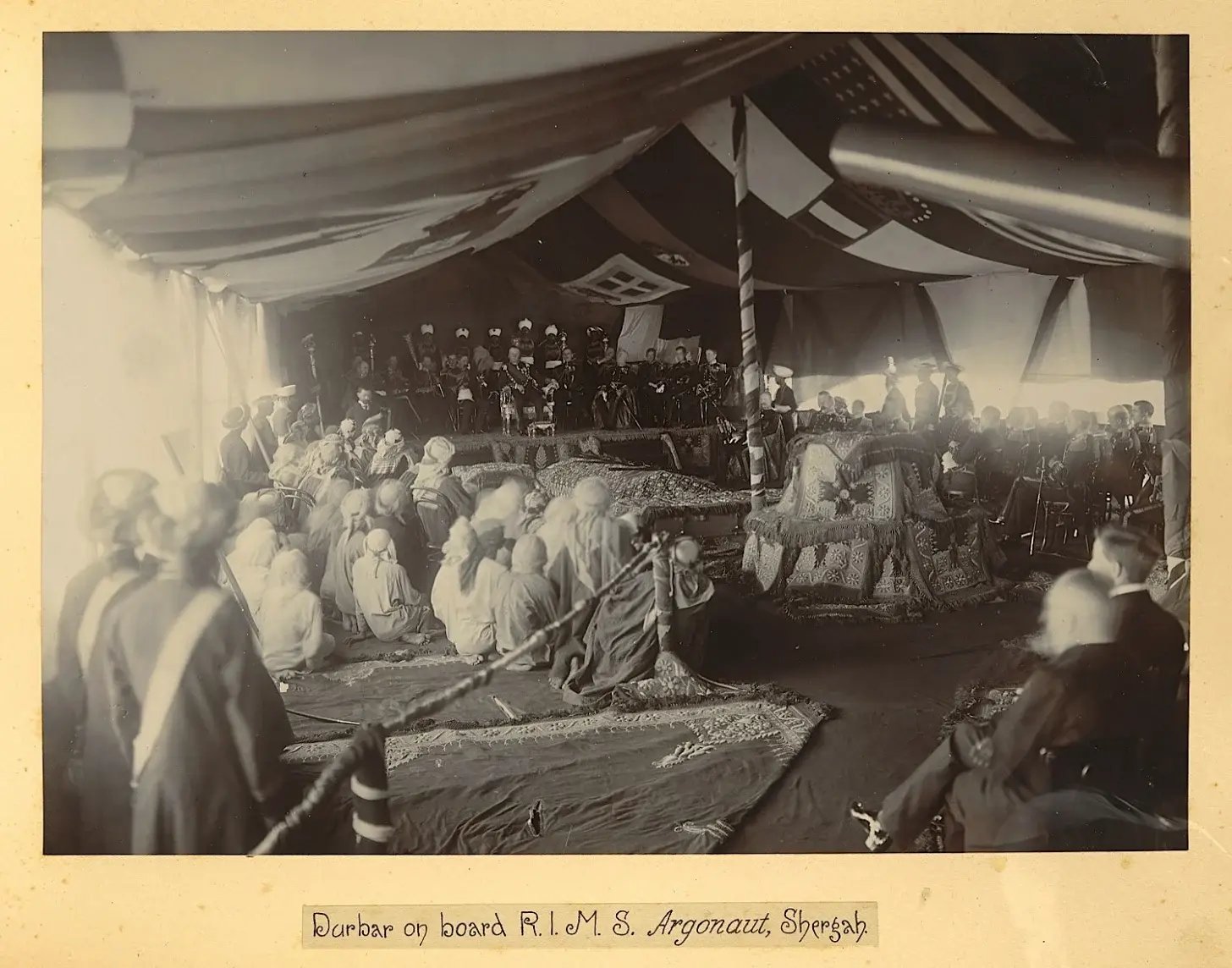
Holden, who had previously worked as a geography teacher before becoming a correspondent for The Times, found himself attending a garden durbar celebrating Queen Victoria's appointment as Empress of India. According to the BBC, his travels across Bahrain, Dubai, Abu Dhabi and Oman revealed striking reminders of the British Raj that had continued long after its decline in India.
"The Raj maintains here a slightly phantasmal sway," wrote Holden, "a situation rich in anomaly and anachronism… The servants are all bearers, the laundryman a dhobi, and the watchman a chowkidar," he wrote, "and on Sundays the guests are confronted with the ancient, and agreeable, Anglo-Indian ritual of a mountainous curry lunch."
According to the BBC, the influence of British India extended beyond language and customs. The Sultan of Oman, educated in Rajasthan, reportedly spoke Urdu more fluently than Arabic, while soldiers serving in Qu'aiti, in what is now eastern Yemen, still wore obsolete Hyderabadi military uniforms.
The atmosphere was so deeply rooted in the Raj that even the Governor of Aden described the region as though time had stopped decades earlier.
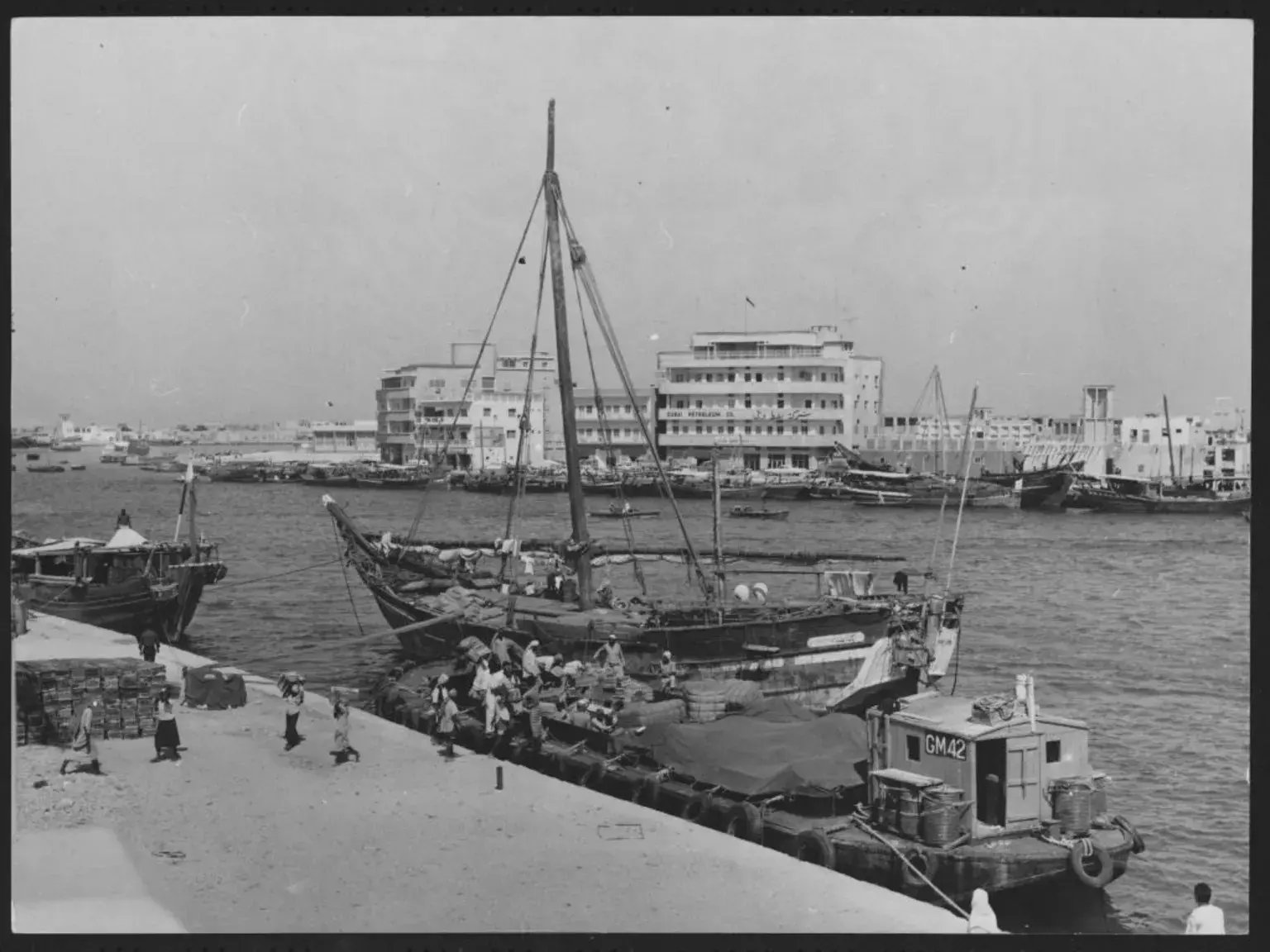
"One had an extraordinarily powerful impression that all the clocks here had stopped seventy years ago; that the Raj was at its height, Victoria on the throne, Gilbert and Sullivan a fresh and revolutionary phenomenon, and Kipling a dangerous debunker, so strong was the link from Delhi via Hyderabad to the South Arabian shore."
According to the BBC, although largely forgotten today, nearly one-third of the Arabian Peninsula was administered as part of the British Indian Empire during the early twentieth century. From Aden to Kuwait, a vast crescent of protectorates was governed from Delhi, supervised by the Indian Political Service, protected by Indian troops, and ultimately answerable to the Viceroy of India.
Under Britain's Interpretation Act of 1889, these territories were legally considered part of India. According to the BBC, official records of India's princely states even listed Abu Dhabi alphabetically before many well-known Indian kingdoms, while Viceroy Lord Curzon argued that Oman should be treated "as much a Native State of the Indian Empire as Lus Beyla or Kelat [present day Balochistan]".
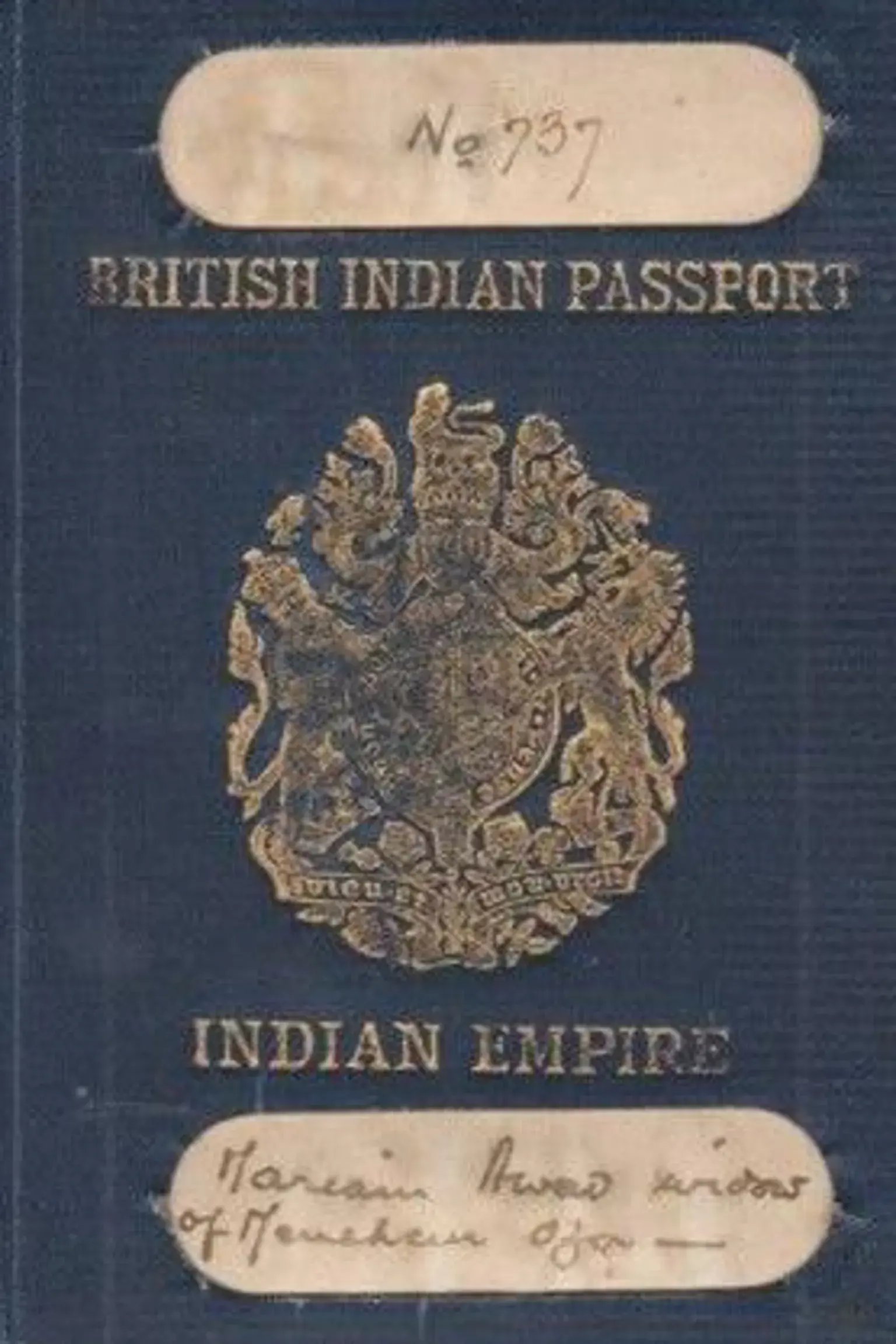
Indian passports were issued as far west as Aden, now part of Yemen, which functioned as the westernmost port of British India and was administered under Bombay Province. According to the BBC, when Mahatma Gandhi visited Aden in 1931, he found many young Arabs identifying themselves as Indian nationalists.
Despite the scale of India's administrative role in Arabia, very few people in Britain or India knew about it. According to the BBC, maps showing the true extent of the Indian Empire remained classified to avoid provoking first the Ottoman Empire and later Saudi rulers. Public documents deliberately omitted many of the Arabian territories.
As one Royal Asiatic Society lecturer observed:
"As a jealous sheikh veils his favourite wife, so the British authorities shroud conditions in the Arab states in such thick mystery that ill-disposed propagandists might almost be excused for thinking that something dreadful is going on there."
By the 1920s, however, political thinking in India had begun to change. According to the BBC, Indian nationalists increasingly viewed India as a civilisation defined by culture and geography rather than by the boundaries of the British Empire. London recognised this shift as an opportunity to redraw imperial borders.
On April 1, 1937, Aden became the first Arabian territory to be separated from British India and transferred directly to Britain's Colonial Empire.
A telegram from King George VI announced the historic administrative change:
"Aden has been an integral part of British Indian administration for nearly 100 years. That political association with my Indian Empire will now be broken, and Aden will take its place in my Colonial Empire."
According to the BBC, although Aden had been separated, the Gulf protectorates themselves continued to remain under the Government of India for another decade.
As Indian independence approached, British officials debated whether responsibility for the Persian Gulf should pass to India or Pakistan. According to the BBC, officials in Delhi showed surprisingly little interest in retaining influence over the Gulf.
One British diplomat stationed in Tehran even remarked on the "apparent unanimity" of "officials in Delhi … that the Persian Gulf was of little interest to the Government of India."
Gulf Resident William Hay also opposed the idea of transferring responsibility to either new nation.
"It would clearly have been inappropriate to hand over responsibility for dealing with the Gulf Arabs to Indians or Pakistanis."
According to the BBC, the final administrative separation came on April 1, 1947, when the Gulf states—including Dubai, Abu Dhabi, Bahrain, Qatar, Kuwait and others—were formally detached from British India, several months before India and Pakistan themselves gained independence.
The timing proved significant. Months later, as India and Pakistan integrated hundreds of princely states into the newly independent nations, the Gulf protectorates no longer formed part of the administrative framework.
According to the BBC, had the transfer not taken place, it is possible that many Gulf states could have become part of either India or Pakistan after independence, much like Hyderabad, Jaipur or Bahawalpur.
British Prime Minister Clement Attlee reportedly proposed withdrawing from the Arabian territories alongside Britain's exit from India, but the suggestion was rejected. Instead, Britain retained control over the Gulf for another 24 years, creating what scholars later described as an "Arabian Raj" administered directly from London rather than Delhi.
As Gulf historian Paul Rich described it, this was:
"the Indian Empire's last redoubt, just as Goa was Portuguese India's last solitary vestige, or Pondicherry was the tag-end of French India".
According to the BBC, many aspects of the old Indian administration remained in place long after 1947. The official currency continued to be the Indian rupee, transport links remained dominated by the British India Steam Navigation Company, and dozens of Arabian princely states were still administered by British Residents who had spent their careers in the Indian Political Service.
Britain finally withdrew from the Gulf in 1971 as part of its broader decision to end its military commitments east of the Suez Canal.
Reflecting on that historic transition, David Holden wrote:
"For the first time since the heyday of Britain's East India Company, all the territories around the Gulf will be at liberty to seek their own salvation without the threat of British intervention, or the comfort of British protection. This final remnant of the British Raj - for that, in effect, is what it is – has been for some years now an obvious, if in some ways charming, anachronism … But its day is over."
According to the BBC, the Gulf monarchies have largely erased memories of their administrative links with British India from their national narratives. While colonial ties with Britain are widely acknowledged, governance from Delhi has faded from public memory, helping reinforce the image of uninterrupted national sovereignty.
Yet personal memories have survived. In 2009, Gulf scholar Paul Rich interviewed an elderly Qatari man who vividly remembered social relations during British rule.
He "still got angry when he related to me the beating he received when as a young boy of seven or eight he stole an orange, a fruit which he had never seen before, from an Indian employee of the British agent".
"The Indians, he said, were a privileged caste during his youth, and it gave him immense pleasure that the tables had turned and they now came to the Gulf as servants."
Today, Dubai stands as one of the world's leading financial and commercial centres, a dramatic transformation from its days as a small administrative outpost of British India. According to the BBC, few of the millions of Indians and Pakistanis living in the Gulf today realise there was once a genuine possibility that these oil-rich Gulf states might have become part of independent India or Pakistan.
Instead, a quiet administrative decision made in the final months of the British Empire permanently severed that connection. More than seven decades later, the political link has disappeared, but its historical echoes continue to reveal an extraordinary chapter in the intertwined histories of India and the Gulf.
In the winter of 1956, British journalist David Holden arrived in Bahrain, then a British protectorate, expecting to cover the Gulf region. According to the BBC, what he encountered instead was a world that still carried unmistakable echoes of British India, despite being hundreds of miles away...
In the winter of 1956, British journalist David Holden arrived in Bahrain, then a British protectorate, expecting to cover the Gulf region. According to the BBC, what he encountered instead was a world that still carried unmistakable echoes of British India, despite being hundreds of miles away from the subcontinent.
Holden, who had previously worked as a geography teacher before becoming a correspondent for The Times, found himself attending a garden durbar celebrating Queen Victoria's appointment as Empress of India. According to the BBC, his travels across Bahrain, Dubai, Abu Dhabi and Oman revealed striking reminders of the British Raj that had continued long after its decline in India.
"The Raj maintains here a slightly phantasmal sway," wrote Holden, "a situation rich in anomaly and anachronism… The servants are all bearers, the laundryman a dhobi, and the watchman a chowkidar," he wrote, "and on Sundays the guests are confronted with the ancient, and agreeable, Anglo-Indian ritual of a mountainous curry lunch."
According to the BBC, the influence of British India extended beyond language and customs. The Sultan of Oman, educated in Rajasthan, reportedly spoke Urdu more fluently than Arabic, while soldiers serving in Qu'aiti, in what is now eastern Yemen, still wore obsolete Hyderabadi military uniforms.
The atmosphere was so deeply rooted in the Raj that even the Governor of Aden described the region as though time had stopped decades earlier.

"One had an extraordinarily powerful impression that all the clocks here had stopped seventy years ago; that the Raj was at its height, Victoria on the throne, Gilbert and Sullivan a fresh and revolutionary phenomenon, and Kipling a dangerous debunker, so strong was the link from Delhi via Hyderabad to the South Arabian shore."
According to the BBC, although largely forgotten today, nearly one-third of the Arabian Peninsula was administered as part of the British Indian Empire during the early twentieth century. From Aden to Kuwait, a vast crescent of protectorates was governed from Delhi, supervised by the Indian Political Service, protected by Indian troops, and ultimately answerable to the Viceroy of India.
Under Britain's Interpretation Act of 1889, these territories were legally considered part of India. According to the BBC, official records of India's princely states even listed Abu Dhabi alphabetically before many well-known Indian kingdoms, while Viceroy Lord Curzon argued that Oman should be treated "as much a Native State of the Indian Empire as Lus Beyla or Kelat [present day Balochistan]".
Indian passports were issued as far west as Aden, now part of Yemen, which functioned as the westernmost port of British India and was administered under Bombay Province. According to the BBC, when Mahatma Gandhi visited Aden in 1931, he found many young Arabs identifying themselves as Indian nationalists.
Despite the scale of India's administrative role in Arabia, very few people in Britain or India knew about it. According to the BBC, maps showing the true extent of the Indian Empire remained classified to avoid provoking first the Ottoman Empire and later Saudi rulers. Public documents deliberately omitted many of the Arabian territories.

As one Royal Asiatic Society lecturer observed:
"As a jealous sheikh veils his favourite wife, so the British authorities shroud conditions in the Arab states in such thick mystery that ill-disposed propagandists might almost be excused for thinking that something dreadful is going on there."
By the 1920s, however, political thinking in India had begun to change. According to the BBC, Indian nationalists increasingly viewed India as a civilisation defined by culture and geography rather than by the boundaries of the British Empire. London recognised this shift as an opportunity to redraw imperial borders.
On April 1, 1937, Aden became the first Arabian territory to be separated from British India and transferred directly to Britain's Colonial Empire.
A telegram from King George VI announced the historic administrative change:
"Aden has been an integral part of British Indian administration for nearly 100 years. That political association with my Indian Empire will now be broken, and Aden will take its place in my Colonial Empire."
According to the BBC, although Aden had been separated, the Gulf protectorates themselves continued to remain under the Government of India for another decade.
As Indian independence approached, British officials debated whether responsibility for the Persian Gulf should pass to India or Pakistan. According to the BBC, officials in Delhi showed surprisingly little interest in retaining influence over the Gulf.
One British diplomat stationed in Tehran even remarked on the "apparent unanimity" of "officials in Delhi … that the Persian Gulf was of little interest to the Government of India."
Gulf Resident William Hay also opposed the idea of transferring responsibility to either new nation.
"It would clearly have been inappropriate to hand over responsibility for dealing with the Gulf Arabs to Indians or Pakistanis."
According to the BBC, the final administrative separation came on April 1, 1947, when the Gulf states—including Dubai, Abu Dhabi, Bahrain, Qatar, Kuwait and others—were formally detached from British India, several months before India and Pakistan themselves gained independence.
The timing proved significant. Months later, as India and Pakistan integrated hundreds of princely states into the newly independent nations, the Gulf protectorates no longer formed part of the administrative framework.
According to the BBC, had the transfer not taken place, it is possible that many Gulf states could have become part of either India or Pakistan after independence, much like Hyderabad, Jaipur or Bahawalpur.
British Prime Minister Clement Attlee reportedly proposed withdrawing from the Arabian territories alongside Britain's exit from India, but the suggestion was rejected. Instead, Britain retained control over the Gulf for another 24 years, creating what scholars later described as an "Arabian Raj" administered directly from London rather than Delhi.
As Gulf historian Paul Rich described it, this was:
"the Indian Empire's last redoubt, just as Goa was Portuguese India's last solitary vestige, or Pondicherry was the tag-end of French India".
According to the BBC, many aspects of the old Indian administration remained in place long after 1947. The official currency continued to be the Indian rupee, transport links remained dominated by the British India Steam Navigation Company, and dozens of Arabian princely states were still administered by British Residents who had spent their careers in the Indian Political Service.
Britain finally withdrew from the Gulf in 1971 as part of its broader decision to end its military commitments east of the Suez Canal.
Reflecting on that historic transition, David Holden wrote:
"For the first time since the heyday of Britain's East India Company, all the territories around the Gulf will be at liberty to seek their own salvation without the threat of British intervention, or the comfort of British protection. This final remnant of the British Raj - for that, in effect, is what it is – has been for some years now an obvious, if in some ways charming, anachronism … But its day is over."

According to the BBC, the Gulf monarchies have largely erased memories of their administrative links with British India from their national narratives. While colonial ties with Britain are widely acknowledged, governance from Delhi has faded from public memory, helping reinforce the image of uninterrupted national sovereignty.
Yet personal memories have survived. In 2009, Gulf scholar Paul Rich interviewed an elderly Qatari man who vividly remembered social relations during British rule.
He "still got angry when he related to me the beating he received when as a young boy of seven or eight he stole an orange, a fruit which he had never seen before, from an Indian employee of the British agent".
"The Indians, he said, were a privileged caste during his youth, and it gave him immense pleasure that the tables had turned and they now came to the Gulf as servants."
Today, Dubai stands as one of the world's leading financial and commercial centres, a dramatic transformation from its days as a small administrative outpost of British India. According to the BBC, few of the millions of Indians and Pakistanis living in the Gulf today realise there was once a genuine possibility that these oil-rich Gulf states might have become part of independent India or Pakistan.
Instead, a quiet administrative decision made in the final months of the British Empire permanently severed that connection. More than seven decades later, the political link has disappeared, but its historical echoes continue to reveal an extraordinary chapter in the intertwined histories of India and the Gulf.





Leave a Comment