




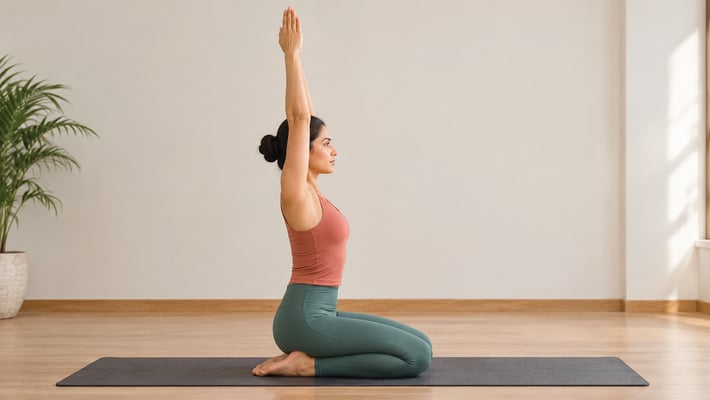



Parvatasana is derived from the Sanskrit words Parvata (Mountain) and Asana (pose) and is also known as Mountain Pose. It can be practised while sitting in Vajrasana, Padmasana or Sukhasana.

PARVATASANA IN VAJRASANA (MOUNTAIN POSE IN VAJRASANA)
HOW TO SIT AND PRACTISE PARVATASANA IN VAJRASANA
Sit in Vajrasana with your back and neck straight and your shoulders relaxed.
Rest your hands on your knees with your palms facing upward.

Inhale and slowly raise both arms overhead.
Join your palms above your head in a Namaskara pose, keeping your elbows straight and your arms extended upwards.
Hold the position for a few seconds, focusing on your breathing and keeping your spine aligned.
As you exhale, slowly lower your arms back to your sides with your palms facing outward and return to Vajrasana.
Repeat 5 times, coordinating the movement with your inhalation and exhalation.
FOR BEGINNERS
First, practise sitting in Vajrasana or if doing Parvatasana in Padmasana or Sukhasana.
Start by holding the pose for a few seconds then slowly increase the duration as you become more comfortable.
Practise under guidance if you are a beginner to ensure proper alignment and prevent strain.
THE BENEFITS OF PARVATASANA
It helps stretch the upper body.
It strengthens the muscles along the spine, arms and shoulders.
It helps reduce back pain.
It tones the abdominal muscles, helps reduce abdominal fat and strengthens the core.
It improves digestion.
It brings stability, resilience and calmness.
WHEN TO AVOID PARVATASANA
Avoid if you have any hip, knee, wrist or ankle injury or have undergone an operation in these areas.


ISSUE

Leave a Comment