




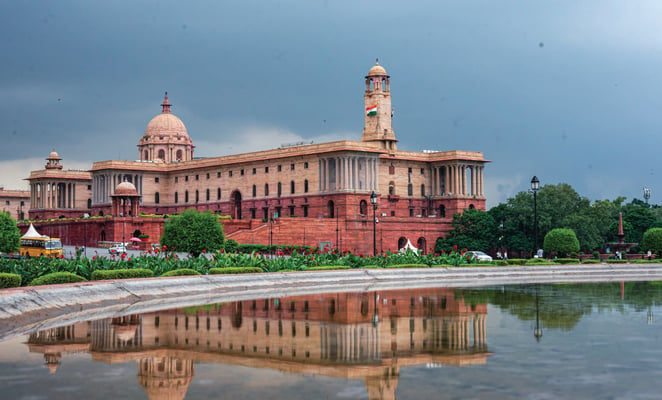



The Election Commission of India (ECI) has recently faced a new legal challenge after a case was filed in the Supreme Court. The petition claims that ECI Chief Gyanesh Kumar has taken decisions without the agreement of the other two Election Commissioners.

The Chief Commissioner has sought a writ of Quo Warranto, which asks into what authority he has to exercise the powers assigned to the ECI under the Constitution and existing laws. The accusations against him include issues related to electoral rolls, the Special Intensive Revision (SIR), and changes to the electoral process.
The ECI currently comprises Gyanesh Kumar as Chief Election Commissioner, along with the other two Election Commissioners, Sukhbir Singh Sandhu and Vivek Joshi. According to Section 18 of the Chief Election Commissioner and Other Election Commissioners (Appointment, Conditions of Service and Term of Office) Act, 2023, the business of the Commission is required to be conducted as far as possible unanimously, while voting must be done in accordance with the majority of opinion.

The petition accuses the Chief Election Commissioner of an “incremental monopoly” over tendering authority and power. The petition cites instances in which the two Election Commissioners made written objections to the EC's activities since late 2025 and August 2026.
Among the various issues in the petition is Form 6, which relates to adding names to electoral rolls through the digital electoral roll management system. The issues raised in the petition concern alleged changes to the system and suggest that the required statutory and institutional approvals were not obtained.
The petition also notes that any actions connected with the Special Intensive Revision carried out without proper authority are void. The petition also questions whether decisions made without the necessary concurrence were valid.
Whatever claims are made in the petition remain legally unproven. The EC claims that it is a multi-member constitutional body and that keeping written notes, making observations, and conducting internal checks are part of its institutional working.
The case raises an important institutional question about how a constitutional body functions when its members hold dissenting views on collective decision-making.


ISSUE


Leave a Comment