

India and Belgium sharpen strategic ties
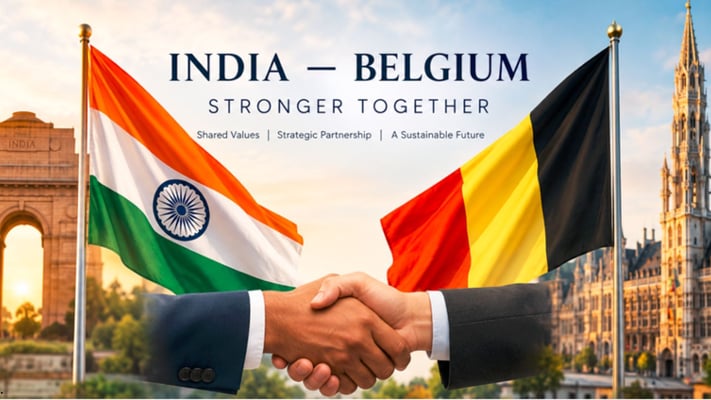
Belgium may not stand out as one of India's top international allies. Still, Belgium's Prime Minister's trip to New Delhi carries significance that goes far beyond the size of the two countries' influence. The visit fits into the broader picture of India developing relations with other European countries, with a focus on trade, defense, and strategy.
The most important topic on the two Prime Ministers' agenda was trade. Both sides are looking forward to the Free Trade Agreement between India and the European Union, which is scheduled to be signed soon.
Currently, India's turnover with Belgium is about $13 billion, with a significant part of that being the diamond trade; Antwerp is a famous center of diamond trading known worldwide, while Indian cities such as Mumbai and Surat play a significant role in the diamond-cutting and polishing industry.
The main goal of both countries' governments after the signature of the deal is strengthening of the cooperation between the countries in the emerging industries like clean energy and food processing, to increase the trade turnover between the countries to $26 billion over the of military technology, including a commitment to strengthen further the cooperation in the area of defense, which has also prompted India to post a permanent defense representative in Brussels.
Beyond the bilateral agenda, both leaders discussed the wider geopolitical picture. At one point, the Belgian PM said the European world has begun to recognize the need for strategic independence and the risks of overreliance on a single power bloc, referring in particular to China.
Indian PM, in turn, described India and Belgium as “natural allies,” based on the principles of democracy, a market economy, and good relations between the two nations. The timing is also worth noting: the visit comes just before India hosts Vladimir Putin for the BRICS summit and shortly before various meetings with European leaders that will lead to EU negotiations in Brussels later this year.
This timing matters because, even though Europe and Russia do not share the same view of events in Ukraine, India’s relations with both sides continue to improve.
Belgium's active involvement in the negotiations matters for India's approach to Europe. The country itself may not influence events, but as a founding member of the EU and a representative of its institutions, it carries significant weight in bringing the EU-India FTA to life. From another perspective, defense cooperation is more important than trade agreements.
In fact, India is trying to reduce its dependence on traditional partners in military technology, including the USA and Russia. It is therefore showing interest in smaller players like Belgium, which can offer better conditions for technology-transfer cooperation than large military exporters.
Most important, though, is the timing. Indeed, meeting with the European leader and emphasizing the importance of strategic independence right before the meeting with Putin may have been a message from India that it is still able to act independently.
Belgium may not stand out as one of India's top international allies. Still, Belgium's Prime Minister's trip to New Delhi carries significance that goes far beyond the size of the two countries' influence. The visit fits into the broader picture of India developing relations with other European...
Belgium may not stand out as one of India's top international allies. Still, Belgium's Prime Minister's trip to New Delhi carries significance that goes far beyond the size of the two countries' influence. The visit fits into the broader picture of India developing relations with other European countries, with a focus on trade, defense, and strategy.
The most important topic on the two Prime Ministers' agenda was trade. Both sides are looking forward to the Free Trade Agreement between India and the European Union, which is scheduled to be signed soon.
Currently, India's turnover with Belgium is about $13 billion, with a significant part of that being the diamond trade; Antwerp is a famous center of diamond trading known worldwide, while Indian cities such as Mumbai and Surat play a significant role in the diamond-cutting and polishing industry.
The main goal of both countries' governments after the signature of the deal is strengthening of the cooperation between the countries in the emerging industries like clean energy and food processing, to increase the trade turnover between the countries to $26 billion over the of military technology, including a commitment to strengthen further the cooperation in the area of defense, which has also prompted India to post a permanent defense representative in Brussels.
Beyond the bilateral agenda, both leaders discussed the wider geopolitical picture. At one point, the Belgian PM said the European world has begun to recognize the need for strategic independence and the risks of overreliance on a single power bloc, referring in particular to China.
Indian PM, in turn, described India and Belgium as “natural allies,” based on the principles of democracy, a market economy, and good relations between the two nations. The timing is also worth noting: the visit comes just before India hosts Vladimir Putin for the BRICS summit and shortly before various meetings with European leaders that will lead to EU negotiations in Brussels later this year.
This timing matters because, even though Europe and Russia do not share the same view of events in Ukraine, India’s relations with both sides continue to improve.
Belgium's active involvement in the negotiations matters for India's approach to Europe. The country itself may not influence events, but as a founding member of the EU and a representative of its institutions, it carries significant weight in bringing the EU-India FTA to life. From another perspective, defense cooperation is more important than trade agreements.
In fact, India is trying to reduce its dependence on traditional partners in military technology, including the USA and Russia. It is therefore showing interest in smaller players like Belgium, which can offer better conditions for technology-transfer cooperation than large military exporters.
Most important, though, is the timing. Indeed, meeting with the European leader and emphasizing the importance of strategic independence right before the meeting with Putin may have been a message from India that it is still able to act independently.





Leave a Comment