

Indian students deserve a fair go: questions we need to ask
As an immigration adviser working extensively with students from India and the wider Indian subcontinent, I have seen the enormous commitment families make when choosing New Zealand for education. That is why I believe we need an honest conversation about how some student visa applications are currently being assessed.
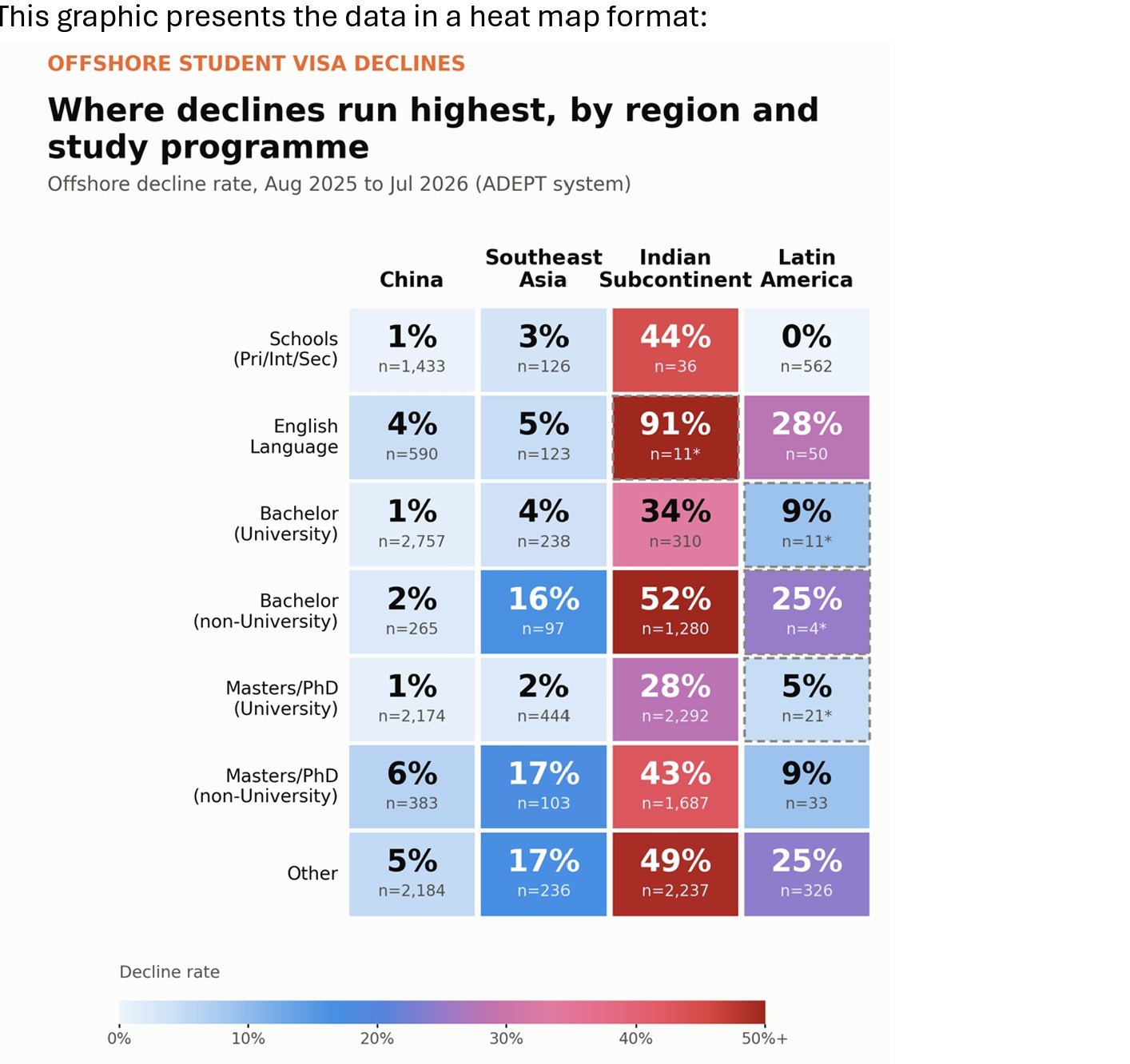
Recent data obtained by NZAMI from Immigration New Zealand, covering more than 100,000 applications processed through ADEPT, shows a significant difference in offshore decline rates, with India recording a 41.2% decline rate compared with 2.4% for China. The same data raises questions about how frequently applicants are given an opportunity to respond to concerns through PPI or RFI processes.
My concerns are also based on what we are experiencing in practice.
In one recent case, we represented a highly accomplished student applying for a Master’s programme. His application was declined on the basis that he allegedly could not provide satisfactory answers during an interview and lacked confidence. However, when we reviewed the interview recording, our assessment was very different: the student answered the questions confidently and addressed the matters raised.
This raises an important question—when the evidence appears to contradict the reasons recorded for a decline, what mechanism exists to ensure that the decision is properly reviewed?
We have also encountered cases where students who completed their schooling qualification in 2025 sought to undertake another undergraduate programme in New Zealand because of their genuine academic and career plans. Some of these applications have been declined primarily on bona fide grounds. I understand that INZ must assess whether a student genuinely intends to study; however, the assessment should remain grounded in the individual evidence and circumstances of each applicant. INZ itself states that genuine intentions are assessed using the information available about the applicant and their study plans.
I also recall my conversation with Immigration Minister Erica Stanford last year, where she spoke about attracting young international students to undertake undergraduate study and their potential long-term contribution to New Zealand. The Government has publicly stated its ambition to significantly grow international education.
That ambition must be matched by confidence in the visa system.
Indian students are not asking for preferential treatment. They are asking for the same thing every genuine applicant deserves: a fair, consistent and evidence-based assessment.
Pawandeep Singh is the Director & Licensed Immigration Adviser at Kiwiana Immigration
As an immigration adviser working extensively with students from India and the wider Indian subcontinent, I have seen the enormous commitment families make when choosing New Zealand for education. That is why I believe we need an honest conversation about how some student visa applications are...
As an immigration adviser working extensively with students from India and the wider Indian subcontinent, I have seen the enormous commitment families make when choosing New Zealand for education. That is why I believe we need an honest conversation about how some student visa applications are currently being assessed.
Recent data obtained by NZAMI from Immigration New Zealand, covering more than 100,000 applications processed through ADEPT, shows a significant difference in offshore decline rates, with India recording a 41.2% decline rate compared with 2.4% for China. The same data raises questions about how frequently applicants are given an opportunity to respond to concerns through PPI or RFI processes.
My concerns are also based on what we are experiencing in practice.

In one recent case, we represented a highly accomplished student applying for a Master’s programme. His application was declined on the basis that he allegedly could not provide satisfactory answers during an interview and lacked confidence. However, when we reviewed the interview recording, our assessment was very different: the student answered the questions confidently and addressed the matters raised.
This raises an important question—when the evidence appears to contradict the reasons recorded for a decline, what mechanism exists to ensure that the decision is properly reviewed?
We have also encountered cases where students who completed their schooling qualification in 2025 sought to undertake another undergraduate programme in New Zealand because of their genuine academic and career plans. Some of these applications have been declined primarily on bona fide grounds. I understand that INZ must assess whether a student genuinely intends to study; however, the assessment should remain grounded in the individual evidence and circumstances of each applicant. INZ itself states that genuine intentions are assessed using the information available about the applicant and their study plans.
I also recall my conversation with Immigration Minister Erica Stanford last year, where she spoke about attracting young international students to undertake undergraduate study and their potential long-term contribution to New Zealand. The Government has publicly stated its ambition to significantly grow international education.
That ambition must be matched by confidence in the visa system.
Indian students are not asking for preferential treatment. They are asking for the same thing every genuine applicant deserves: a fair, consistent and evidence-based assessment.
Pawandeep Singh is the Director & Licensed Immigration Adviser at Kiwiana Immigration





Leave a Comment