


BRICS finds its footing in New Delhi
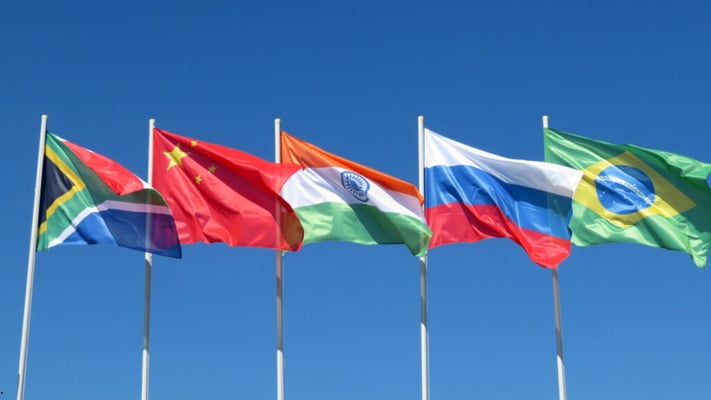
The 18th BRICS summit in New Delhi concluded with something unique. The summit brought together 11 nations representing about half the humanity and around 40 percent of the global GDP to produce a unanimous declaration.
It is quite unprecedented to reach a consensus among such a diverse group of countries, as there are Iran and the UAE engaged in war, Russia with sanctions against it, and China and India separated from each other.
India deserves credit for this achievement, especially for bridging two countries on different sides of the conflict. The successful negotiations with Russia on the anti-sanctions clause were a real example of diplomacy.
Those studying BRICS concluded that it was an overwhelming success. A fallout threatened in May when foreign ministers failed to agree on a resolution on the Iranian conflict. Their ability to reach an understanding in September has proven the stability of the newly formed bloc.
Prime Minister Modi called the summit a turning point for BRICS. By emphasizing “maximum restraint” and dialogue-based resolution instead of taking sides, BRICS is following the approach required of a constructive bloc if its purpose is to remain an entity where disagreement can be openly aired.
Kremlin sources reported that Xi and Modi expressed their readiness to assist in peace talks involving Ukraine on the sidelines of the summit, underscoring the importance of subtle, pragmatic diplomacy that would not have been possible had BRICS's statement been confrontational.
BRICS spoke clearly and straightforwardly on morality and ethics. The bloc has expressed firm opposition to the policy of displacement, statehood acknowledgment as an independent country on the borders of 1967 with East Jerusalem being the capital of Palestine, support of UNRWA, as well as the call to recognize Palestine at the United Nations — a unified position made by a group of four-continent organization.
On trade, BRICS defended a principle above any state's particular grievance: unilateral exceptions imposed without UNSC consent harm the rules-based order. Without any doubt, all major members of BRICS- China, Russia, and India- suffered from the introduction of tariffs by the West in one way or another; however, BRICS opted to frame its response in accordance with the rules of international law instead of resorting to retaliation.
Modi’s call for the Global South to move from “rule-taker” to “rule-maker” captures the summit's real achievement. In fact, such a large and diverse bloc does not need to agree on everything to be important — it suffices that it appears and finds opportunities to build common ground in discussions on various issues.
The 18th BRICS summit in New Delhi concluded with something unique. The summit brought together 11 nations representing about half the humanity and around 40 percent of the global GDP to produce a unanimous declaration.
{% module_block module "widget_fb1c3f68-d0d2-4bda-bb5f-53276822c471" %}{%...The 18th BRICS summit in New Delhi concluded with something unique. The summit brought together 11 nations representing about half the humanity and around 40 percent of the global GDP to produce a unanimous declaration.
It is quite unprecedented to reach a consensus among such a diverse group of countries, as there are Iran and the UAE engaged in war, Russia with sanctions against it, and China and India separated from each other.
India deserves credit for this achievement, especially for bridging two countries on different sides of the conflict. The successful negotiations with Russia on the anti-sanctions clause were a real example of diplomacy.
Those studying BRICS concluded that it was an overwhelming success. A fallout threatened in May when foreign ministers failed to agree on a resolution on the Iranian conflict. Their ability to reach an understanding in September has proven the stability of the newly formed bloc.
Prime Minister Modi called the summit a turning point for BRICS. By emphasizing “maximum restraint” and dialogue-based resolution instead of taking sides, BRICS is following the approach required of a constructive bloc if its purpose is to remain an entity where disagreement can be openly aired.
Kremlin sources reported that Xi and Modi expressed their readiness to assist in peace talks involving Ukraine on the sidelines of the summit, underscoring the importance of subtle, pragmatic diplomacy that would not have been possible had BRICS's statement been confrontational.
BRICS spoke clearly and straightforwardly on morality and ethics. The bloc has expressed firm opposition to the policy of displacement, statehood acknowledgment as an independent country on the borders of 1967 with East Jerusalem being the capital of Palestine, support of UNRWA, as well as the call to recognize Palestine at the United Nations — a unified position made by a group of four-continent organization.
On trade, BRICS defended a principle above any state's particular grievance: unilateral exceptions imposed without UNSC consent harm the rules-based order. Without any doubt, all major members of BRICS- China, Russia, and India- suffered from the introduction of tariffs by the West in one way or another; however, BRICS opted to frame its response in accordance with the rules of international law instead of resorting to retaliation.
Modi’s call for the Global South to move from “rule-taker” to “rule-maker” captures the summit's real achievement. In fact, such a large and diverse bloc does not need to agree on everything to be important — it suffices that it appears and finds opportunities to build common ground in discussions on various issues.





Leave a Comment