


Astrology explained through a conscious energy framework
Astrology is often dismissed either as superstition or defended as a predictive science. Both positions misunderstand what astrology actually is. To explain astrology coherently, it must be situated within a deeper model of reality, one in which the universe is understood as a single field of conscious energy in continuous kinesis, rather than a collection of disconnected material objects.
Modern science already tells us that matter is condensed energy. As energy expands outward from a state of maximum equilibrium, its vibrational intensity weakens, giving rise to stable forms such as particles, planets, and galaxies. If this energy is not merely mechanical but intrinsically conscious, then matter, life, and mind are not separate substances but different density regimes of the same underlying field. Apparent separation is a function of scale and perception, not of reality itself.
Within this framework, celestial bodies are not external agents exerting mysterious forces on human life. They are large-scale, stable condensations of the same conscious field that also manifests locally as biological and psychological processes. Because of their immense stability and predictable motion, planets function as reliable reference patterns within the field. Astrology does not treat them as causes, but as markers of phase relationships in the overall energetic configuration of the cosmos.
Astrology therefore operates through correlation and resonance rather than causation. The movement of planets reflects shifts in the geometry of the conscious energy field as it appears from Earth. Human consciousness, being a localized modulation of that same field, resonates with these configurations. Astrology reads this resonance symbolically. It does not claim that planets compel events, but that they indicate tendencies, pressures, and momentum within which human experience unfolds.
This also explains why astrology is geocentric. Conscious experience is always situated. Meaning arises relative to an observer, not from an abstract, detached coordinate system. Astrology is concerned with how the cosmic field is experienced from Earth, not with modeling orbital mechanics. Using the Earth as the reference point is not a scientific error; it is an epistemological necessity for a system concerned with lived reality.
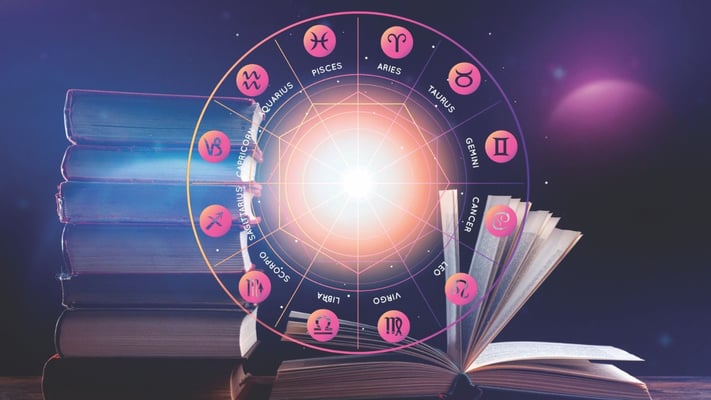
The zodiac and astrological houses are often misunderstood as literal divisions in space. In fact, they are symbolic segmentations of a continuous field, mapping qualitative modes of expression and domains of experience. These symbols are interpretive tools, not ontological compartments. Astrology fails only when these symbolic maps are mistaken for fixed realities.
At the moment of birth, individual consciousness becomes anchored to a body-mind system within a particular phase configuration of the field. The natal chart records this configuration. It is not an imprint of destiny, but a snapshot of momentum. Free will remains intact because consciousness, especially at higher levels of awareness, can reorient its relationship to these patterns.
Seen this way, astrology is neither magic nor failed science. It is a phenomenological language that helps human beings recognise their phase relationship with a dynamic, conscious cosmos. Its purpose is not to remove agency, but to increase intelligibility, revealing the larger rhythms within which choice, growth, and transformation occur.
Astrology is often dismissed either as superstition or defended as a predictive science. Both positions misunderstand what astrology actually is. To explain astrology coherently, it must be situated within a deeper model of reality, one in which the universe is understood as a single field of...
Astrology is often dismissed either as superstition or defended as a predictive science. Both positions misunderstand what astrology actually is. To explain astrology coherently, it must be situated within a deeper model of reality, one in which the universe is understood as a single field of conscious energy in continuous kinesis, rather than a collection of disconnected material objects.
Modern science already tells us that matter is condensed energy. As energy expands outward from a state of maximum equilibrium, its vibrational intensity weakens, giving rise to stable forms such as particles, planets, and galaxies. If this energy is not merely mechanical but intrinsically conscious, then matter, life, and mind are not separate substances but different density regimes of the same underlying field. Apparent separation is a function of scale and perception, not of reality itself.
Within this framework, celestial bodies are not external agents exerting mysterious forces on human life. They are large-scale, stable condensations of the same conscious field that also manifests locally as biological and psychological processes. Because of their immense stability and predictable motion, planets function as reliable reference patterns within the field. Astrology does not treat them as causes, but as markers of phase relationships in the overall energetic configuration of the cosmos.
Astrology therefore operates through correlation and resonance rather than causation. The movement of planets reflects shifts in the geometry of the conscious energy field as it appears from Earth. Human consciousness, being a localized modulation of that same field, resonates with these configurations. Astrology reads this resonance symbolically. It does not claim that planets compel events, but that they indicate tendencies, pressures, and momentum within which human experience unfolds.
This also explains why astrology is geocentric. Conscious experience is always situated. Meaning arises relative to an observer, not from an abstract, detached coordinate system. Astrology is concerned with how the cosmic field is experienced from Earth, not with modeling orbital mechanics. Using the Earth as the reference point is not a scientific error; it is an epistemological necessity for a system concerned with lived reality.
The zodiac and astrological houses are often misunderstood as literal divisions in space. In fact, they are symbolic segmentations of a continuous field, mapping qualitative modes of expression and domains of experience. These symbols are interpretive tools, not ontological compartments. Astrology fails only when these symbolic maps are mistaken for fixed realities.
At the moment of birth, individual consciousness becomes anchored to a body-mind system within a particular phase configuration of the field. The natal chart records this configuration. It is not an imprint of destiny, but a snapshot of momentum. Free will remains intact because consciousness, especially at higher levels of awareness, can reorient its relationship to these patterns.
Seen this way, astrology is neither magic nor failed science. It is a phenomenological language that helps human beings recognise their phase relationship with a dynamic, conscious cosmos. Its purpose is not to remove agency, but to increase intelligibility, revealing the larger rhythms within which choice, growth, and transformation occur.


Leave a Comment