


SpaceX revenue soars despite first public company loss
SpaceX reported a smaller quarterly loss than Wall Street had anticipated while posting a sharp increase in revenue in its first financial results since becoming a publicly traded company.
According to 1 News, the company also significantly increased spending during the quarter, particularly on artificial intelligence and infrastructure, as it continues investing heavily in future growth.
The Elon Musk-led company recorded a loss of US$541 million (NZ$919 million), or 9 US cents (15 NZ cents) per share, for the three months ending in June. According to 1 News, the loss was less than half of what financial analysts had forecast. At the same time, revenue surged to US$7.8 billion (NZ$13.2 billion), representing an increase of more than 90 percent compared with the same period last year.
One of the strongest contributors to the company's financial performance was its connectivity business. According to 1 News, revenue from Starlink, SpaceX's satellite internet service, climbed 66 percent from a year earlier as its subscriber base doubled to approximately 12 million users worldwide.
"It's not out of the question that at some point, Starlink will deliver a majority of the world's internet," Musk said in call with analysts.
Following the earnings announcement, SpaceX shares rose 9 percent during regular trading before surrendering most of those gains in after-hours trading. According to 1 News, the company's stock has declined by roughly half since reaching its peak shortly after its June initial public offering, an event that briefly made Elon Musk the world's first trillionaire.
Investor concerns remain focused on whether Musk has set expectations too high regarding SpaceX's long-term ambitions in commercial space travel and the development of its AI chatbot, Grok. According to 1 News, investors are also preparing for increased market volatility as company insiders become eligible to sell shares following the expiration of a lock-up provision later this week.
Another major concern is the company's rapidly rising spending. According to 1 News, infrastructure investment and research and development expenses surged to US$18 billion (NZ$30.5 billion) during the quarter, compared with less than US$3 billion (NZ$5.1 billion) a year earlier. Chief Financial Officer Bret Johnsen said investors should expect capital expenditure to remain at similar levels over the next two quarters.
Musk defended the increased investment, arguing that the aggressive spending—particularly on artificial intelligence—would accelerate the company's long-term growth trajectory.
He said the resulting supercharged growth meant the company would reach a trillion dollars in revenue a year faster now, 2030 rather than 2031.
SpaceX shares had climbed 19 percent on their first day of trading in June, helping Musk become the first person ever to achieve trillionaire status. However, according to 1 News, the subsequent decline in SpaceX shares, along with falling shares of Tesla, has reduced Musk's estimated net worth to US$783 billion (NZ$1.3 trillion), according to Forbes.
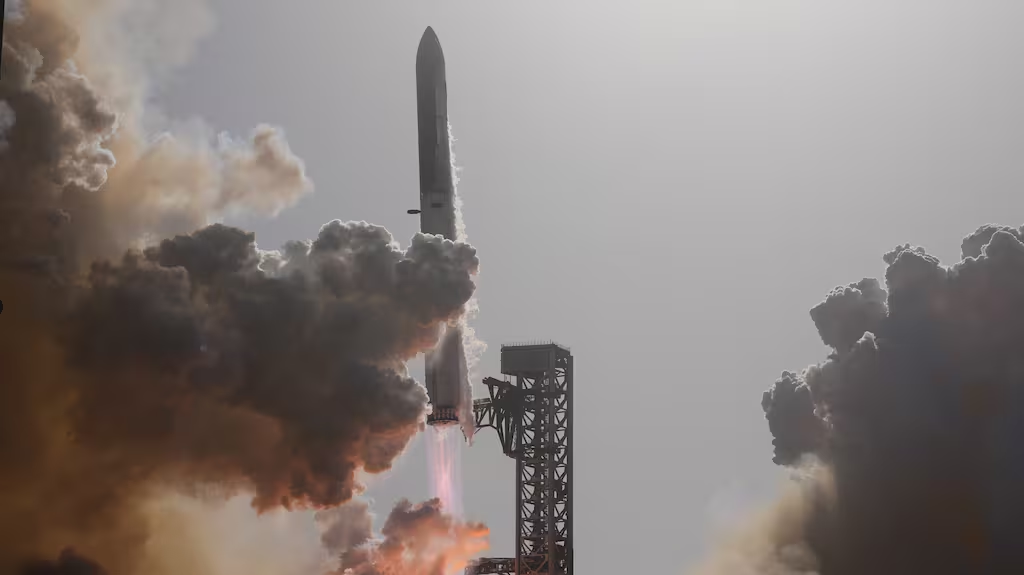
During the earnings discussion, Musk was repeatedly questioned about the future of the massive Starship rocket, which remains central to SpaceX's long-term plans for deep-space exploration. According to 1 News, Starship successfully deployed satellites during a test mission conducted late last month, marking another milestone in the programme's development.
Musk said he expects the company to attempt another significant Starship test at the end of the month, during which engineers will try to demonstrate the rocket's reusability by catching both the spacecraft and its booster using giant mechanical arms upon their return to the launch site.
NASA is planning to use Starship as part of its Artemis programme to return astronauts to the Moon.
"We want to put boots on the ground — boots on the moon — in 2028," said SpaceX President Gwynne Shotwell.
According to 1 News, SpaceX shares may continue experiencing heightened volatility in the coming weeks. More than 900 million shares are scheduled to become eligible for trading on Thursday (local time) as restrictions preventing insiders from selling begin to expire. The release will more than double the number of shares currently available in the market and represents the first of several planned lock-up expirations over the coming months, potentially increasing selling pressure on the stock.
SpaceX reported a smaller quarterly loss than Wall Street had anticipated while posting a sharp increase in revenue in its first financial results since becoming a publicly traded company.
{% module_block module "widget_6e63ac15-a9e6-433a-b9c7-fee3b3cda930" %}{% module_attribute "ads"...SpaceX reported a smaller quarterly loss than Wall Street had anticipated while posting a sharp increase in revenue in its first financial results since becoming a publicly traded company.
According to 1 News, the company also significantly increased spending during the quarter, particularly on artificial intelligence and infrastructure, as it continues investing heavily in future growth.
The Elon Musk-led company recorded a loss of US$541 million (NZ$919 million), or 9 US cents (15 NZ cents) per share, for the three months ending in June. According to 1 News, the loss was less than half of what financial analysts had forecast. At the same time, revenue surged to US$7.8 billion (NZ$13.2 billion), representing an increase of more than 90 percent compared with the same period last year.
One of the strongest contributors to the company's financial performance was its connectivity business. According to 1 News, revenue from Starlink, SpaceX's satellite internet service, climbed 66 percent from a year earlier as its subscriber base doubled to approximately 12 million users worldwide.
"It's not out of the question that at some point, Starlink will deliver a majority of the world's internet," Musk said in call with analysts.
Following the earnings announcement, SpaceX shares rose 9 percent during regular trading before surrendering most of those gains in after-hours trading. According to 1 News, the company's stock has declined by roughly half since reaching its peak shortly after its June initial public offering, an event that briefly made Elon Musk the world's first trillionaire.
Investor concerns remain focused on whether Musk has set expectations too high regarding SpaceX's long-term ambitions in commercial space travel and the development of its AI chatbot, Grok. According to 1 News, investors are also preparing for increased market volatility as company insiders become eligible to sell shares following the expiration of a lock-up provision later this week.
Another major concern is the company's rapidly rising spending. According to 1 News, infrastructure investment and research and development expenses surged to US$18 billion (NZ$30.5 billion) during the quarter, compared with less than US$3 billion (NZ$5.1 billion) a year earlier. Chief Financial Officer Bret Johnsen said investors should expect capital expenditure to remain at similar levels over the next two quarters.
Musk defended the increased investment, arguing that the aggressive spending—particularly on artificial intelligence—would accelerate the company's long-term growth trajectory.
He said the resulting supercharged growth meant the company would reach a trillion dollars in revenue a year faster now, 2030 rather than 2031.
SpaceX shares had climbed 19 percent on their first day of trading in June, helping Musk become the first person ever to achieve trillionaire status. However, according to 1 News, the subsequent decline in SpaceX shares, along with falling shares of Tesla, has reduced Musk's estimated net worth to US$783 billion (NZ$1.3 trillion), according to Forbes.
During the earnings discussion, Musk was repeatedly questioned about the future of the massive Starship rocket, which remains central to SpaceX's long-term plans for deep-space exploration. According to 1 News, Starship successfully deployed satellites during a test mission conducted late last month, marking another milestone in the programme's development.
Musk said he expects the company to attempt another significant Starship test at the end of the month, during which engineers will try to demonstrate the rocket's reusability by catching both the spacecraft and its booster using giant mechanical arms upon their return to the launch site.
NASA is planning to use Starship as part of its Artemis programme to return astronauts to the Moon.
"We want to put boots on the ground — boots on the moon — in 2028," said SpaceX President Gwynne Shotwell.
According to 1 News, SpaceX shares may continue experiencing heightened volatility in the coming weeks. More than 900 million shares are scheduled to become eligible for trading on Thursday (local time) as restrictions preventing insiders from selling begin to expire. The release will more than double the number of shares currently available in the market and represents the first of several planned lock-up expirations over the coming months, potentially increasing selling pressure on the stock.





Leave a Comment