


Sick child, no appointment: Indian mother’s NZ healthcare struggle sparks debate
An Indian woman living in New Zealand has sparked a discussion about access to healthcare after sharing her experience of struggling to secure timely medical attention for her sick child. The child had reportedly been suffering from a persistent cough for 10 days, prompting the mother to seek medical advice.
The experience left her comparing New Zealand's healthcare system with the ease of accessing doctors in India, where she said patients can often visit a hospital or clinic and consult a doctor more quickly.
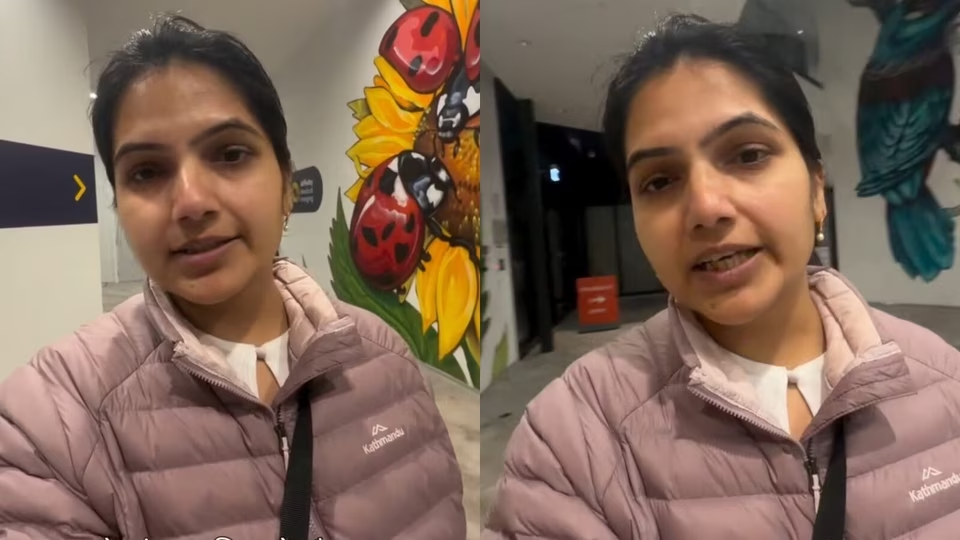
According to Hindustan Times, Akriti Jaiswal Srivastava shared a video on Instagram describing her experience and explaining the difficulties she faced while trying to get her child examined.
‘They don't have any appointments for a week’
In the video, Srivastava explained that she contacted her local medical centre after her child's cough continued for several days.
"Hi everyone! So you guys often ask how the medical facilities are in New Zealand, right? So let me tell you. I called this morning—like everyone has a local medical center here, so I called them.
But they said they don't have any appointments for a week. Today is Thursday, and the appointment they gave me is for next Wednesday. Kevith has a cough, and it's been going on for the last 10 days.
So I thought, okay, let's wait and see if it gets better on its own, because they don't really prescribe medicines much here. So we thought, fine, let's wait. But it has been 10 days and it's not getting better, so I felt we should get him checked.
Maybe he has an internal infection or needs some antibiotics. So, here there is an after-hours system. Let me tell you, we came to the after-hours clinic where walk-in patients are usually seen. But just imagine, it was so overcrowded here too that—let me show you what they've put up on the board."
Hindustan Times reported that Srivastava also showed viewers a notice displayed at the after-hours clinic, indicating that the facility had reached capacity.
The notice read: "We are sorry but we are at capacity and unable to take any more patients tonight."
The experience, she said, highlighted the challenges parents can face when their children require medical attention but appointments are not immediately available.
‘Perhaps nothing beats India’
Srivastava went on to explain why she believed families moving to New Zealand should be prepared for differences in accessing medical care, particularly when they have children.
"So look, these are the medical facilities here. Anyone coming to New Zealand from India or anywhere else with their children, please be mentally prepared regarding medical care for kids. Adults can still manage somehow, but for children, managing these things becomes very necessary.
So do bring proper medicines with you. Now I feel I should have brought a couple of antibiotics for Kevith, which I didn't. But next time, I will definitely keep this in mind. Just think, even here the situation is such that even the after-hours clinic is so full that they've refused to take any more patients.
And the appointment I booked today is for an entire week later. So you can imagine how difficult a situation this is for any parent to handle when your child is sick. I've seen this kind of situation in many countries. Otherwise, it is a very developed country, but when it comes to medical care, perhaps India is the best.
In India, you can go to a hospital or clinic immediately, see a doctor right away, and everything gets sorted quickly. But it’s not like that here."
According to Hindustan Times, her comments have prompted discussion among social media users, particularly among people who have experienced delays in accessing healthcare after moving abroad.
Her comparison between India and New Zealand also reflects a broader conversation among immigrants about the differences between healthcare systems, including appointment availability, walk-in services and access to medical professionals.
Social media users react
The video attracted reactions from several users, with some saying they had encountered similar difficulties while seeking medical care in other countries.
One user shared their experience in London, writing, "Same in London. We recently had to wait more than five and a half hours just to be seen by several doctors for a five-minute consultation!"
Another user simply responded, "Yes, you're right."
A third person commented, "I agree with you," while another added, "This is so true."
Hindustan Times noted that the reactions showed that Srivastava's experience resonated with people who have encountered long waiting times and difficulties accessing healthcare in other countries.
The discussion, however, also highlights how healthcare experiences can vary depending on location, individual circumstances and the urgency of a patient's condition.
While Srivastava shared her personal experience and preference for the accessibility she associates with healthcare in India, her account reflects one individual's experience rather than a complete assessment of New Zealand's healthcare system.
For Indian families considering a move abroad, the experience has nevertheless opened up an important conversation: alongside employment, education, housing and lifestyle, access to healthcare can also be an important factor when deciding where to build a life.
An Indian woman living in New Zealand has sparked a discussion about access to healthcare after sharing her experience of struggling to secure timely medical attention for her sick child. The child had reportedly been suffering from a persistent cough for 10 days, prompting the mother to seek...
An Indian woman living in New Zealand has sparked a discussion about access to healthcare after sharing her experience of struggling to secure timely medical attention for her sick child. The child had reportedly been suffering from a persistent cough for 10 days, prompting the mother to seek medical advice.
The experience left her comparing New Zealand's healthcare system with the ease of accessing doctors in India, where she said patients can often visit a hospital or clinic and consult a doctor more quickly.
According to Hindustan Times, Akriti Jaiswal Srivastava shared a video on Instagram describing her experience and explaining the difficulties she faced while trying to get her child examined.
‘They don't have any appointments for a week’
In the video, Srivastava explained that she contacted her local medical centre after her child's cough continued for several days.
"Hi everyone! So you guys often ask how the medical facilities are in New Zealand, right? So let me tell you. I called this morning—like everyone has a local medical center here, so I called them.
But they said they don't have any appointments for a week. Today is Thursday, and the appointment they gave me is for next Wednesday. Kevith has a cough, and it's been going on for the last 10 days.
So I thought, okay, let's wait and see if it gets better on its own, because they don't really prescribe medicines much here. So we thought, fine, let's wait. But it has been 10 days and it's not getting better, so I felt we should get him checked.
Maybe he has an internal infection or needs some antibiotics. So, here there is an after-hours system. Let me tell you, we came to the after-hours clinic where walk-in patients are usually seen. But just imagine, it was so overcrowded here too that—let me show you what they've put up on the board."
Hindustan Times reported that Srivastava also showed viewers a notice displayed at the after-hours clinic, indicating that the facility had reached capacity.
The notice read: "We are sorry but we are at capacity and unable to take any more patients tonight."
The experience, she said, highlighted the challenges parents can face when their children require medical attention but appointments are not immediately available.
‘Perhaps nothing beats India’
Srivastava went on to explain why she believed families moving to New Zealand should be prepared for differences in accessing medical care, particularly when they have children.
"So look, these are the medical facilities here. Anyone coming to New Zealand from India or anywhere else with their children, please be mentally prepared regarding medical care for kids. Adults can still manage somehow, but for children, managing these things becomes very necessary.
So do bring proper medicines with you. Now I feel I should have brought a couple of antibiotics for Kevith, which I didn't. But next time, I will definitely keep this in mind. Just think, even here the situation is such that even the after-hours clinic is so full that they've refused to take any more patients.
And the appointment I booked today is for an entire week later. So you can imagine how difficult a situation this is for any parent to handle when your child is sick. I've seen this kind of situation in many countries. Otherwise, it is a very developed country, but when it comes to medical care, perhaps India is the best.
In India, you can go to a hospital or clinic immediately, see a doctor right away, and everything gets sorted quickly. But it’s not like that here."
According to Hindustan Times, her comments have prompted discussion among social media users, particularly among people who have experienced delays in accessing healthcare after moving abroad.
Her comparison between India and New Zealand also reflects a broader conversation among immigrants about the differences between healthcare systems, including appointment availability, walk-in services and access to medical professionals.
Social media users react
The video attracted reactions from several users, with some saying they had encountered similar difficulties while seeking medical care in other countries.
One user shared their experience in London, writing, "Same in London. We recently had to wait more than five and a half hours just to be seen by several doctors for a five-minute consultation!"
Another user simply responded, "Yes, you're right."
A third person commented, "I agree with you," while another added, "This is so true."
Hindustan Times noted that the reactions showed that Srivastava's experience resonated with people who have encountered long waiting times and difficulties accessing healthcare in other countries.
The discussion, however, also highlights how healthcare experiences can vary depending on location, individual circumstances and the urgency of a patient's condition.
While Srivastava shared her personal experience and preference for the accessibility she associates with healthcare in India, her account reflects one individual's experience rather than a complete assessment of New Zealand's healthcare system.
For Indian families considering a move abroad, the experience has nevertheless opened up an important conversation: alongside employment, education, housing and lifestyle, access to healthcare can also be an important factor when deciding where to build a life.





Leave a Comment