








Immigration New Zealand has released further details on changes to the Skilled Migrant Category (SMC), with the new settings due to take effect from late August 2026.
The updates confirm key occupation lists, introduce simplified median wage settings across SMC pathways, clarify qualification requirements for claiming points, extend English language test validity for some applicants, recognise a new occupational registration for accountants, and outline a future ability to extend an Accredited Employer Work Visa (AEWV) to complete skilled work experience requirements.
The SMC is New Zealand’s main residence pathway for skilled migrants. In September 2025, the Government announced reforms aimed at helping employers retain skilled workers and supporting long-term economic growth. These included new residence pathways, changes to better reflect the value of qualifications completed in New Zealand, and simplified existing settings.
Trades and Technician pathway confirmed
Immigration New Zealand has confirmed the list of eligible occupations for the Trades and Technician residence pathway.
The pathway applies to migrants working in specified ANZSCO skill level 1–3 trades and technician occupations who hold a relevant Level 4 or above qualification and have at least four years of directly relevant experience gained after qualification. This must include at least 1.5 years in New Zealand earning at least the SMC median wage.
Pay rates for the Skilled Migrant Category Resident Visa
A full list of eligible occupations is available here:
Eligible occupations for the SMC Trades and Technician pathway (August 2026)
These occupations were added on the basis that they are skilled roles with appropriate qualifications and contribute important skills to the economy. Under previous SMC settings, many workers in these roles did not have a realistic pathway to residence. Immigration New Zealand said there is a history of migrant recruitment in these occupations indicating a gap in the labour market.
Red and amber lists introduced
Further detail has also been provided on the red and amber occupation lists, first announced in September 2025. The lists are intended to manage immigration risk and ensure residence pathways remain targeted to genuine skill needs.
Occupations on the red list are not eligible for the two new residence pathways. Migrants in these roles may apply for residence only if they can claim six points under an existing SMC pathway. This includes earning at least 1.5 times the SMC median wage, holding a Bachelor’s degree (Level 7) or higher, or holding recognised occupational registration with the required length of skilled work experience in New Zealand.
Skilled Migrant Category Resident Visa
Occupations on the amber list are eligible for the new Skilled Work Experience pathway but must meet additional criteria. Applicants must have at least five years of relevant eligible work experience in New Zealand, including two years of skilled work experience earning at least 1.2 times the SMC median wage. Migrants in these occupations remain eligible under existing SMC pathways.
Immigration New Zealand said occupations on the red and amber lists were determined based on evidence of historic immigration risk, including indicators of role inflation and immigration fraud. The lists will be reviewed regularly to add or remove occupations as required.
Skilled work experience requirements
Under the updated settings, relevant work experience must be directly related to an applicant’s skilled job or job offer and be in an ANZSCO skill level 1–3 occupation. Skilled work experience must also meet the wage threshold required for the relevant SMC pathway.
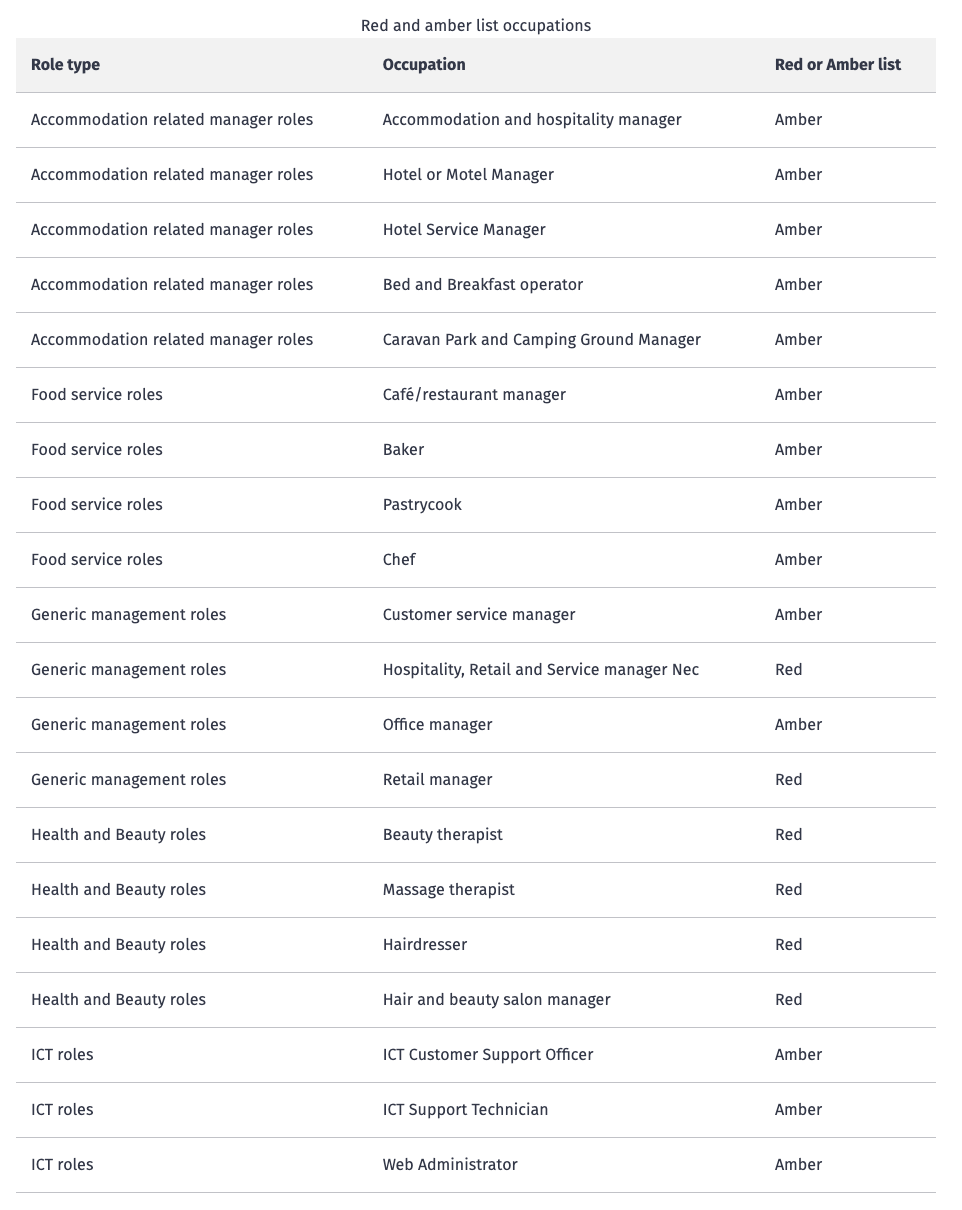
Red and amber list occupations/ Immigration New Zealand
AEWV extension planned
From 2027, migrants who require up to 12 additional months of skilled work experience to meet SMC requirements will be able to apply to extend their Accredited Employer Work Visa to complete the necessary experience. Further details on eligibility and process will be provided at a later date.
Qualification points clarified
From August 2026, qualification points will change to provide one additional point for qualifications completed in New Zealand compared with those completed overseas, except for doctoral degrees and, in some cases, master’s degrees.
Applicants claiming points must provide their qualification certificate and, where applicable, an International Qualification Assessment (IQA) if the qualification was obtained overseas and is not on the List of Qualifications Exempt from Assessment.
Check if you need an International Qualification Assessment
Under the new rules, applicants claiming points for Level 8 or Level 9 qualifications on the New Zealand Qualifications and Credentials Framework must also hold a bachelor’s degree, except for those claiming five points for a New Zealand master’s degree. Level 8 and 9 qualifications include master's degree (level 9), postgraduate diploma (level 8), postgraduate certificate (level 8), honour's degree (level 8).
Applicants claiming six points for a New Zealand master’s degree must have studied full-time for at least 30 weeks in New Zealand and hold a bachelor’s degree, which may be obtained in any country.
Wage and English language changes
Two changes have been made to wage assessment settings. First, migrants will need to meet the SMC median wage applicable when they begin gaining skilled work experience and maintain at least that rate when applying for residence. They will no longer be required to meet a higher wage threshold at the time of residence application.
Second, a five-month grace period will apply if the SMC median wage increases before a migrant starts work. If skilled work begins within five months of the work visa being granted, the wage threshold in place on the visa grant date will apply.
From late August 2026, English language test results will be valid for five years for applicants who hold recognised occupational registration.
Accountants recognised
From late August 2026, accountants who can undertake the work of a Qualified Statutory Accountant in New Zealand and who hold membership with Certified Practising Accountants Australia will be eligible under the Skilled Migrant Category pathway.


ISSUE


Leave a Comment