




A historic guest for a historic moment



India and New Zealand have long been described as the bookends of Asia. For many years, those bookends stood with too few shared stories between them. The time has come to fill that shelf with volumes of trade, investment, innovation and people-to-people success that future generations will look back on with pride.
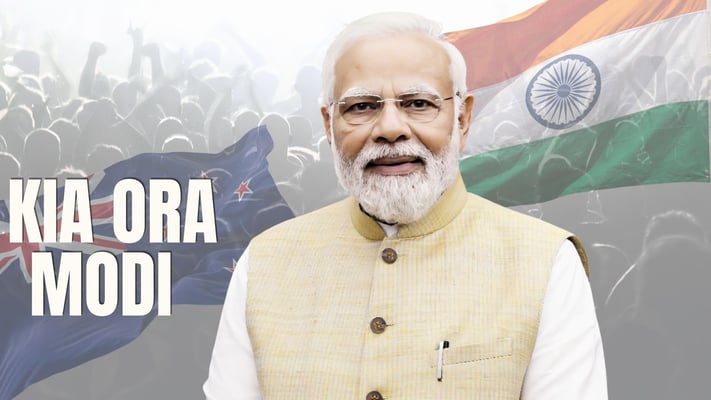
When Narendra Modi arrives in Auckland this week, it will be more than the first visit to New Zealand by an Indian Prime Minister in four decades. He will arrive as the longest-serving elected Prime Minister in the history of independent India, leading the world’s largest democracy at a time when it has emerged as one of the world’s foremost economic and geopolitical powers.
Just as importantly, the visit will show that the elephant and the kiwi can indeed find common ground — and, with enough intent and imagination, even tango.
The last time a sitting Indian Prime Minister visited New Zealand was in 1986, when Rajiv Gandhi travelled here. Much has changed since then. Trade has expanded, people-to-people links have deepened, and the Indian community has become one of New Zealand's largest, most accomplished and most influential migrant communities. The relationship itself has matured, with both countries recognising that they have far more to gain by working together than by looking past one another.
This visit is both a recognition of that journey and a statement of intent for what comes next.
Prime Minister Christopher Luxon deserves considerable credit for recognising it early in his term. From the outset, he made India a foreign policy priority, travelling to New Delhi with a strong business delegation and signalling that New Zealand intended to engage India with a seriousness not always evident in the past.
Much of the progress owes to Trade Minister Todd McClay, whose determination kept the negotiations moving through months of discussions and whose patient approach demonstrated that persistence in diplomacy still counts.
Equally important has been the work of people outside government. Simon Bridges has long championed stronger India-New Zealand ties, first in Parliament and now through the Auckland Business Chamber. Business leaders have travelled repeatedly to India, often at their own expense, building commercial relationships long before they became politically fashionable. Universities have expanded research partnerships and educated generations of Indian students who now contribute to both countries. Sportspeople have strengthened goodwill that no diplomatic communiqué could ever replicate. Community organisations have fostered understanding, while hundreds of thousands of Kiwi Indians have quietly become the living bridge between the two nations.
This moment belongs to all of them.
India and New Zealand have often been described as the bookends of Asia. It is a pleasing image, but bookends are only meaningful when they hold books worth reading. The challenge now is to fill the shelf between them with stories of successful businesses, world-class research, sporting exchanges, cultural partnerships and friendships that enrich both countries.
For New Zealand’s Indian community, this visit carries a significance that is difficult to overstate. Long before governments accelerated the relationship, the community had already been living it. It built businesses that traded across both countries, established educational links, celebrated culture and demonstrated every day that India and New Zealand have far more in common than geography might suggest.
This visit is, in many respects, recognition of that contribution.
It also acknowledges something larger: India is no longer a country that New Zealand can afford simply to admire from afar. It is a nation with which we must engage strategically, economically and culturally. Equally, New Zealand has much to offer India as a trusted partner, an innovative economy and a gateway to the Pacific.
As we celebrate another milestone in the Indian Weekender’s journey, it is worth reflecting on how far this relationship has come. For more than two decades, we have argued that India deserved greater attention in New Zealand’s foreign and economic policy. Today, that view has become mainstream.
Our cover carries the Prime Ministers of India and New Zealand side by side. It is more than a photograph. It is a symbol of a relationship that has finally come of age.
The real work, however, begins now. The next chapter should not be measured simply by high-level visits or diplomatic milestones, but by the partnerships, investments, innovations and friendships that future generations will look back on as the period when the bookends of Asia finally filled the shelf between them.
India and New Zealand have long been described as the bookends of Asia. For many years, those bookends stood with too few shared stories between them. The time has come to fill that shelf with volumes of trade, investment, innovation and people-to-people success that future generations will look...
India and New Zealand have long been described as the bookends of Asia. For many years, those bookends stood with too few shared stories between them. The time has come to fill that shelf with volumes of trade, investment, innovation and people-to-people success that future generations will look back on with pride.
When Narendra Modi arrives in Auckland this week, it will be more than the first visit to New Zealand by an Indian Prime Minister in four decades. He will arrive as the longest-serving elected Prime Minister in the history of independent India, leading the world’s largest democracy at a time when it has emerged as one of the world’s foremost economic and geopolitical powers.
Just as importantly, the visit will show that the elephant and the kiwi can indeed find common ground — and, with enough intent and imagination, even tango.
The last time a sitting Indian Prime Minister visited New Zealand was in 1986, when Rajiv Gandhi travelled here. Much has changed since then. Trade has expanded, people-to-people links have deepened, and the Indian community has become one of New Zealand's largest, most accomplished and most influential migrant communities. The relationship itself has matured, with both countries recognising that they have far more to gain by working together than by looking past one another.
This visit is both a recognition of that journey and a statement of intent for what comes next.
Prime Minister Christopher Luxon deserves considerable credit for recognising it early in his term. From the outset, he made India a foreign policy priority, travelling to New Delhi with a strong business delegation and signalling that New Zealand intended to engage India with a seriousness not always evident in the past.
Much of the progress owes to Trade Minister Todd McClay, whose determination kept the negotiations moving through months of discussions and whose patient approach demonstrated that persistence in diplomacy still counts.
Equally important has been the work of people outside government. Simon Bridges has long championed stronger India-New Zealand ties, first in Parliament and now through the Auckland Business Chamber. Business leaders have travelled repeatedly to India, often at their own expense, building commercial relationships long before they became politically fashionable. Universities have expanded research partnerships and educated generations of Indian students who now contribute to both countries. Sportspeople have strengthened goodwill that no diplomatic communiqué could ever replicate. Community organisations have fostered understanding, while hundreds of thousands of Kiwi Indians have quietly become the living bridge between the two nations.
This moment belongs to all of them.
India and New Zealand have often been described as the bookends of Asia. It is a pleasing image, but bookends are only meaningful when they hold books worth reading. The challenge now is to fill the shelf between them with stories of successful businesses, world-class research, sporting exchanges, cultural partnerships and friendships that enrich both countries.
For New Zealand’s Indian community, this visit carries a significance that is difficult to overstate. Long before governments accelerated the relationship, the community had already been living it. It built businesses that traded across both countries, established educational links, celebrated culture and demonstrated every day that India and New Zealand have far more in common than geography might suggest.
This visit is, in many respects, recognition of that contribution.
It also acknowledges something larger: India is no longer a country that New Zealand can afford simply to admire from afar. It is a nation with which we must engage strategically, economically and culturally. Equally, New Zealand has much to offer India as a trusted partner, an innovative economy and a gateway to the Pacific.
As we celebrate another milestone in the Indian Weekender’s journey, it is worth reflecting on how far this relationship has come. For more than two decades, we have argued that India deserved greater attention in New Zealand’s foreign and economic policy. Today, that view has become mainstream.
Our cover carries the Prime Ministers of India and New Zealand side by side. It is more than a photograph. It is a symbol of a relationship that has finally come of age.
The real work, however, begins now. The next chapter should not be measured simply by high-level visits or diplomatic milestones, but by the partnerships, investments, innovations and friendships that future generations will look back on as the period when the bookends of Asia finally filled the shelf between them.


Related Posts
ISSUE


Leave a Comment