


Training, Everest, temporary vision loss: Fijian Indian athlete’s journey to the summit
"The mountain is so hard, it requires a lot of perseverance. I kept going one step at a time, and I did it"
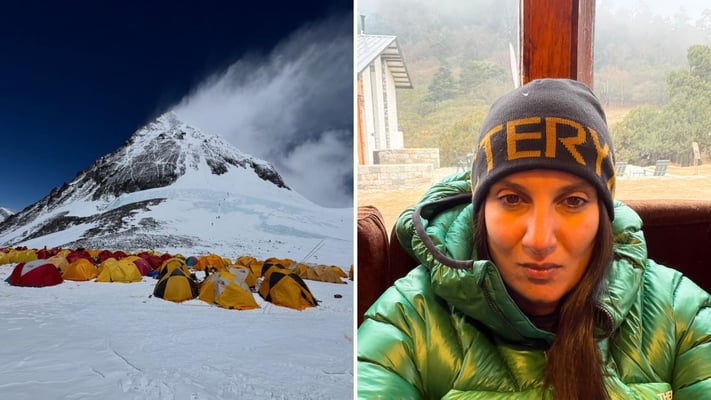
Fiji-born Indian-origin endurance athlete Shika Raju, 46, has achieved a lifelong dream by summiting Mt Everest on May 21, 2026, a feat that came after eight years of preparation, years of training, and two months spent on the mountain.
Born in Fiji with Indian ancestry, Shika is now based in Sydney, Australia, where she has spent the past decade building her journey as an endurance athlete.
For the past 10-12 years, Shika has competed in marathons around the world. It was during one such race, the Everest Marathon, that she first saw the Himalayas and found inspiration for her biggest challenge yet.
“I saw Mt Everest and I thought - I would like to do that,” she said.
-jpg.jpeg?width=1920&height=1080&name=Untitled%20design%20(2)-jpg.jpeg)
Mt Everest Summit/ Supplied
Eight years of preparation behind one summit
For Shika, climbing Everest was never an overnight decision. It was a carefully planned goal that involved years of learning, training and smaller climbs before attempting the world’s highest mountain.
“I went and did a mountaineering course followed by small climbs and climbed a 7,000-metre peak and 8,000-metre peak,” she said.
Her Everest preparation was structured and disciplined, involving a dedicated coach and years of physical conditioning.
“The training took 8 years and had a coach and we trained every day for the last 3 years heavily for Everest, including long weekends, 8-hour hikes with a heavy backpack and the running and a lot of strength work.”
Shika was coached by Summit Strength and prepared for the summit through New Zealand-based expedition company Adventure Consultants.
Her routine demanded immense commitment. Shika would wake up at 4am for training before heading to work and continuing her preparation after returning home.
She worked with a coach from Australia through the Summit while balancing her professional and academic commitments.
“I don't have children or family, so managing things at home did not require so much time,” she said.
Alongside training, Shika was completing her masters and thesis while working full-time in the health sector in Australia.
When an Indian background came with expectations
Shika acknowledged that as someone from an Indian background, her decision to focus on mountaineering was not always easy for people around her to understand.
She said expectations around marriage and settling down could sometimes shape the choices people make, but she wanted to follow a different dream.
“For the community, it was hard to understand why am I doing this but at the same time, for me it was more about if I can do this anyone can do this.”
“Don’t put your goals in a box,” she explained.
Losing her vision on Everest
Spending two months on Everest pushed Shika through some of the toughest moments of her life, with challenges that went beyond physical endurance.
One of the most frightening experiences came when she temporarily lost her vision due to the effects of high altitude.
“I lost my vision - I couldn't see and I was solely dependent on my guides who were great and safety got me the camps,” she shared.
“As I was climbing down I started losing the vision.”
“That was a scary bit,” she recalled.
Her vision returned the following day once the pressure settled down.
Despite the challenges, Shika continued to push forward, relying on her training and the support of her guides.
“I spent my own money on Everest and that was around 100,000 USD.”
-jpg-1.jpeg?width=1920&height=1080&name=Untitled%20design%20(1)-jpg-1.jpeg)
Mt Everest Summit/ Supplied
Life on Everest
The daily routine on Everest involved constant movement between camps, physical exhaustion and adapting to unpredictable weather conditions.
Climbers would begin their days early at the base camp, spending time moving up and down the mountain repeatedly before progressing through Camp 1, Camp 2, Camp 3 and eventually higher.
“One minute it would be cold, and in the middle of the day on the mountain it would be so hot, and would get cold again,” she explained.
Communication with family was limited during the climb. Shika stayed in contact with her sister through dispatches but intentionally kept communication with her parents limited to avoid causing worry.
-jpg-1.jpeg?width=1920&height=1080&name=Untitled%20design%20(3)-jpg-1.jpeg)
Mt Everest Summit/ Supplied
Coming home after achieving an eight-year goal
After returning to Australia, Shika is recovering from the physical and emotional impact of completing a goal that took eight years to achieve.
“Psychologically it is different because I am not training, and my goal of eight years is accomplished,” she shared.
She said returning physically felt challenging, but she remained positive about rebuilding her strength.
“It also feels weird coming back to work as I was on the mountain last week,” Shika quipped.
However, for Shika, the next challenge is already in sight.
After a week of rest following her Everest climb, Shika has started training for Denali- the highest mountain peak in North America, which she plans to attempt next June.
“I was resting for a week and now I’m back at work,” she quipped.
"The mountain is so hard, it requires a lot of perseverance. I kept going one step at a time, and I did it"
Fiji-born Indian-origin endurance athlete Shika Raju, 46, has achieved a lifelong dream by summiting Mt Everest on May 21, 2026, a feat that came after eight years of preparation, years of...
"The mountain is so hard, it requires a lot of perseverance. I kept going one step at a time, and I did it"
Fiji-born Indian-origin endurance athlete Shika Raju, 46, has achieved a lifelong dream by summiting Mt Everest on May 21, 2026, a feat that came after eight years of preparation, years of training, and two months spent on the mountain.
Born in Fiji with Indian ancestry, Shika is now based in Sydney, Australia, where she has spent the past decade building her journey as an endurance athlete.
For the past 10-12 years, Shika has competed in marathons around the world. It was during one such race, the Everest Marathon, that she first saw the Himalayas and found inspiration for her biggest challenge yet.
“I saw Mt Everest and I thought - I would like to do that,” she said.
-jpg.jpeg?width=1920&height=1080&name=Untitled%20design%20(2)-jpg.jpeg)
Mt Everest Summit/ Supplied
Eight years of preparation behind one summit
For Shika, climbing Everest was never an overnight decision. It was a carefully planned goal that involved years of learning, training and smaller climbs before attempting the world’s highest mountain.
“I went and did a mountaineering course followed by small climbs and climbed a 7,000-metre peak and 8,000-metre peak,” she said.
Her Everest preparation was structured and disciplined, involving a dedicated coach and years of physical conditioning.
“The training took 8 years and had a coach and we trained every day for the last 3 years heavily for Everest, including long weekends, 8-hour hikes with a heavy backpack and the running and a lot of strength work.”
Shika was coached by Summit Strength and prepared for the summit through New Zealand-based expedition company Adventure Consultants.
Her routine demanded immense commitment. Shika would wake up at 4am for training before heading to work and continuing her preparation after returning home.
She worked with a coach from Australia through the Summit while balancing her professional and academic commitments.
“I don't have children or family, so managing things at home did not require so much time,” she said.
Alongside training, Shika was completing her masters and thesis while working full-time in the health sector in Australia.
When an Indian background came with expectations
Shika acknowledged that as someone from an Indian background, her decision to focus on mountaineering was not always easy for people around her to understand.
She said expectations around marriage and settling down could sometimes shape the choices people make, but she wanted to follow a different dream.
“For the community, it was hard to understand why am I doing this but at the same time, for me it was more about if I can do this anyone can do this.”
“Don’t put your goals in a box,” she explained.
Losing her vision on Everest
Spending two months on Everest pushed Shika through some of the toughest moments of her life, with challenges that went beyond physical endurance.
One of the most frightening experiences came when she temporarily lost her vision due to the effects of high altitude.
“I lost my vision - I couldn't see and I was solely dependent on my guides who were great and safety got me the camps,” she shared.
“As I was climbing down I started losing the vision.”
“That was a scary bit,” she recalled.
Her vision returned the following day once the pressure settled down.
Despite the challenges, Shika continued to push forward, relying on her training and the support of her guides.
“I spent my own money on Everest and that was around 100,000 USD.”
-jpg-1.jpeg?width=1920&height=1080&name=Untitled%20design%20(1)-jpg-1.jpeg)
Mt Everest Summit/ Supplied
Life on Everest
The daily routine on Everest involved constant movement between camps, physical exhaustion and adapting to unpredictable weather conditions.
Climbers would begin their days early at the base camp, spending time moving up and down the mountain repeatedly before progressing through Camp 1, Camp 2, Camp 3 and eventually higher.
“One minute it would be cold, and in the middle of the day on the mountain it would be so hot, and would get cold again,” she explained.
Communication with family was limited during the climb. Shika stayed in contact with her sister through dispatches but intentionally kept communication with her parents limited to avoid causing worry.
-jpg-1.jpeg?width=1920&height=1080&name=Untitled%20design%20(3)-jpg-1.jpeg)
Mt Everest Summit/ Supplied
Coming home after achieving an eight-year goal
After returning to Australia, Shika is recovering from the physical and emotional impact of completing a goal that took eight years to achieve.
“Psychologically it is different because I am not training, and my goal of eight years is accomplished,” she shared.
She said returning physically felt challenging, but she remained positive about rebuilding her strength.
“It also feels weird coming back to work as I was on the mountain last week,” Shika quipped.
However, for Shika, the next challenge is already in sight.
After a week of rest following her Everest climb, Shika has started training for Denali- the highest mountain peak in North America, which she plans to attempt next June.
“I was resting for a week and now I’m back at work,” she quipped.





Leave a Comment