



Parents to get clearer updates on children’s learning progress
Parents across New Zealand will begin receiving standardised updates on their children’s progress in reading, writing and maths from this term, under a new national reporting framework being rolled out across primary and intermediate schools.
According to a report by 1News, the changes, promoted by Education Minister Erica Stanford, aim to provide nationally consistent assessment and reporting for students, regardless of the school they attend.
Under the framework, parents of students in Years 0–10 will receive reports using one of five progress descriptors to outline learning progress in key subjects. These descriptors are Emerging, Developing, Consolidating, Proficient, and Exceeding.
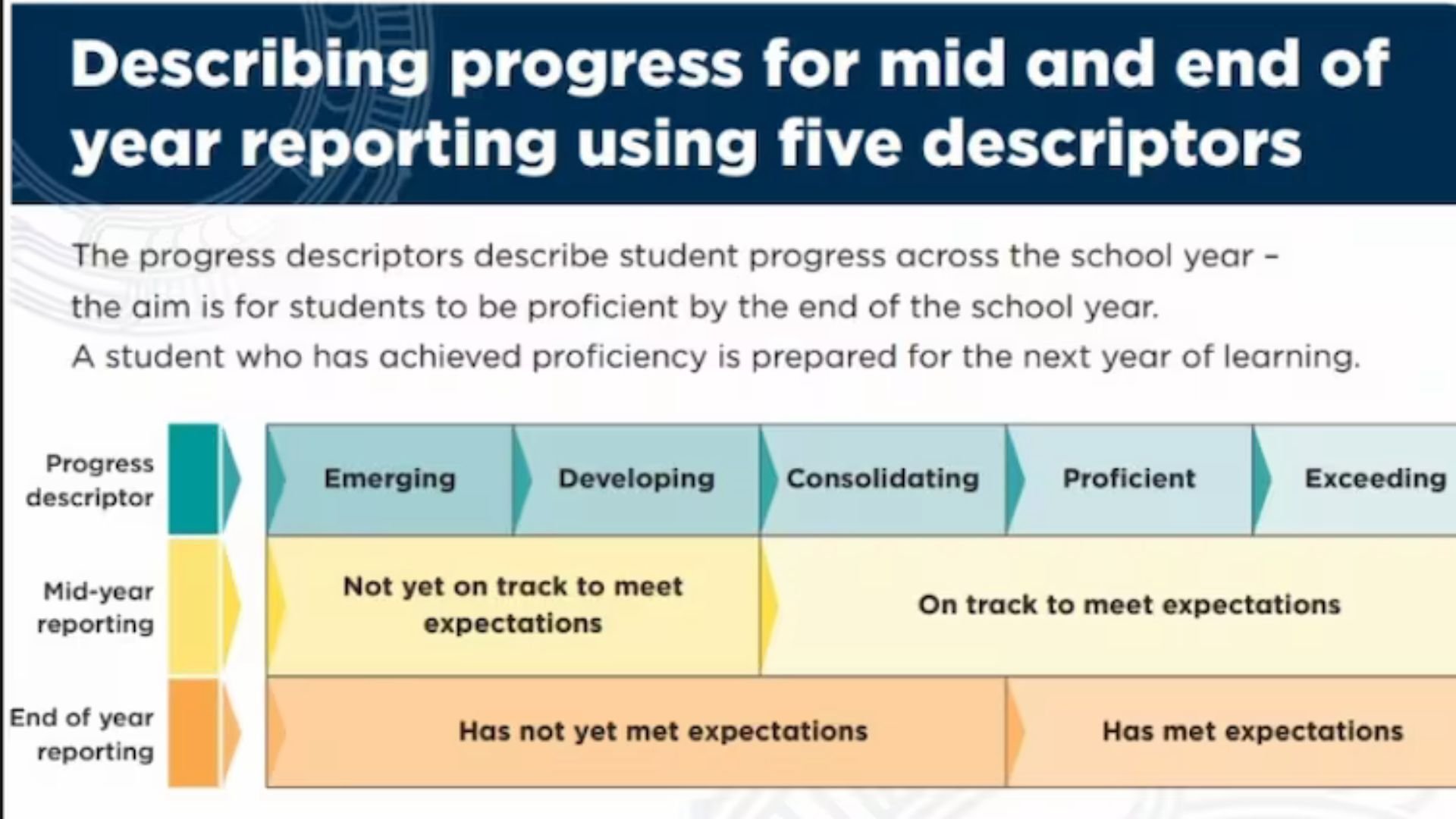
The five progress descriptors are Emerging, Developing, Consolidating, Proficient, and Exceeding. (Source: Supplied)
Reports will also include an explanation of why a particular descriptor was chosen and guidance on how parents can support their child’s next learning steps, as reported by 1News.
In addition to subject progress, reports will include information on progress over time, attendance, and phonics achievement. Reporting on other learning areas, values, and behaviour will continue as it currently does.
"For too long, New Zealand has lacked consistent, reliable information on how students are progressing in the basics," Stanford said, 1News has quoted.
“The Education Review Office and Assessment Institute have been clear that without nationally consistent assessment and reporting, parents can be left without information they need, and the system cannot respond early when children need support."
Stanford said parents had repeatedly called for clearer reporting on academic achievement.
"Parents have long called for clearer, more detailed reporting on academic achievement, and this new framework delivers that clarity, 1News has reported.
"It supports parents to understand their child’s progress over time and to be active partners in their learning."
A spokesperson said many schools already provided strong reporting and would be able to continue using existing templates where these meet the new expectations.
The Government said the new framework responded "directly to expert advice and long-standing concerns about assessment and reporting."
As part of the changes, students in Years 3–8 will also receive twice-yearly progress check-ins in reading, writing and maths. These check-ins will take place mid-year and at the end of the year, aligning with reporting periods.
The check-ins are intended to provide a clearer picture of student progress across the year, "helping parents see how their child is tracking across the year, not just at a single point in time," 1News has reported.
Schools will use specified assessment tools for these check-ins, supported by the new SMART system, short for Student Monitoring, Assessment and Reporting Tool. Schools can choose between SMART, Progressive Achievement Tests (PATs), and e-asTTle.
“The SMART tool is a low-stakes, light-touch way to support consistent assessment. It is not designed to replace teacher judgment," Stanford said, 1News has quoted.
"Teachers will continue to use their professional expertise, drawing on classroom work, observations and assessments. These tools support that judgement and help ensure parents receive clear, consistent information,” 1News has quoted.
The Ministry of Education said schools and kura have been provided with resources to support implementation, including information sheets and guidance documents, with webinars and videos to be released by the end of March.
"These changes ensure parents are better informed, teachers are supported, and students get help earlier when they need it. That is how we lift achievement and ensure every child can reach their potential," Stanford said.
“I wish all students and teachers the very best as they return to school this year,” as quoted by 1News.
Parents across New Zealand will begin receiving standardised updates on their children’s progress in reading, writing and maths from this term, under a new national reporting framework being rolled out across primary and intermediate schools.
{% module_block module...Parents across New Zealand will begin receiving standardised updates on their children’s progress in reading, writing and maths from this term, under a new national reporting framework being rolled out across primary and intermediate schools.
According to a report by 1News, the changes, promoted by Education Minister Erica Stanford, aim to provide nationally consistent assessment and reporting for students, regardless of the school they attend.
Under the framework, parents of students in Years 0–10 will receive reports using one of five progress descriptors to outline learning progress in key subjects. These descriptors are Emerging, Developing, Consolidating, Proficient, and Exceeding.

The five progress descriptors are Emerging, Developing, Consolidating, Proficient, and Exceeding. (Source: Supplied)
Reports will also include an explanation of why a particular descriptor was chosen and guidance on how parents can support their child’s next learning steps, as reported by 1News.
In addition to subject progress, reports will include information on progress over time, attendance, and phonics achievement. Reporting on other learning areas, values, and behaviour will continue as it currently does.
"For too long, New Zealand has lacked consistent, reliable information on how students are progressing in the basics," Stanford said, 1News has quoted.
“The Education Review Office and Assessment Institute have been clear that without nationally consistent assessment and reporting, parents can be left without information they need, and the system cannot respond early when children need support."
Stanford said parents had repeatedly called for clearer reporting on academic achievement.
"Parents have long called for clearer, more detailed reporting on academic achievement, and this new framework delivers that clarity, 1News has reported.
"It supports parents to understand their child’s progress over time and to be active partners in their learning."
A spokesperson said many schools already provided strong reporting and would be able to continue using existing templates where these meet the new expectations.
The Government said the new framework responded "directly to expert advice and long-standing concerns about assessment and reporting."
As part of the changes, students in Years 3–8 will also receive twice-yearly progress check-ins in reading, writing and maths. These check-ins will take place mid-year and at the end of the year, aligning with reporting periods.
The check-ins are intended to provide a clearer picture of student progress across the year, "helping parents see how their child is tracking across the year, not just at a single point in time," 1News has reported.
Schools will use specified assessment tools for these check-ins, supported by the new SMART system, short for Student Monitoring, Assessment and Reporting Tool. Schools can choose between SMART, Progressive Achievement Tests (PATs), and e-asTTle.
“The SMART tool is a low-stakes, light-touch way to support consistent assessment. It is not designed to replace teacher judgment," Stanford said, 1News has quoted.
"Teachers will continue to use their professional expertise, drawing on classroom work, observations and assessments. These tools support that judgement and help ensure parents receive clear, consistent information,” 1News has quoted.
The Ministry of Education said schools and kura have been provided with resources to support implementation, including information sheets and guidance documents, with webinars and videos to be released by the end of March.
"These changes ensure parents are better informed, teachers are supported, and students get help earlier when they need it. That is how we lift achievement and ensure every child can reach their potential," Stanford said.
“I wish all students and teachers the very best as they return to school this year,” as quoted by 1News.


Leave a Comment