

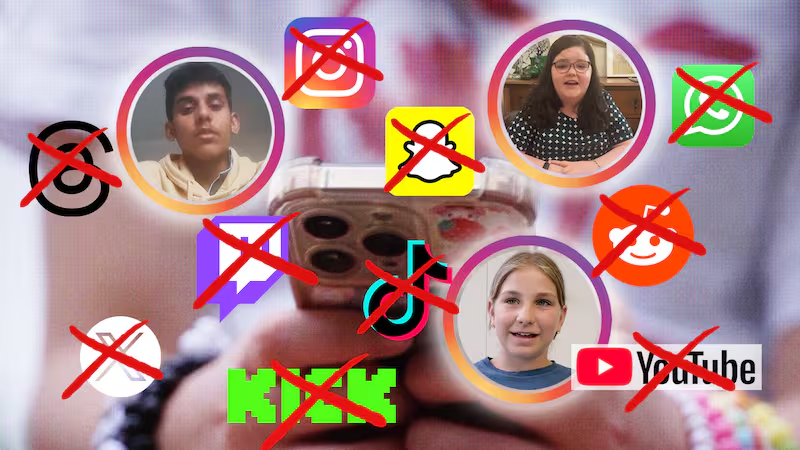

Meta: Social media bans won’t stop kids as NZ weighs options
Meta has pushed back against calls to ban children from social media, warning that such restrictions alone will not stop young people from going online, as New Zealand considers whether to follow Australia’s approach. Reported by Aziz Al Saafin from 1news.
The company’s vice president and global head of safety, Antigone Davis, is currently in Auckland attending an Instagram safety camp, where Meta is promoting what it describes as stronger protections for teenagers and greater parental control.
Davis criticised the idea of an outright social media ban, calling it a “fool’s errand” and arguing that it can create a false sense of safety while pushing young users towards less regulated areas of the internet.
“The challenge with a ban is that you can’t ban the entire internet,” she told 1News. “So you’re going to try to home in on a subset of apps that kids use.”
Meta pointed to Australia’s under-16 social media ban, which came into force this year, saying early indications suggest teenagers are simply turning to alternative platforms.
“Teens did what you would have expected, which is they started downloading a whole slew of apps that people didn’t know about,” Davis said. “You kind of drive teens, unfortunately, to less safe experiences.”
Instead of bans, Meta is promoting its Teen Accounts, which the company says are designed to address parents’ main concerns.
“We’ve built teen accounts around parents’ top concerns: Who their teens are connecting with, what content they’re seeing, and how much time they’re spending,” Davis said. “You can’t access these apps without permission from your parents first. That sets up the right initial barrier, and then we put safeguards in place.”
However, Davis acknowledged that technology alone cannot fully solve the issue.
“No technology is perfect,” she said. “That’s why we think it’s important to have multiple layers of protection, not just one single solution.”
On the question of responsibility, Davis said platforms must continue to play an active role.
“It has to be shared,” she said. “Parents play a critical role, but platforms have to design safety in from the start. Platforms absolutely have a responsibility, and that’s why we’ve focused on building protections directly into our products.”
Online safety advocates have also cautioned against framing the debate as a simple choice between bans and access. NetSafe chief executive Brent Carey said there is no single solution.
“We love the idea of a silver bullet, but silver bullets don’t work,” Carey said. “We need more than just banning and restricting access.”
From a youth perspective, Gen-Z Aotearoa co-director Lola Fisher said bans risk overlooking how deeply social media is already woven into young people’s lives.
“Young people are still accessing social media, they’re finding ways around the ban,” Fisher said. “What we need is regulation and safe, supportive environments.”
However, one online safety advocacy group that attended the event said it was not convinced Meta’s approach went far enough.
In a statement, Makes Sense said it understood Meta’s desire to respond to growing demand for safer products, but said any trust it once had in major platforms had been “fundamentally eroded”, with action only coming after years of harm and exposure.
Asked what assurances she could give Kiwi parents, Davis said Meta was listening.
“What I would say to parents is that we’re listening, and we’re building these protections with them in mind.”
Meta’s visit came amid growing calls for greater oversight of social media platforms, with the Government considering whether to introduce stricter rules for children online.
Meta has pushed back against calls to ban children from social media, warning that such restrictions alone will not stop young people from going online, as New Zealand considers whether to follow Australia’s approach. Reported by Aziz Al Saafin from 1news.
The company’s vice president and global...
Meta has pushed back against calls to ban children from social media, warning that such restrictions alone will not stop young people from going online, as New Zealand considers whether to follow Australia’s approach. Reported by Aziz Al Saafin from 1news.
The company’s vice president and global head of safety, Antigone Davis, is currently in Auckland attending an Instagram safety camp, where Meta is promoting what it describes as stronger protections for teenagers and greater parental control.
Davis criticised the idea of an outright social media ban, calling it a “fool’s errand” and arguing that it can create a false sense of safety while pushing young users towards less regulated areas of the internet.
“The challenge with a ban is that you can’t ban the entire internet,” she told 1News. “So you’re going to try to home in on a subset of apps that kids use.”
Meta pointed to Australia’s under-16 social media ban, which came into force this year, saying early indications suggest teenagers are simply turning to alternative platforms.
“Teens did what you would have expected, which is they started downloading a whole slew of apps that people didn’t know about,” Davis said. “You kind of drive teens, unfortunately, to less safe experiences.”
Instead of bans, Meta is promoting its Teen Accounts, which the company says are designed to address parents’ main concerns.
“We’ve built teen accounts around parents’ top concerns: Who their teens are connecting with, what content they’re seeing, and how much time they’re spending,” Davis said. “You can’t access these apps without permission from your parents first. That sets up the right initial barrier, and then we put safeguards in place.”
However, Davis acknowledged that technology alone cannot fully solve the issue.
“No technology is perfect,” she said. “That’s why we think it’s important to have multiple layers of protection, not just one single solution.”
On the question of responsibility, Davis said platforms must continue to play an active role.
“It has to be shared,” she said. “Parents play a critical role, but platforms have to design safety in from the start. Platforms absolutely have a responsibility, and that’s why we’ve focused on building protections directly into our products.”
Online safety advocates have also cautioned against framing the debate as a simple choice between bans and access. NetSafe chief executive Brent Carey said there is no single solution.
“We love the idea of a silver bullet, but silver bullets don’t work,” Carey said. “We need more than just banning and restricting access.”
From a youth perspective, Gen-Z Aotearoa co-director Lola Fisher said bans risk overlooking how deeply social media is already woven into young people’s lives.
“Young people are still accessing social media, they’re finding ways around the ban,” Fisher said. “What we need is regulation and safe, supportive environments.”
However, one online safety advocacy group that attended the event said it was not convinced Meta’s approach went far enough.
In a statement, Makes Sense said it understood Meta’s desire to respond to growing demand for safer products, but said any trust it once had in major platforms had been “fundamentally eroded”, with action only coming after years of harm and exposure.
Asked what assurances she could give Kiwi parents, Davis said Meta was listening.
“What I would say to parents is that we’re listening, and we’re building these protections with them in mind.”
Meta’s visit came amid growing calls for greater oversight of social media platforms, with the Government considering whether to introduce stricter rules for children online.


Leave a Comment