


Women shouldn’t have to change to stay safe
For many women in India, safety is not simply a question of where they live or how they travel. It can become a constant calculation — which road to take, what time to return, whom to trust and whether a familiar public place will remain safe after dark.
That anxiety has resurfaced following two disturbing incidents in Bihar and Delhi, raising a larger question: when sexual violence occurs, should the response be to restrict women’s movements, or to focus more directly on preventing such violence and holding perpetrators accountable?
In Jamui, Bihar, a teenage boy and girl returning from coaching classes were stopped and surrounded by a group of men on September 19. Police said the girl was molested and the boy was assaulted. Videos of the incident circulated widely on social media, showing the teenagers pleading with the group. Police subsequently registered a case under the POCSO Act and arrested several accused. The Indian Express reported that investigators were also looking for others identified through the videos.
The incident generated widespread outrage, but the consequences extended beyond the people directly involved. Reporting by The Guardian highlighted how such incidents can lead to additional restrictions being placed on women and girls, including pressure over where they go, when they return home and how they conduct themselves. The original Guardian report captures this personal anxiety through the line: “The anxiety is about doing the mental maths of how to stay safe.”
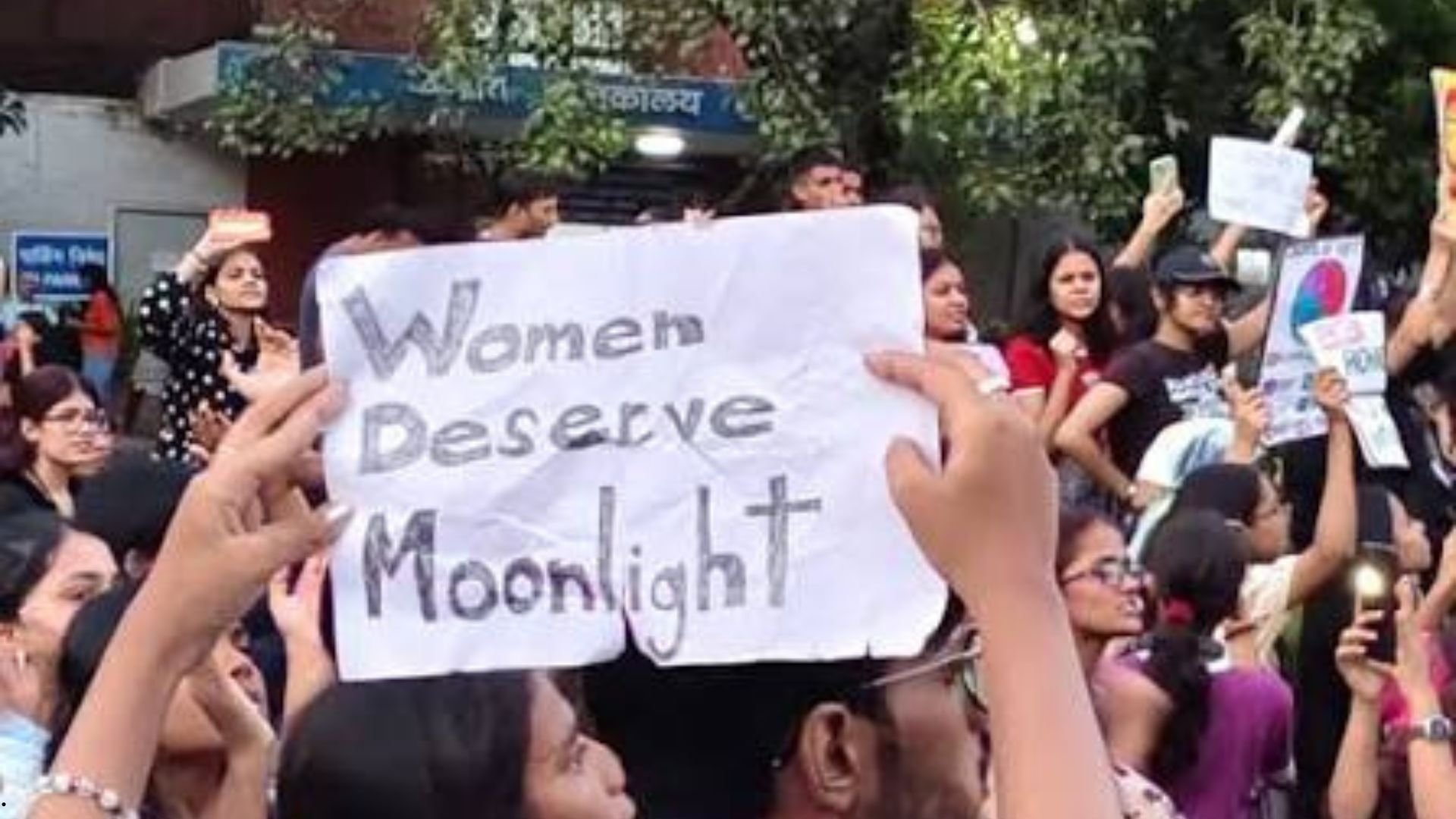
The second case unfolded in Delhi, where a 17-year-old girl was allegedly sexually assaulted in Aastha Kunj park by three men who allegedly posed as police officers. According to the FIR details reported by Hindustan Times, the teenager and her male friend were threatened during the incident. The case led to protests by students and renewed concerns about safety in and around public spaces.
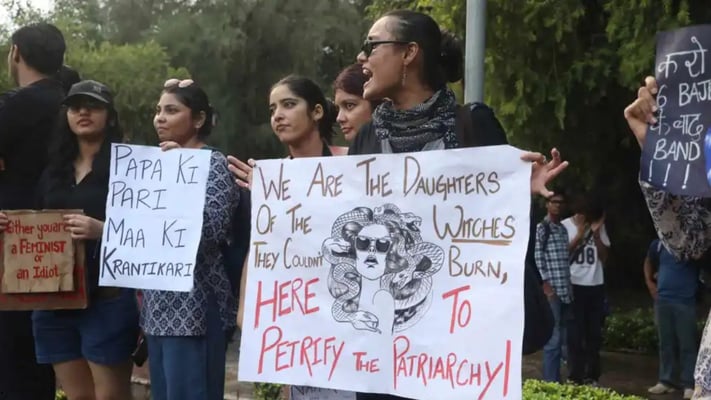
The location of the Delhi incident also became significant because it occurred close to Lady Shri Ram College. Students organised demonstrations calling attention to women’s safety, while the college temporarily shifted classes online amid concerns following the incident. Reuters reported that hundreds of students, predominantly women, took part in protests in Delhi and called for safer public spaces.
These incidents have renewed a difficult conversation about how society responds to sexual violence. Restricting access to parks, imposing earlier curfews or advising women to avoid certain places may sometimes be presented as immediate safety measures. But such steps do not, by themselves, address the behaviour of the people committing harassment and violence.
The debate is therefore not about whether women should take precautions. Personal safety measures can be useful in dangerous situations. The larger question is whether those precautions should become the principal responsibility placed on women, while the behaviour of perpetrators receives less attention.
The Guardian’s report points to this tension through the experiences of women who say that incidents of violence can result in greater restrictions on their freedom. Meanwhile, the Jamui investigation demonstrates that identifying suspects and pursuing legal action remains an important part of the response. The Indian Express reported that police used video footage to identify those involved and continued efforts to arrest additional suspects.

There is also a wider concern about how social media shapes these cases. Videos can help investigators identify suspects, as happened in Jamui, but the circulation of footage involving minors can create additional harm. The Indian Express later reported that Bihar Police registered cases against social media accounts for circulating material that revealed the identity of a minor victim.
For women, the issue ultimately goes beyond one incident or one city. The ability to travel to college, return from work, meet friends, use a park or simply move through a public street without fear is closely connected to the idea of equal participation in public life.
The recent cases in Jamui and Delhi have once again placed that question in the spotlight. A meaningful response to sexual violence requires attention to perpetrators, investigations, accountability, safer public infrastructure and social attitudes — alongside any reasonable personal safety precautions.
Women can be cautious without being made responsible for the violence committed against them. Safety should be something public spaces and institutions help provide, rather than a burden women are expected to carry alone.
The personal perspective and central argument are reworked originally from The Guardian’s “From Jamui to Delhi, the burden of safety from sexual assault cannot fall on women.” The Jamui incident details were cross-checked with The Indian Express, while the Delhi case details were checked against Hindustan Times and Reuters.
For many women in India, safety is not simply a question of where they live or how they travel. It can become a constant calculation — which road to take, what time to return, whom to trust and whether a familiar public place will remain safe after dark.
{% module_block module...For many women in India, safety is not simply a question of where they live or how they travel. It can become a constant calculation — which road to take, what time to return, whom to trust and whether a familiar public place will remain safe after dark.
That anxiety has resurfaced following two disturbing incidents in Bihar and Delhi, raising a larger question: when sexual violence occurs, should the response be to restrict women’s movements, or to focus more directly on preventing such violence and holding perpetrators accountable?
In Jamui, Bihar, a teenage boy and girl returning from coaching classes were stopped and surrounded by a group of men on September 19. Police said the girl was molested and the boy was assaulted. Videos of the incident circulated widely on social media, showing the teenagers pleading with the group. Police subsequently registered a case under the POCSO Act and arrested several accused. The Indian Express reported that investigators were also looking for others identified through the videos.
The incident generated widespread outrage, but the consequences extended beyond the people directly involved. Reporting by The Guardian highlighted how such incidents can lead to additional restrictions being placed on women and girls, including pressure over where they go, when they return home and how they conduct themselves. The original Guardian report captures this personal anxiety through the line: “The anxiety is about doing the mental maths of how to stay safe.”

The second case unfolded in Delhi, where a 17-year-old girl was allegedly sexually assaulted in Aastha Kunj park by three men who allegedly posed as police officers. According to the FIR details reported by Hindustan Times, the teenager and her male friend were threatened during the incident. The case led to protests by students and renewed concerns about safety in and around public spaces.
The location of the Delhi incident also became significant because it occurred close to Lady Shri Ram College. Students organised demonstrations calling attention to women’s safety, while the college temporarily shifted classes online amid concerns following the incident. Reuters reported that hundreds of students, predominantly women, took part in protests in Delhi and called for safer public spaces.
These incidents have renewed a difficult conversation about how society responds to sexual violence. Restricting access to parks, imposing earlier curfews or advising women to avoid certain places may sometimes be presented as immediate safety measures. But such steps do not, by themselves, address the behaviour of the people committing harassment and violence.
The debate is therefore not about whether women should take precautions. Personal safety measures can be useful in dangerous situations. The larger question is whether those precautions should become the principal responsibility placed on women, while the behaviour of perpetrators receives less attention.
The Guardian’s report points to this tension through the experiences of women who say that incidents of violence can result in greater restrictions on their freedom. Meanwhile, the Jamui investigation demonstrates that identifying suspects and pursuing legal action remains an important part of the response. The Indian Express reported that police used video footage to identify those involved and continued efforts to arrest additional suspects.

There is also a wider concern about how social media shapes these cases. Videos can help investigators identify suspects, as happened in Jamui, but the circulation of footage involving minors can create additional harm. The Indian Express later reported that Bihar Police registered cases against social media accounts for circulating material that revealed the identity of a minor victim.
For women, the issue ultimately goes beyond one incident or one city. The ability to travel to college, return from work, meet friends, use a park or simply move through a public street without fear is closely connected to the idea of equal participation in public life.
The recent cases in Jamui and Delhi have once again placed that question in the spotlight. A meaningful response to sexual violence requires attention to perpetrators, investigations, accountability, safer public infrastructure and social attitudes — alongside any reasonable personal safety precautions.
Women can be cautious without being made responsible for the violence committed against them. Safety should be something public spaces and institutions help provide, rather than a burden women are expected to carry alone.
The personal perspective and central argument are reworked originally from The Guardian’s “From Jamui to Delhi, the burden of safety from sexual assault cannot fall on women.” The Jamui incident details were cross-checked with The Indian Express, while the Delhi case details were checked against Hindustan Times and Reuters.





Leave a Comment