

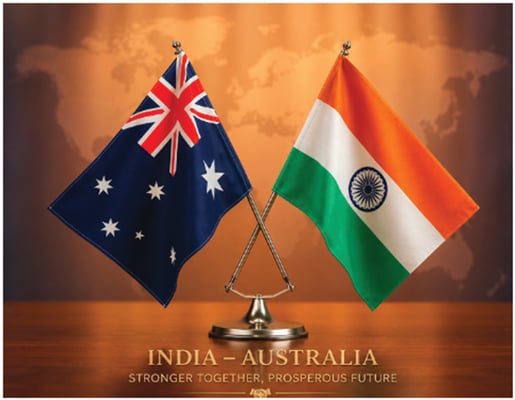

PM Modi powers India-Australia ties to new heights in Melbourne
Prime Minister Narendra Modi's trip to Australia from 8 to 10 July has been making news in both India and Australia. The tour concluded with 18 key outcomes across fields including defense, maritime security, energy, critical technologies, education, mining, research, and cultural cooperation, marking a step toward the India-Australia Comprehensive Strategic Partnership.
This was not a usual bilateral visit, but the third annual summit between Modi and Australian PM Anthony Albanese, and it shows that the ties have moved from goodwill to substance.
India and Australia are among the largest democracies in the world and share a mutual concern about an assertive China in the Indo-Pacific.
Their relationship has also grown increasingly vital to each other's economic future. Significant agreements signed during the visit included the Joint Declaration on Defense and Security Cooperation and the Maritime Security Collaboration Roadmap.
The visit also allowed Australia to supply uranium to India under the Civil Nuclear Agreement, and saw the return of three antique items from India.
Economically and in terms of people-to-people initiatives, there were new approvals to open Australian universities in India, as well as the construction of a solar training academy, showing that this partnership is focused on future generations of Indians rather than the current government.
The most important announcement relates to trade. Modi announced that the two countries agreed to speed up talks on the Comprehensive Economic Cooperation Agreement (CECA), which he described as "balanced, ambitious, and beneficial for both countries."
This is particularly relevant, given that there has already been a temporary trade agreement since 2022. The signing of the CECA would mean deeper trade access and expanded cooperation in critical minerals, defense equipment manufacturing, and green energy, which is India's aim to reduce reliance on China.
The diaspora's response underscored the importance of the visit. Around 30,000 people attended Modi's meeting in Melbourne — which is said to be the largest of its kind in Australia — and it is seen as a sign of the relationship between India and Australia.
Even during the celebrations, several commentators pointed out that the real issues must be resolved for this unprecedented summit to succeed, rather than becoming just another series of unsuccessful MoUs.
Analysts said CECA must address labor mobility and visa issues, as skilled Indian workers still have difficulty obtaining visas to Australia, even after years of talks. Additionally, some experts spoke positively about the critical minerals alliance, which is essential not only to India's manufacturing plans but also to disposing of radioactive waste and securing certain guarantees in the nuclear power agreement.
Lastly, the parties involved must develop clear schedules for cooperation in renewable energy rather than holding theoretical talks.
This visit is a real achievement in diplomacy: extensive, ambitious, and motivated by shared political realities. However, India’s foreign policy history is littered with interesting statements that never actually came to anything.
In the next twelve months, and especially in the context of CECA and the nuclear and defense pacts, we shall see whether this summit represents a milestone or merely an interesting headline.
Prime Minister Narendra Modi's trip to Australia from 8 to 10 July has been making news in both India and Australia. The tour concluded with 18 key outcomes across fields including defense, maritime security, energy, critical technologies, education, mining, research, and cultural cooperation,...
Prime Minister Narendra Modi's trip to Australia from 8 to 10 July has been making news in both India and Australia. The tour concluded with 18 key outcomes across fields including defense, maritime security, energy, critical technologies, education, mining, research, and cultural cooperation, marking a step toward the India-Australia Comprehensive Strategic Partnership.
This was not a usual bilateral visit, but the third annual summit between Modi and Australian PM Anthony Albanese, and it shows that the ties have moved from goodwill to substance.
India and Australia are among the largest democracies in the world and share a mutual concern about an assertive China in the Indo-Pacific.
Their relationship has also grown increasingly vital to each other's economic future. Significant agreements signed during the visit included the Joint Declaration on Defense and Security Cooperation and the Maritime Security Collaboration Roadmap.
The visit also allowed Australia to supply uranium to India under the Civil Nuclear Agreement, and saw the return of three antique items from India.
Economically and in terms of people-to-people initiatives, there were new approvals to open Australian universities in India, as well as the construction of a solar training academy, showing that this partnership is focused on future generations of Indians rather than the current government.
The most important announcement relates to trade. Modi announced that the two countries agreed to speed up talks on the Comprehensive Economic Cooperation Agreement (CECA), which he described as "balanced, ambitious, and beneficial for both countries."
This is particularly relevant, given that there has already been a temporary trade agreement since 2022. The signing of the CECA would mean deeper trade access and expanded cooperation in critical minerals, defense equipment manufacturing, and green energy, which is India's aim to reduce reliance on China.
The diaspora's response underscored the importance of the visit. Around 30,000 people attended Modi's meeting in Melbourne — which is said to be the largest of its kind in Australia — and it is seen as a sign of the relationship between India and Australia.
Even during the celebrations, several commentators pointed out that the real issues must be resolved for this unprecedented summit to succeed, rather than becoming just another series of unsuccessful MoUs.
Analysts said CECA must address labor mobility and visa issues, as skilled Indian workers still have difficulty obtaining visas to Australia, even after years of talks. Additionally, some experts spoke positively about the critical minerals alliance, which is essential not only to India's manufacturing plans but also to disposing of radioactive waste and securing certain guarantees in the nuclear power agreement.
Lastly, the parties involved must develop clear schedules for cooperation in renewable energy rather than holding theoretical talks.
This visit is a real achievement in diplomacy: extensive, ambitious, and motivated by shared political realities. However, India’s foreign policy history is littered with interesting statements that never actually came to anything.
In the next twelve months, and especially in the context of CECA and the nuclear and defense pacts, we shall see whether this summit represents a milestone or merely an interesting headline.


Leave a Comment