

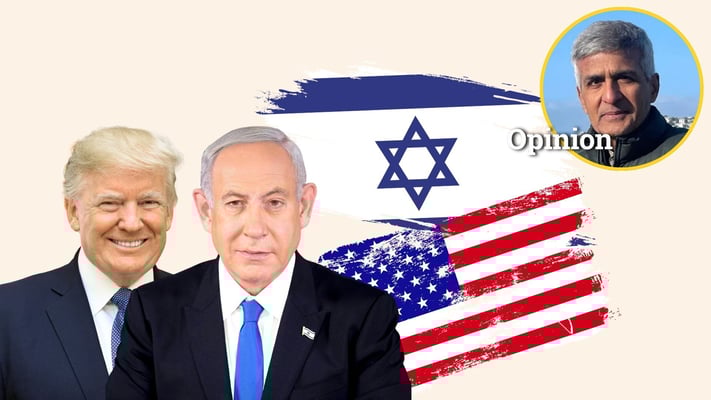

Iran: Are US and Israel’s war goals diverging ?
Tehran sees its chokehold on the Straits of Hormuz as a means of ending “the existence of the US in the Persian Gulf area.”
That is how Iran’s deputy foreign minister Saeed Khatibzadeh framed it at the Raisina Dialogue, the security conclave co-hosted by India’s foreign ministry in New Delhi last week.
In other words, Tehran seeks to counter Washington and Tel Aviv’s raison d’etre for launching their attack on Iran by appropriating it to justify its own aggression targeted at the Gulf states and opening a new theatre of war in the Middle East.
While the United Nations has broadly condemned the combatants in the ongoing turmoil in the Middle East , it is yet to address the new conundrum of a member state inviting reciprocal aggression on neighbouring states when its sovereignty is under attack by an alliance of fellow member states, including a permanent member of the UN Security Council.
With the US-Israeli war against Iran showing no signs of let-up, and its ripples extending beyond the Middle East, attention inevitably strays to the great power competition underlying the conflict.
China, which is tied up with Iran and the wider Middle East via trade and investment, is constrained from asserting its presence to counterbalance the US and Israel in the present turmoil. It buys discounted oil from Iran and has over 400,000 of its nationals in the United Arab Emirates (UAE). The Gulf states, which have attracted Chinese investment under the Belt and Road initiative infrastructure programme and supplies crude to Beijing, are now under attack by Iran.
With oil prices edging closer to the USD 100-per-barrel mark, following the closure of the Strait of Hormuz, China finds itself wedged in a geopolitical limbo. Beijing’s carefully calibrated Middle East policy is under pressure and in need of a reset.
Russia, a major recipient of Iranian oil supplies, is hamstrung by its war in Ukraine.
That leaves the skies over Iran open for the US and Israel to strike at will. But Washington and Tel Aviv appear to be diverging over their war objectives in Iran. While Trump has toned down the rhetoric around regime change and is focused on downgrading Tehran’s ballistic and military capability, including eliminating its stockpile of around 400kg of enriched uranium, Israel seeks to eliminate long-term threats to its security posed by a hostile regime in Tehran.
This divergence in the strategic objectives of US and Israel puts a question mark on the duration of the war in Iran. Washington’s objectives are limited to clearing a pathway toward regime change, which means it is moving to a plan that precludes putting boots on the ground and envisages an uncompromising exit.
Israel, on the other hand, is coalesced around a plan that could include helping Iran’s Opposition to find a successor who is aligned with Tel Aviv's security interests.
To that extent, the war goals of Washington and Tel Aviv in Iran are misaligned.
The focus has also shifted to Iran’s proxies in the Middle East.
The killing of supreme leader Ayatollah Ali Khamenei prompted Lebanon-based Hezbollah, lying low after a costly and protracted confrontation with Israel in the recent past, to launch incursions into Israel’s border areas. That resulted in Israeli air strikes over Lebanon’s capital Beirut, with its attendant civilian death toll.
But the wild card in the current outbreak of hostilities in the region are the Houthis, Tehran’s proxy operating out of Yemen.
With a history of active insurgency targeted at US and Israeli cargo vessels plying the seas off the coast of Yemen, the Houthis are yet to fire a salvo in the present war. Analysts speculate that the compulsions of the Houthis are moulded by their detente with Saudi Arabia following a history of hostility with the Gulf states.
The war in Iran, which started as a joint US-Israeli military operation but whose momentum is increasingly dictated by Tel Aviv, threatens to escalate into a wider regional conflict, involving both state and non-state actors.
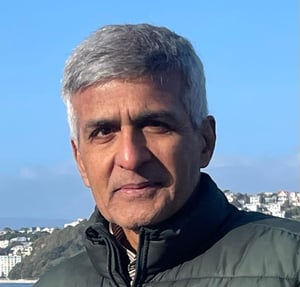
Venu Menon is a senior journalist based in Wellington. He was Consulting Editor of The Hindu in India prior to moving to New Zealand.
Tehran sees its chokehold on the Straits of Hormuz as a means of ending “the existence of the US in the Persian Gulf area.”
That is how Iran’s deputy foreign minister Saeed Khatibzadeh framed it at the Raisina Dialogue, the security conclave co-hosted by India’s foreign ministry in New Delhi last...
Tehran sees its chokehold on the Straits of Hormuz as a means of ending “the existence of the US in the Persian Gulf area.”
That is how Iran’s deputy foreign minister Saeed Khatibzadeh framed it at the Raisina Dialogue, the security conclave co-hosted by India’s foreign ministry in New Delhi last week.
In other words, Tehran seeks to counter Washington and Tel Aviv’s raison d’etre for launching their attack on Iran by appropriating it to justify its own aggression targeted at the Gulf states and opening a new theatre of war in the Middle East.
While the United Nations has broadly condemned the combatants in the ongoing turmoil in the Middle East , it is yet to address the new conundrum of a member state inviting reciprocal aggression on neighbouring states when its sovereignty is under attack by an alliance of fellow member states, including a permanent member of the UN Security Council.
With the US-Israeli war against Iran showing no signs of let-up, and its ripples extending beyond the Middle East, attention inevitably strays to the great power competition underlying the conflict.
China, which is tied up with Iran and the wider Middle East via trade and investment, is constrained from asserting its presence to counterbalance the US and Israel in the present turmoil. It buys discounted oil from Iran and has over 400,000 of its nationals in the United Arab Emirates (UAE). The Gulf states, which have attracted Chinese investment under the Belt and Road initiative infrastructure programme and supplies crude to Beijing, are now under attack by Iran.
With oil prices edging closer to the USD 100-per-barrel mark, following the closure of the Strait of Hormuz, China finds itself wedged in a geopolitical limbo. Beijing’s carefully calibrated Middle East policy is under pressure and in need of a reset.
Russia, a major recipient of Iranian oil supplies, is hamstrung by its war in Ukraine.
That leaves the skies over Iran open for the US and Israel to strike at will. But Washington and Tel Aviv appear to be diverging over their war objectives in Iran. While Trump has toned down the rhetoric around regime change and is focused on downgrading Tehran’s ballistic and military capability, including eliminating its stockpile of around 400kg of enriched uranium, Israel seeks to eliminate long-term threats to its security posed by a hostile regime in Tehran.
This divergence in the strategic objectives of US and Israel puts a question mark on the duration of the war in Iran. Washington’s objectives are limited to clearing a pathway toward regime change, which means it is moving to a plan that precludes putting boots on the ground and envisages an uncompromising exit.
Israel, on the other hand, is coalesced around a plan that could include helping Iran’s Opposition to find a successor who is aligned with Tel Aviv's security interests.
To that extent, the war goals of Washington and Tel Aviv in Iran are misaligned.
The focus has also shifted to Iran’s proxies in the Middle East.
The killing of supreme leader Ayatollah Ali Khamenei prompted Lebanon-based Hezbollah, lying low after a costly and protracted confrontation with Israel in the recent past, to launch incursions into Israel’s border areas. That resulted in Israeli air strikes over Lebanon’s capital Beirut, with its attendant civilian death toll.
But the wild card in the current outbreak of hostilities in the region are the Houthis, Tehran’s proxy operating out of Yemen.
With a history of active insurgency targeted at US and Israeli cargo vessels plying the seas off the coast of Yemen, the Houthis are yet to fire a salvo in the present war. Analysts speculate that the compulsions of the Houthis are moulded by their detente with Saudi Arabia following a history of hostility with the Gulf states.
The war in Iran, which started as a joint US-Israeli military operation but whose momentum is increasingly dictated by Tel Aviv, threatens to escalate into a wider regional conflict, involving both state and non-state actors.

Venu Menon is a senior journalist based in Wellington. He was Consulting Editor of The Hindu in India prior to moving to New Zealand.





Leave a Comment