




-Apr-23-2026-02-01-19-9935-AM.jpg?width=740&height=400&name=Break%20The%20Silence%20NZ%20Campaign%20Supports%20Asians%20Facing%20Gambling%20Harm%20(2)-Apr-23-2026-02-01-19-9935-AM.jpg)



Pakistan has leveraged its connections in the Middle East to emerge as a key mediator between the United States and Iran, in the buildup to an extended ceasefire declared by President Donald Trump.
Islamabad had hosted the first round of talks between the warring sides that failed to achieve an outcome and was readying for a second round before Iran withdrew in a huff over the US blockade of Iranian vessels in the Strait of Hormuz.
Trump’s extension of the truce ensures a lull in hostilities for the present, though its blockade of Iranian vessels in the Strait of Hormuz is still on.
Islamabad has, for all intents and purposes, rebranded itself as a key intermediary and enhanced its geopolitical clout. Trump's choice of the Pakistani capital as the venue for the first peace summit boosted its status, even though the talks failed.
Trump gave the go-ahead for a second round of talks in the same venue before Tehran backed out over continuing US hostilities targeted at Iranian vessels in the Strait of Hormuz.
Trump’s unilateral declaration of a truce in the conflict, currently in place, follows what Pakistan likely sees as a vindication of its contributing role in the process.
Islamabad’s emergence as a key mediator (along with Turkey and Egypt) comes with the risk of a backlash to its standing should the ceasefire prove to be fragile.
It is noteworthy that Pakistan has come from behind to emerge as the lead peace coordinator in the strife-torn Middle East. This owes in no small measure to a reset in the ties between Islamabad and Washington, which has seen many ups and downs.
Pakistan’s goodwill with Iran, with which it shares a long land border, is strained by the defence pact it recently signed with Saudi Arabia (targeted by Iran in its reciprocal attacks on the Gulf region after it was bombed by the US and Israel in February). But Tehran has obviously chosen not to thwart Trump’s ceasefire.
Iran is also mindful of the looming presence of China. Beijing wields influence over both Islamabad and Tehran.
Even so, Pakistan’s standing as a lead negotiator to end the war between the US and Iran has come as a surprise.
Its hyphenated relationship with India is a key factor in how Pakistan is viewed by the rest of the world.
The India-Pakistan rivalry is a running theme on the South Asian subcontinent, with India arguably ahead in terms of economy and growth.
But Pakistan is focused on leveraging its links to the Middle East, specifically Saudi Arabia, the Gulf Cooperation Council (GCC) states, and Iran. It has also nurtured its ties to global powers such as the US and China.
India, though, has broadly pursued a foreign policy that hinges on nonalignment and equidistance. New Delhi has been assertive with Washington, specifically in trade negotiations, which has not endeared it to the Trump administration. New Delhi’s dependence on discounted crude supplied by Moscow is also a sore point for Washington.
The deadly clashes between troops in the Himalayan region in 2020 left India-China relations frosty, though a rapprochement between the two Asian economic powerhouses since then has cooled temperatures.
India is steadfastly committed to an independent foreign policy.
While Beijing is a key strategic partner, Islamabad also views its relationship with Washington as important to counterbalance India’s geopolitical clout and influence in South Asia.
Pakistan’s current role as a peace broker is aimed at building diplomatic capital, as an interlocutor and intermediary, in the conflict resolution process in a global hotspot such as the Middle East.
The endgame is to boost Islamabad’s standing in its neighbourhood as well as the international community.
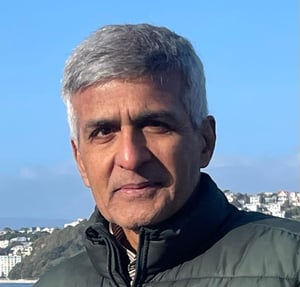
Venu Menon is a senior journalist based in Wellington.



ISSUE


Leave a Comment