




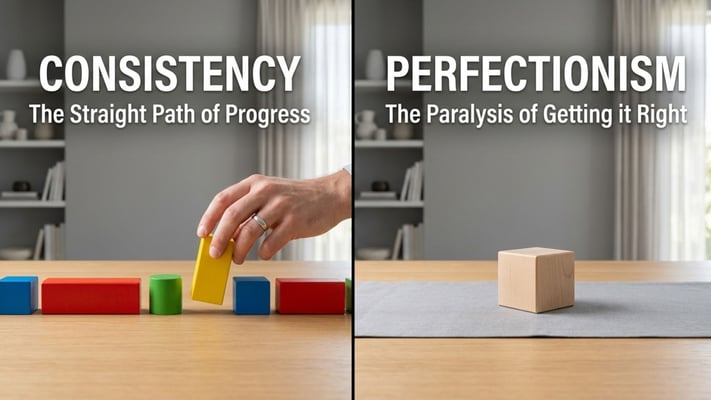


We have all been there. You start a new habit, project, or goal with excitement. Then, you get busy. You miss a workout, make a mistake at work, or break your routine.
For many of us, this first mistake triggers an "all-or-nothing" mindset. We think, “If I can’t do this perfectly, I shouldn’t bother at all.” This is the trap of flawlessness. It tells us that our worth depends on being flawless. Chasing perfection most of the time causes stress, leads to procrastination, and stops us from moving forward.

When you fall into all-or-nothing thinking, you create an unsustainable environment for personal growth. Consider the classic example of a diet. You eat healthy for six days, but on the seventh day, you eat a single slice of cake.
A flexible mindset says, "That was delicious, now let's get back to my nutritious meals." An all-or-nothing mindset says, "The day is ruined. I might as well eat the whole cake, a pizza, and start over next Monday."
This mindset creates a vicious cycle. To keep going after a setback, you need a new approach: embrace the power of "Consistency."

Why Flawlessness Holds You Back
Perfectionism looks like high standards, but it is actually driven by a fear of failure. When we make a mistake, our inner critic takes over and makes us feel like a failure.
This rigid mindset ruins our progress. By demanding perfection, we stop ourselves from taking risks, experimenting, and learning. On the other hand, aiming for "consistency" allows us to focus on action, utility, and steady growth.
When you mess up, how you respond matters. When you stumble, you need immediate, practical strategies to break the paralyzing cycle of the all-or-nothing mindset. Use these simple steps to break the chain and regain your momentum:
- Stop the Negative Self-Talk: Notice what you say to yourself when you slip up. Stop thoughts like "I ruined everything" by asking: “Will this mistake actually matter a month from now?”
- Use Strict Time Limits: Seeking 100% perfection always makes tasks take much longer than necessary. Give yourself a deadline to finish your work. This allows you to accept completion over endless editing.
- View Mistakes as Learning: Do not take mistakes personally. Look at them as neutral information. Figure out what went wrong, adjust your plan, and try again.
Consistency Over Perfection
In this world, waiting for perfection causes major delays. Many successful companies do not wait. They launch a basic version of a product, get feedback, and work on improving it till they achieve the best version.
You can use this same rule. An imperfect, messy workout is much better than the perfect workout you skipped. A rough, flawed first draft is definitely more valuable than the brilliant story you never wrote.
Choosing small steps is not about being lazy. It is about choosing consistency and mental well-being over an impossible standard. When you permit yourself to be a work in progress, you find the freedom to bounce back from any mistake and keep moving forward.


ISSUE

Friday, October 23, 2026
Volume 17 . Issue 42

Leave a Comment