



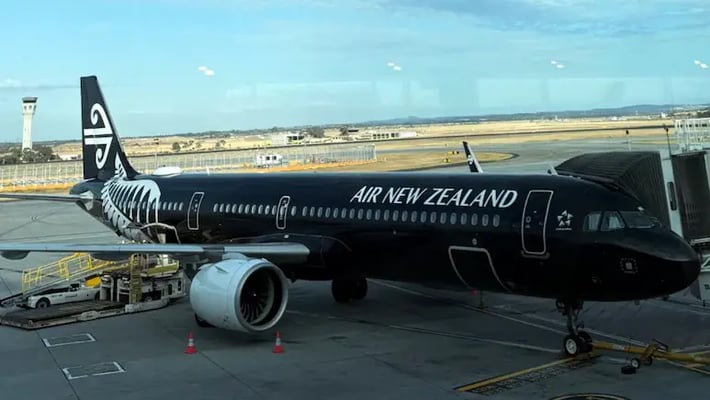



Why Most Commercial Airplanes Are White, But Air New Zealand Flies Black Jets Since 2007, Air New Zealand has operated black aircraft, including the largest black commercial plane, blending cultural pride with aviation innovation. Reported by NDTV.

Why Most Commercial Airplanes Are White, But Air New Zealand Flies Black Jets Since 2007, Air New Zealand has operated black aircraft, including the largest black commercial plane, blending cultural pride with aviation innovation.
If you’ve ever watched planes take off or browsed aviation photos online, one thing stands out — nearly every commercial aircraft is white. From low-cost carriers to international long-haul airlines, white dominates the skies. It has become aviation’s unofficial uniform.
Yet one airline has consistently broken that norm: Air New Zealand. Since 2007, the carrier has embraced black-painted aircraft, building a distinctive global identity rooted in culture, branding and national pride.
But before understanding why Air New Zealand chose black, it’s important to know why most airlines don’t.
Why Most Commercial Aircraft Are White
Painting an aircraft is not simply an aesthetic choice. Colour affects efficiency, maintenance, safety and long-term operating costs. That’s why white remains the industry standard.
1. White Reflects Heat
White paint reflects sunlight rather than absorbing it. Aircraft parked on runways — particularly in warm climates — can heat up quickly. Dark colours absorb more heat, increasing cabin temperatures and placing extra demand on air-conditioning systems.
White aircraft stay cooler, making ground operations more energy-efficient.
2. White Paint Is Lighter
In aviation, every kilogram counts. Even small increases in weight can impact fuel burn over thousands of flights. White paint often requires fewer layers and pigments compared to darker shades.
Black paint typically needs additional coats to maintain an even finish and resist fading, which can add weight over time. For airlines focused on cost efficiency, lighter is better.
3. Easier Maintenance and Damage Detection
Aircraft undergo frequent inspections. Engineers check for cracks, corrosion, oil leaks and structural wear. These issues are easier to spot on white surfaces.
On darker aircraft, small defects can blend in, potentially requiring more detailed inspections. White helps speed up maintenance checks and enhances safety monitoring.
4. Better Resistance to Fading
At cruising altitudes, aircraft are exposed to intense UV radiation. Dark colours fade faster under prolonged sunlight. A black aircraft may require more frequent repainting to maintain its finish.
White paint generally holds up longer, reducing repainting cycles and maintenance costs.

5. Improved Visibility
White aircraft stand out clearly against blue skies, which may help birds spot them earlier and potentially reduce bird strikes. While not a complete solution, visibility plays a role in aviation safety.
White also became widely adopted after Air France introduced the “Euro white” livery in 1976. Since then, it has remained the global standard.
With so many practical advantages, it’s easy to see why black aircraft are rare.
And yet, Air New Zealand chose differently.
Air New Zealand’s Bold Move to Black
According to The Times of India, Air New Zealand began its black aircraft journey in 2007 with a special Boeing 777 (ZK-OKH) painted in an “All Black” livery to promote the Rugby World Cup in France.
The design paid tribute to New Zealand’s legendary rugby team, the All Blacks, and immediately attracted global attention.
What started as a promotional aircraft evolved into a long-term brand strategy. Today, Air New Zealand ensures that at least one aircraft from each major fleet type features a black-based livery.
The airline currently operates 115 aircraft, with 12 more on order, and black has become a defining visual identity.
The World’s Largest Black Commercial Aircraft
Air New Zealand’s Boeing 777-300ER holds the distinction of being the largest commercially operated black-painted aircraft in the world.
In August 2022, the airline unveiled the Airbus A321neo ZK-OYB — the first completely black aircraft in the Star Alliance fleet — drawing significant international attention.
Unlike most airlines that experiment briefly with darker liveries, Air New Zealand has consistently embraced black as a signature.
Does Black Affect Performance?
A common question is whether black paint reduces efficiency.
According to Air New Zealand spokespersons quoted by The New Zealand Herald, there is no noticeable operational difference between white and black aircraft. Because the airline operates both colour variants within the same aircraft types, it has direct comparison data.
Michael Williams, Air New Zealand's chief transformation and alliances officer, explained that paint primarily serves a protective function, and black has not caused performance issues.
Why Air New Zealand Chooses Black
For Air New Zealand, the decision is about more than aesthetics — it is cultural.
“Black is an iconic Kiwi colour,” said Michael Williams on the delivery of the A321neo ZK-OYB. “From sports jerseys to gumboots, black is embedded in New Zealand's national identity and worn with pride.”
The aircraft serve as flying symbols of national identity. In a highly competitive global aviation market, strong brand recognition matters. While white may be the practical choice, black gives Air New Zealand a powerful visual presence.
Standing Out in a White Sky
Commercial aviation will likely continue to be dominated by white aircraft for operational and economic reasons. But Air New Zealand has shown that with purpose, cultural storytelling and brand clarity, breaking the norm can be worth it.
In a sky filled with white, black makes a statement — and that statement has helped Air New Zealand carve out a unique place in global aviation.


ISSUE


Leave a Comment