




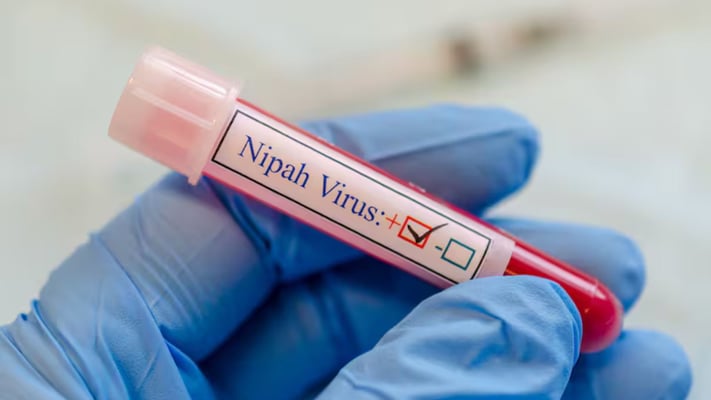



An outbreak of the Nipah virus has prompted several countries to tighten border controls and issue travel advisories, as health authorities monitor the situation closely. Reported by 1News.

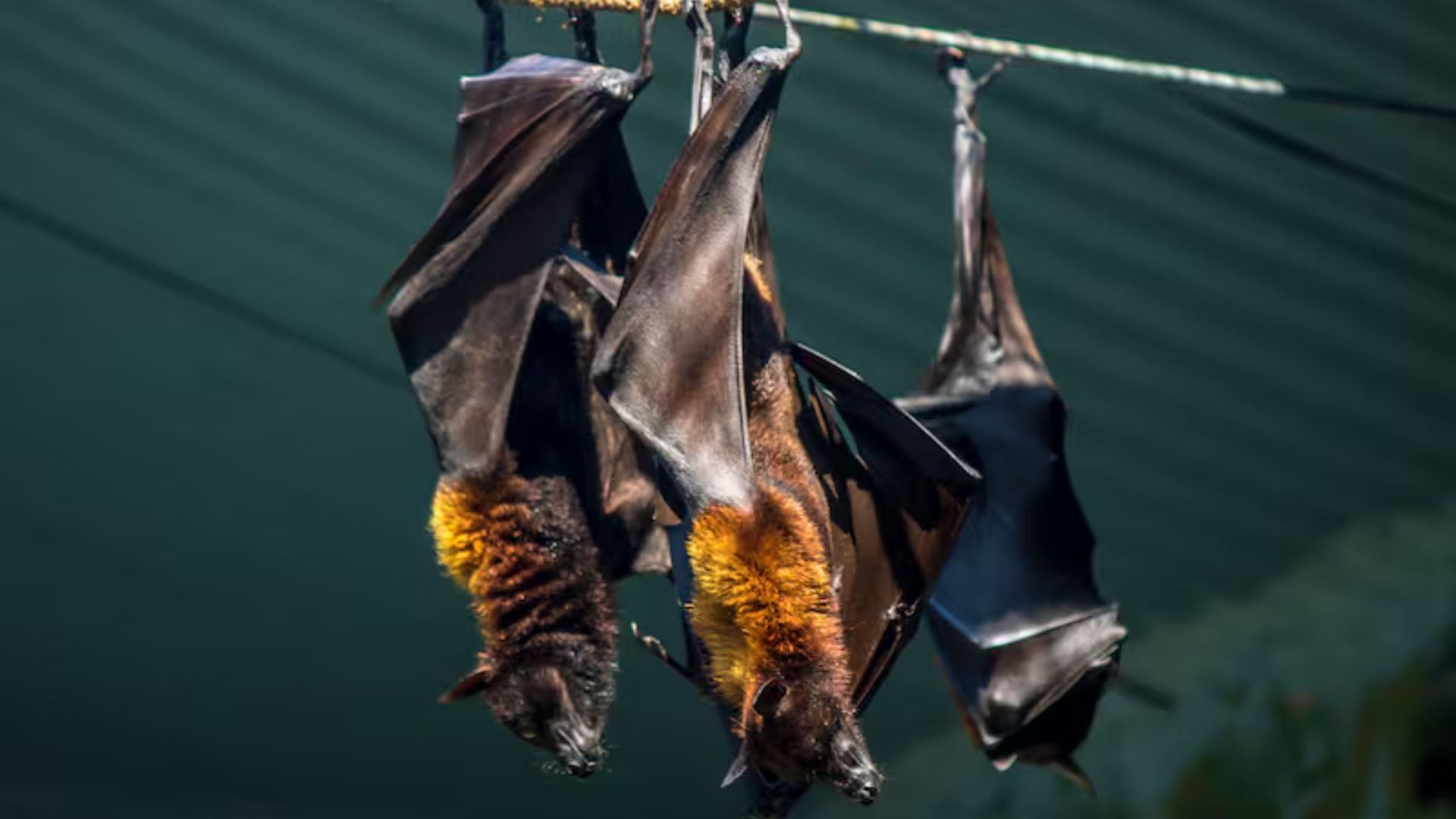
Nipah is a zoonotic virus, meaning it can spread from animals — particularly fruit bats and pigs — to humans. It can also be transmitted between people through close contact with bodily fluids.
Although the World Health Organization has stated that the risk of sustained human-to-human transmission remains low, countries including Thailand, Malaysia, and Singapore have introduced precautionary screening and testing measures. New Zealand’s Ministry of Foreign Affairs and Trade (MFAT) has also updated its travel advice for those heading to India.
University of Otago professor and evolutionary virologist Jemma Geoghegan told Breakfast there was a “low risk” of the virus spreading to New Zealand.
“This virus is sort of a natural virus for fruit bats, but it does spread over to humans, and it can spill over in several ways," she said.
“Humans can have direct contact with bats, for example, their faeces, urine and saliva from bats, (humans) can be infected with that."
Geoghegan explained that the most common route of infection for humans has been through consuming raw date palm sap contaminated by bats.
Human-to-human transmission, she said, is “not very efficient”.
“You have to have really direct contact with people who are infected. Being infected with their bodily fluids, for example.
“That is quite rare. And so outside of the countries where there have been reported cases, it is extremely low risk for us to be infected in New Zealand.”
She added that the risk is expected to remain low in regions without reported infections.
Symptoms and Risks
Symptoms of Nipah virus infection can include fever, severe headaches, difficulty breathing, seizures, unconsciousness, personality changes such as unusual behaviour or psychosis, and weakness or inability to move a limb. The virus can lead to encephalitis — inflammation of the brain — which contributes to its high fatality rate.
Currently, there is no approved treatment for Nipah virus, although vaccine and treatment development is underway in Australia.
Travel Advice
Geoghegan advised travellers to affected areas to avoid contact with bats and refrain from consuming date palm sap products.
"That’s a major way of getting infected – not just with Nipah virus, but we know bats harbour many different viruses.”
MFAT’s Safetravel website provides similar guidance. It advises people living in or travelling to outbreak areas to:
- Wash hands frequently with soap and water or use a hand sanitiser containing at least 60% alcohol.
- Avoid contact with flying fox bats or sick pigs.
- Stay away from bat roosting areas and avoid touching surfaces contaminated by bats.
- Avoid consuming raw date palm sap or fruit that may have been contaminated.
- Avoid contact with the blood or bodily fluids of infected individuals.
- Eat fully cooked food and fruit that can be washed and peeled.
"If you have been to an area known to have an outbreak of Nipah virus and you are unwell, seek immediate medical advice and tell the doctors about your travel," the website said.
In a joint statement to 1News, the Ministry of Health and Health New Zealand confirmed they are monitoring the overseas outbreak. While the National Public Health Service does not screen specifically for Nipah at the border, officials said there are “systems in place to ensure any traveller who arrives in New Zealand unwell is checked and managed appropriately to the situation”.

An outbreak of the Nipah virus has prompted several countries to tighten border controls and issue travel advisories, as health authorities monitor the situation closely. Reported by 1News.


ISSUE


Leave a Comment