


Clean ECG, sudden heart attack: What are we missing?
The sudden death of a senior doctor at the start of 2026 has sparked deep concern and reflection across India’s medical community, raising urgent questions about how cardiac risk is understood — especially among healthcare professionals themselves. Reported by Health Beat.
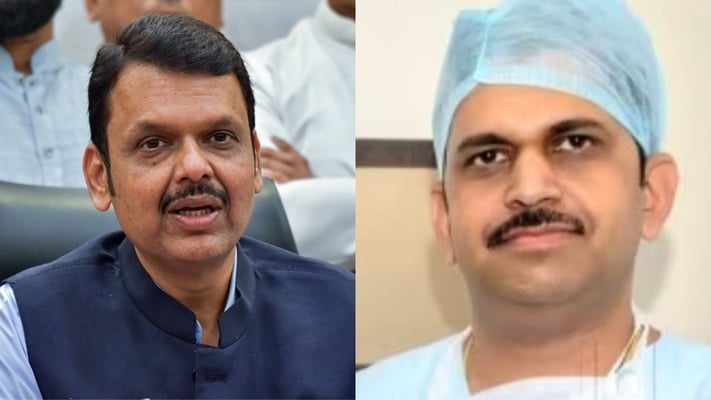
Dr Chandrashekhar Pakhmode, a 53-year-old neurosurgeon from Nagpur, died of a heart attack despite being physically fit and having undergone a routine cardiac check-up just days earlier. His ECG had reportedly shown no abnormalities. Three days later, he was gone.
To those outside medicine, the incident may appear to be a tragic but unpredictable event. Within the healthcare fraternity, however, it has reignited a long-simmering debate: are current health assessments missing the most dangerous risks doctors face?
A clean ECG, many cardiologists point out, is not a clean bill of health. While ECGs are valuable tools, they offer only a brief snapshot of the heart’s electrical activity at a single moment. They often fail to capture deeper, cumulative stressors that increasingly drive cardiac events today.
Modern heart disease is no longer only about blocked arteries or cholesterol levels. It is also shaped by chronic stress, prolonged sleep deprivation, nervous system overload, and burnout that quietly embeds itself into the body over years. These factors rarely show up in routine reports, yet they can be decisive — particularly in high-pressure professions.
Doctors are uniquely vulnerable. Long and irregular shifts, constant high-stakes decision-making, emotional exposure to trauma and death, and a culture that normalises exhaustion all take a toll. Stress hormones remain elevated, sleep becomes fragmented, and recovery is endlessly postponed. Over time, the body adapts to survival mode — until it can no longer cope.
Dr Pakhmode’s death is not being viewed as an isolated medical anomaly. Instead, it is being seen as a reflection of a system that often prioritises resilience over rest and dedication over recovery.
Medical experts stress that routine tests like ECGs remain essential, but they are incomplete when used in isolation. Cardiac risk today must be assessed more holistically — factoring in sleep quality, stress load, recovery time, and nervous system regulation alongside traditional metrics.
Importantly, this is not being framed as a personal failure. It is a systemic issue. When healthcare institutions depend on individual endurance, reward overwork, and lack safeguards for rest, they put their own people at risk. Clinician health, many argue, should be treated as a governance and patient-safety issue, not a private lifestyle concern.
The tragedy has prompted calls for change: redefining fitness for doctors, integrating stress and sleep assessments into routine health checks, improving staffing models, and creating environments where seeking help carries no stigma.
Doctors spend their lives caring for others. Their own health deserves the same urgency and seriousness.
The death of Dr Chandrashekhar Pakhmode is a profound loss — but it may also serve as a turning point. Because a clean ECG is not a clean bill of health, and ignoring that reality comes at a cost far too high.
The sudden death of a senior doctor at the start of 2026 has sparked deep concern and reflection across India’s medical community, raising urgent questions about how cardiac risk is understood — especially among healthcare professionals themselves. Reported by Health Beat.
Dr Chandrashekhar...
The sudden death of a senior doctor at the start of 2026 has sparked deep concern and reflection across India’s medical community, raising urgent questions about how cardiac risk is understood — especially among healthcare professionals themselves. Reported by Health Beat.
Dr Chandrashekhar Pakhmode, a 53-year-old neurosurgeon from Nagpur, died of a heart attack despite being physically fit and having undergone a routine cardiac check-up just days earlier. His ECG had reportedly shown no abnormalities. Three days later, he was gone.
To those outside medicine, the incident may appear to be a tragic but unpredictable event. Within the healthcare fraternity, however, it has reignited a long-simmering debate: are current health assessments missing the most dangerous risks doctors face?
A clean ECG, many cardiologists point out, is not a clean bill of health. While ECGs are valuable tools, they offer only a brief snapshot of the heart’s electrical activity at a single moment. They often fail to capture deeper, cumulative stressors that increasingly drive cardiac events today.
Modern heart disease is no longer only about blocked arteries or cholesterol levels. It is also shaped by chronic stress, prolonged sleep deprivation, nervous system overload, and burnout that quietly embeds itself into the body over years. These factors rarely show up in routine reports, yet they can be decisive — particularly in high-pressure professions.
Doctors are uniquely vulnerable. Long and irregular shifts, constant high-stakes decision-making, emotional exposure to trauma and death, and a culture that normalises exhaustion all take a toll. Stress hormones remain elevated, sleep becomes fragmented, and recovery is endlessly postponed. Over time, the body adapts to survival mode — until it can no longer cope.
Dr Pakhmode’s death is not being viewed as an isolated medical anomaly. Instead, it is being seen as a reflection of a system that often prioritises resilience over rest and dedication over recovery.
Medical experts stress that routine tests like ECGs remain essential, but they are incomplete when used in isolation. Cardiac risk today must be assessed more holistically — factoring in sleep quality, stress load, recovery time, and nervous system regulation alongside traditional metrics.
Importantly, this is not being framed as a personal failure. It is a systemic issue. When healthcare institutions depend on individual endurance, reward overwork, and lack safeguards for rest, they put their own people at risk. Clinician health, many argue, should be treated as a governance and patient-safety issue, not a private lifestyle concern.
The tragedy has prompted calls for change: redefining fitness for doctors, integrating stress and sleep assessments into routine health checks, improving staffing models, and creating environments where seeking help carries no stigma.
Doctors spend their lives caring for others. Their own health deserves the same urgency and seriousness.
The death of Dr Chandrashekhar Pakhmode is a profound loss — but it may also serve as a turning point. Because a clean ECG is not a clean bill of health, and ignoring that reality comes at a cost far too high.


Leave a Comment