

‘Welcome to New India’ post sparks questions over police visit
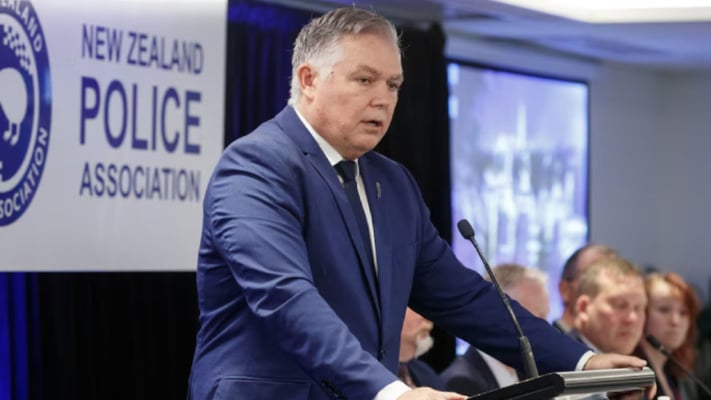
Police Minister Mark Mitchell and Foreign Affairs Minister Winston Peters are questioning police actions after officers spoke to a woman over a Facebook post that allegedly caused offence, with Peters comparing the incident to George Orwell’s dystopian novel 1984.
According to a report by Stuff, the controversy centres on a public post shared by Renee Rose Schwenke late last month. The post featured a selfie taken in what appeared to be a public space, with two men of Indian appearance visible in the background.
The caption on the post read: “Welcome to New India thanks to Luxsingh,” in an apparent reference to New Zealand’s free trade agreement discussions with India and Prime Minister Christopher Luxon.
In another post shared earlier this month, Schwenke claimed police contacted her and asked her to come to a local police station. She alleged a senior sergeant told her the post was “unwelcoming to the Indian community”.
Schwenke described the interaction as an example of “what happens when you live under a soft tyranny of the offended peoples,” as quoted by Stuff.
New Zealand Police confirmed they had received a complaint regarding the social media post.
“Inquiries were carried out, which included speaking to the person whose name had been provided as the poster,” Superintendent Scott Gemmell said in a statement.
“Ultimately, there was insufficient evidence for any type of prosecution in relation to the matter. The person who made the post was provided with advice,” Stuff has quoted.
Police Minister Mark Mitchell said he wanted further details about the matter.
“I want to understand what has happened here and have asked police for more information,” Mitchell told The Post.
Both coalition partners ACT and NZ First criticised the police response, arguing the incident raised concerns around freedom of speech.
“If this report is true, this is ‘1984 thought-police’ level overreach,” Foreign Affairs Minister and NZ First leader Winston Peters said on social media on Thursday.
“It should seriously frighten every New Zealander who believes in freedom of speech. This is not about whether this particular post was offensive or not. There will always be personal responsibility and consequences for people voicing their opinions that are viewed by some as tasteless or gormless or offensive, but those consequences should not be by way of a police visit,” Stuff has quoted.
ACT justice spokesperson Todd Stephenson said police should not be involved in matters of personal offence.
“Being offensive is not a crime, and it should not be a police matter”.
“New Zealanders do not want to see us go down the path of the UK, where police are knocking on doors and arresting people over social media posts that hurt someone's feelings,” he said, as quoted by Stuff.
“Police resources are stretched enough dealing with actual crime without acting as the tone police for Facebook,” Stuff has quoted.

Police Minister Mark Mitchell and Foreign Affairs Minister Winston Peters are questioning police actions after officers spoke to a woman over a Facebook post that allegedly caused offence, with Peters comparing the incident to George Orwell’s dystopian novel 1984.
According to a report by Stuff,...
Police Minister Mark Mitchell and Foreign Affairs Minister Winston Peters are questioning police actions after officers spoke to a woman over a Facebook post that allegedly caused offence, with Peters comparing the incident to George Orwell’s dystopian novel 1984.
According to a report by Stuff, the controversy centres on a public post shared by Renee Rose Schwenke late last month. The post featured a selfie taken in what appeared to be a public space, with two men of Indian appearance visible in the background.
The caption on the post read: “Welcome to New India thanks to Luxsingh,” in an apparent reference to New Zealand’s free trade agreement discussions with India and Prime Minister Christopher Luxon.
In another post shared earlier this month, Schwenke claimed police contacted her and asked her to come to a local police station. She alleged a senior sergeant told her the post was “unwelcoming to the Indian community”.
Schwenke described the interaction as an example of “what happens when you live under a soft tyranny of the offended peoples,” as quoted by Stuff.
New Zealand Police confirmed they had received a complaint regarding the social media post.
“Inquiries were carried out, which included speaking to the person whose name had been provided as the poster,” Superintendent Scott Gemmell said in a statement.
“Ultimately, there was insufficient evidence for any type of prosecution in relation to the matter. The person who made the post was provided with advice,” Stuff has quoted.
Police Minister Mark Mitchell said he wanted further details about the matter.
“I want to understand what has happened here and have asked police for more information,” Mitchell told The Post.
Both coalition partners ACT and NZ First criticised the police response, arguing the incident raised concerns around freedom of speech.
“If this report is true, this is ‘1984 thought-police’ level overreach,” Foreign Affairs Minister and NZ First leader Winston Peters said on social media on Thursday.
“It should seriously frighten every New Zealander who believes in freedom of speech. This is not about whether this particular post was offensive or not. There will always be personal responsibility and consequences for people voicing their opinions that are viewed by some as tasteless or gormless or offensive, but those consequences should not be by way of a police visit,” Stuff has quoted.
ACT justice spokesperson Todd Stephenson said police should not be involved in matters of personal offence.
“Being offensive is not a crime, and it should not be a police matter”.
“New Zealanders do not want to see us go down the path of the UK, where police are knocking on doors and arresting people over social media posts that hurt someone's feelings,” he said, as quoted by Stuff.
“Police resources are stretched enough dealing with actual crime without acting as the tone police for Facebook,” Stuff has quoted.


Leave a Comment