

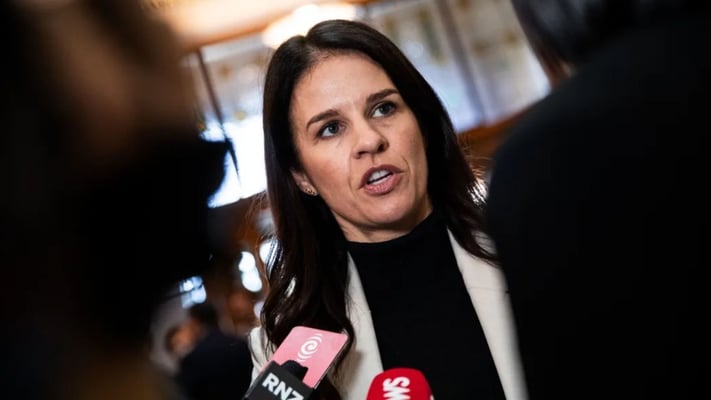

‘Typical, sometimes’: Stanford says Seymour’s plan not thought through
A growing rift has emerged within the coalition government after Immigration Minister Erica Stanford openly criticised immigration proposals put forward by coalition partner David Seymour and his Act Party.
According to a report by NZ Herald, Stanford took aim at Seymour’s policy direction, questioning both its practicality and intent. She said his recent comments on launching the policy indicated “he hasn’t thought through this very well”.
“That’s a little bit typical sometimes,” she added.
The minister warned that key elements of the proposal could have serious consequences for businesses, particularly in rural areas. She argued the policy would increase costs and place added pressure on sectors already reliant on overseas labour, as reported by the NZ Herald.
According to the NZ Herald, speaking publicly, Stanford described aspects of the policy as “kneejerk” and “populist”, suggesting it appeared to mirror tougher anti-immigration rhetoric associated with other political players.
At the centre of the disagreement is the Act’s proposal to tighten the definition of a “skilled migrant” and introduce a $6-a-day infrastructure levy on temporary work visas, payable before migrants arrive. Stanford said these measures would amount to an “attack on small businesses” and an “attack on the rural sector”.
“There are certain regions in New Zealand where there is low unemployment or there are Kiwis who are simply not willing to do some of those jobs, be it in agriculture or aged care,” she said, NZ Herald has quoted.
“We rely on migrant workers; businesses rely on them.”
She also criticised the proposed levy as excessive, highlighting the financial burden it could create.
“If you are a dairy farm worker, a herd manager for example [on a] five-year visa, that’s an $11,000 upfront cost that a migrant will have to pay on top of their visa fee on top of their health check screening, and all those other costs,” Stanford said, as quoted by NZ Herald.
Stanford added that many migrants would be unable to afford such upfront costs, meaning employers could ultimately be forced to cover them.
In response, Seymour defended the policy while signalling openness to adjustments. He said: “We support Erica in her work as Immigration Minister. In many ways, she is doing a good job and our policy is not meant as a criticism of her efforts.
“However, results speak for themselves. People are disillusioned with immigration policy and they don’t believe that it is delivering in practice what it promises in theory,” he said, NZ Herald has quoted.
“Those who worry about immigration policy are right to worry. We don’t have enough enforcement, infrastructure pressure is real and the Kiwi character is under threat from a minority of immigrants who undermine the values previous generations have built up, NZ Herald has quoted.
“Rather than belittling Act or writing off genuine voter concerns, Erica ought to engage constructively and heed those concerns.
“It’s true that nobody wants to pay for infrastructure if they can help it, but somebody has to. Immigration widens the base of infrastructure we require, it is not fair for the whole country to pay for that growth.
“We’re open to feedback that infrastructure pressure is strongest in urban centres, and the levy should not apply or be reduced in rural areas,” NZ Herald has quoted.
Stanford noted that broader immigration reforms are already under consideration by the government, with Seymour having been consulted on those changes.
Meanwhile, Winston Peters weighed in on the debate, using social media to mock Act’s tougher stance. He pointed to the timing of the proposal following a newly signed free trade agreement with India, which introduced a new visa category.
Peters said Act’s policy was a “good effort” but it “doesn’t even touch the sides”.
“We would encourage Act to watch this space for when NZ First will be announcing what a real and comprehensive immigration policy actually looks like,” he said, as quoted by NZ Herald.
A growing rift has emerged within the coalition government after Immigration Minister Erica Stanford openly criticised immigration proposals put forward by coalition partner David Seymour and his Act Party.
{% module_block module "widget_c19396a7-b009-4f87-87cc-f37250ee3fbb" %}{% module_attribute...A growing rift has emerged within the coalition government after Immigration Minister Erica Stanford openly criticised immigration proposals put forward by coalition partner David Seymour and his Act Party.
According to a report by NZ Herald, Stanford took aim at Seymour’s policy direction, questioning both its practicality and intent. She said his recent comments on launching the policy indicated “he hasn’t thought through this very well”.
“That’s a little bit typical sometimes,” she added.
The minister warned that key elements of the proposal could have serious consequences for businesses, particularly in rural areas. She argued the policy would increase costs and place added pressure on sectors already reliant on overseas labour, as reported by the NZ Herald.
According to the NZ Herald, speaking publicly, Stanford described aspects of the policy as “kneejerk” and “populist”, suggesting it appeared to mirror tougher anti-immigration rhetoric associated with other political players.
At the centre of the disagreement is the Act’s proposal to tighten the definition of a “skilled migrant” and introduce a $6-a-day infrastructure levy on temporary work visas, payable before migrants arrive. Stanford said these measures would amount to an “attack on small businesses” and an “attack on the rural sector”.
“There are certain regions in New Zealand where there is low unemployment or there are Kiwis who are simply not willing to do some of those jobs, be it in agriculture or aged care,” she said, NZ Herald has quoted.
“We rely on migrant workers; businesses rely on them.”
She also criticised the proposed levy as excessive, highlighting the financial burden it could create.
“If you are a dairy farm worker, a herd manager for example [on a] five-year visa, that’s an $11,000 upfront cost that a migrant will have to pay on top of their visa fee on top of their health check screening, and all those other costs,” Stanford said, as quoted by NZ Herald.
Stanford added that many migrants would be unable to afford such upfront costs, meaning employers could ultimately be forced to cover them.
In response, Seymour defended the policy while signalling openness to adjustments. He said: “We support Erica in her work as Immigration Minister. In many ways, she is doing a good job and our policy is not meant as a criticism of her efforts.
“However, results speak for themselves. People are disillusioned with immigration policy and they don’t believe that it is delivering in practice what it promises in theory,” he said, NZ Herald has quoted.
“Those who worry about immigration policy are right to worry. We don’t have enough enforcement, infrastructure pressure is real and the Kiwi character is under threat from a minority of immigrants who undermine the values previous generations have built up, NZ Herald has quoted.
“Rather than belittling Act or writing off genuine voter concerns, Erica ought to engage constructively and heed those concerns.
“It’s true that nobody wants to pay for infrastructure if they can help it, but somebody has to. Immigration widens the base of infrastructure we require, it is not fair for the whole country to pay for that growth.
“We’re open to feedback that infrastructure pressure is strongest in urban centres, and the levy should not apply or be reduced in rural areas,” NZ Herald has quoted.
Stanford noted that broader immigration reforms are already under consideration by the government, with Seymour having been consulted on those changes.
Meanwhile, Winston Peters weighed in on the debate, using social media to mock Act’s tougher stance. He pointed to the timing of the proposal following a newly signed free trade agreement with India, which introduced a new visa category.
Peters said Act’s policy was a “good effort” but it “doesn’t even touch the sides”.
“We would encourage Act to watch this space for when NZ First will be announcing what a real and comprehensive immigration policy actually looks like,” he said, as quoted by NZ Herald.




Leave a Comment