

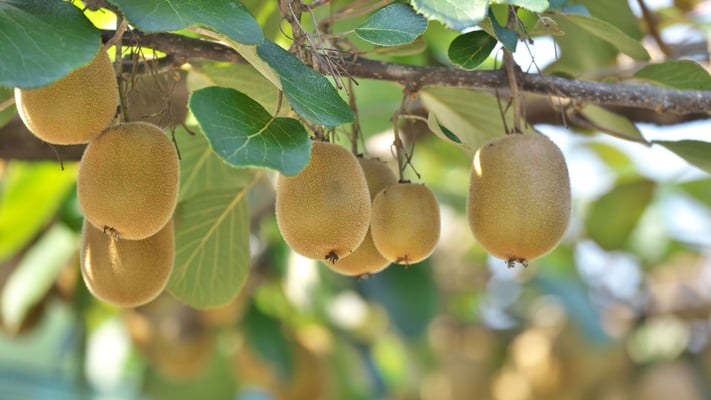
Kiwi scientists take kiwifruit expertise to India's Nagaland
A team of New Zealand scientists has travelled to the remote hills of Nagaland in India to help local growers improve green kiwifruit production through a collaborative agricultural initiative between the two countries.
According to a report by Farmers Weekly (NZ), the team from New Zealand’s Bioeconomy Science Institute (BSI) visited the region in October to continue developing the Green Kiwifruit Centre of Excellence (CoE), one of two such centres already established in India, with more planned.
The initiative is part of the India-New Zealand Free Trade Agreement (FTA), which places agricultural collaboration at the centre of efforts to improve productivity among Indian apple and green kiwifruit growers. New Zealand, meanwhile, benefits from reduced tariffs on these crops under the agreement.
Nagaland presents a challenging environment for the researchers, with the centre located around 2,000 metres above sea level and surrounded by dense tropical vegetation.
According to Farmers Weekly, reaching the site involves a three-hour flight from New Delhi, followed by a five-hour drive through mountainous terrain. Despite basic facilities, the five-hectare site offers conditions representative of the areas where around 1,000 Indian growers cultivate kiwifruit.
New Zealand experts share their knowledge
Led by Dr Stephanie Montgomery, the visiting team included kiwifruit plant physiologist Dr Nick Gould, environmental scientist Dr Steve Green, post-harvest scientist Dr Jeremy Burdon and social impact researcher Toni White.
Montgomery said New Zealand experts were bringing their experience to help develop the centre and share practical knowledge with local growers.
The researchers initially questioned whether Nagaland's heavy monsoon conditions would be suitable for kiwifruit cultivation.
“But it was evident they already were growing here, and farmers just needed to learn how to improve their ability to grow them”, Farmers Weekly has quoted.
During an earlier visit, Green had installed an automated weather station at the site to continuously record local climate conditions.
Burdon compared the experience of visiting the orchards to the early days of New Zealand's kiwifruit industry, when the fruit was smaller, hairier and more sour.
“The level of sophistication is relatively low at this stage. For example, rubbing a fruit to see if the hair comes off is a determinant of ripeness here, which it isn’t, as quoted by Farmers Weekly.
“However, there is a real willingness from the people here to learn more, and improve productivity, and with that farmer and community wealth”, Farmers Weekly has quoted.
Workshops attract Indian horticulture experts
The initiative has also generated interest among local agricultural specialists. During the Farmers Weekly visit, more than 20 Indian horticultural experts travelled to the centre to participate in workshops conducted by the New Zealand scientists. Some had driven as long as 12 hours to attend.
The research team is also bringing more than 115 Bruno and Chieftain seedlings to the site for trials. However, the programme will focus exclusively on green kiwifruit and will not introduce proprietary protected plant varieties, as reported by Farmers Weekly.
BSI has additionally developed a genotype testing process to identify the actual varieties of kiwifruit plants being cultivated in India.
“Often farmers do not know what they are actually growing, until they fruit,” Montgomery said, Farmers Weekly has quoted.
With current yields averaging around three tonnes per hectare, researchers believe even modest improvements in cultivation practices could deliver significant long-term benefits for growers.
The collaboration aims to strengthen agricultural knowledge-sharing between India and New Zealand while improving productivity and supporting the economic wellbeing of farming communities, as reported by Farmers Weekly.
A team of New Zealand scientists has travelled to the remote hills of Nagaland in India to help local growers improve green kiwifruit production through a collaborative agricultural initiative between the two countries.
{% module_block module "widget_661d3514-fc87-4787-add1-372838cfe362" %}{%...A team of New Zealand scientists has travelled to the remote hills of Nagaland in India to help local growers improve green kiwifruit production through a collaborative agricultural initiative between the two countries.
According to a report by Farmers Weekly (NZ), the team from New Zealand’s Bioeconomy Science Institute (BSI) visited the region in October to continue developing the Green Kiwifruit Centre of Excellence (CoE), one of two such centres already established in India, with more planned.
The initiative is part of the India-New Zealand Free Trade Agreement (FTA), which places agricultural collaboration at the centre of efforts to improve productivity among Indian apple and green kiwifruit growers. New Zealand, meanwhile, benefits from reduced tariffs on these crops under the agreement.
Nagaland presents a challenging environment for the researchers, with the centre located around 2,000 metres above sea level and surrounded by dense tropical vegetation.
According to Farmers Weekly, reaching the site involves a three-hour flight from New Delhi, followed by a five-hour drive through mountainous terrain. Despite basic facilities, the five-hectare site offers conditions representative of the areas where around 1,000 Indian growers cultivate kiwifruit.
New Zealand experts share their knowledge
Led by Dr Stephanie Montgomery, the visiting team included kiwifruit plant physiologist Dr Nick Gould, environmental scientist Dr Steve Green, post-harvest scientist Dr Jeremy Burdon and social impact researcher Toni White.
Montgomery said New Zealand experts were bringing their experience to help develop the centre and share practical knowledge with local growers.
The researchers initially questioned whether Nagaland's heavy monsoon conditions would be suitable for kiwifruit cultivation.
“But it was evident they already were growing here, and farmers just needed to learn how to improve their ability to grow them”, Farmers Weekly has quoted.
During an earlier visit, Green had installed an automated weather station at the site to continuously record local climate conditions.
Burdon compared the experience of visiting the orchards to the early days of New Zealand's kiwifruit industry, when the fruit was smaller, hairier and more sour.
“The level of sophistication is relatively low at this stage. For example, rubbing a fruit to see if the hair comes off is a determinant of ripeness here, which it isn’t, as quoted by Farmers Weekly.
“However, there is a real willingness from the people here to learn more, and improve productivity, and with that farmer and community wealth”, Farmers Weekly has quoted.
Workshops attract Indian horticulture experts
The initiative has also generated interest among local agricultural specialists. During the Farmers Weekly visit, more than 20 Indian horticultural experts travelled to the centre to participate in workshops conducted by the New Zealand scientists. Some had driven as long as 12 hours to attend.
The research team is also bringing more than 115 Bruno and Chieftain seedlings to the site for trials. However, the programme will focus exclusively on green kiwifruit and will not introduce proprietary protected plant varieties, as reported by Farmers Weekly.
BSI has additionally developed a genotype testing process to identify the actual varieties of kiwifruit plants being cultivated in India.
“Often farmers do not know what they are actually growing, until they fruit,” Montgomery said, Farmers Weekly has quoted.
With current yields averaging around three tonnes per hectare, researchers believe even modest improvements in cultivation practices could deliver significant long-term benefits for growers.
The collaboration aims to strengthen agricultural knowledge-sharing between India and New Zealand while improving productivity and supporting the economic wellbeing of farming communities, as reported by Farmers Weekly.


Leave a Comment