

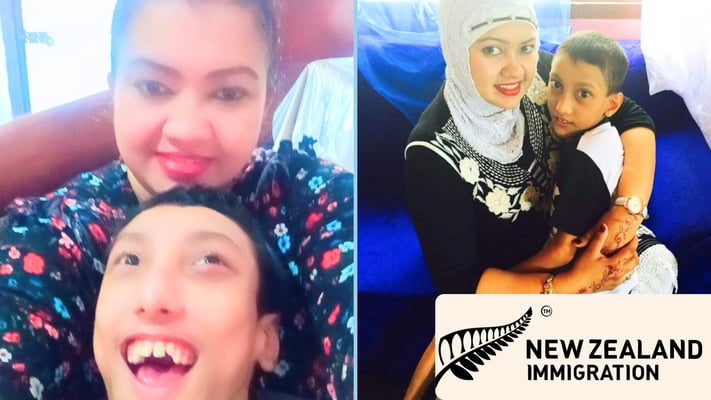

Immigration explains health rules as Fijian-Indian mum fights to live with her son in NZ
Immigration New Zealand (INZ) has explained how it assesses health standards for visa applicants, following the case of Loriza Ali, a Fijian-Indian New Zealand citizen seeking to reunite with her 19-year-old son, Nathan Lyzal Amhaz, who has lived with Cerebral Palsy in Fiji since birth.
Ali applied for ministerial intervention in October after a decade-long effort to bring Nathan to New Zealand. She says Nathan’s earlier visa applications (Visitor Visa and Dependent Child Resident Visa), have been declined.
Ministry of Business, Innovation and Employment (MBIE) deputy chief operating officer Jeannie Melville acknowledged the family’s situation, telling The Indian Weekender that “Immigration New Zealand (INZ) carefully considers all applications involving dependent children, including those with special needs, under clear health and eligibility criteria.”
Melville said that while children with special needs can be included on a parent’s Resident Visa or a Dependent Child Resident Visa application, “in all cases they must meet the acceptable standard of health.”
Ali argues her son is a “happy and healthy” child who is not on any medication. She says Nathan has become “home-bound” in Fiji due to her ageing mother's inability to drive him to physiotherapy appointments. If he could join her in New Zealand, where all her sisters have migrated, Ali says he could be “part of community activities that are not available in Fiji.”
Melville confirmed INZ has previously declined Nathan’s applications. “Ms Ali submitted visa applications for Nathan in 2017 (Visitor Visa) and 2024 (Dependent Child Resident Visa), both of which were declined as he did not meet immigration health requirements,” she said. “We acknowledge that this is a difficult situation for Ms Ali and her son Nathan,” Melville added.
INZ’s health assessment process requires determining whether an applicant is likely to be a risk to public health, impose significant costs or demands on health or special education services, or be able to undertake the work or study their visa requires.
Melville noted that in some cases, “the overriding issue of concern may not be the cost of services required or the ability of an applicant to undertake the purposes of their visa, but the need for services and resources which are already currently under pressure.”
INZ may grant a medical waiver in some situations, assessed case by case, taking into account support needs, family connections, and the potential contribution of the family. However, Melville said Nathan did not qualify: “Nathan was not eligible for a medical waiver in this instance as he did not have an acceptable standard of health and was not included on his mother's Resident Visa application when she applied, although he was eligible to be.”
Ali explained she did not include Nathan in her 2015 application because she did not have a stable job at the time. “You can not bring a special child to a country without a stable job,” she said. “I now have a stable income, enough earnings now.”
Under his Resident Visa application, INZ found that Nathan’s conditions “are listed in immigration policy as likely to place significant demands on health and education services” and assessed that he would likely need full-time care, including in the community. Under current instructions, applicants in this category cannot be considered for a medical waiver, regardless of a family’s personal capacity to provide care.
Ali appealed to the Immigration and Protection Tribunal (IPT) in November 2024. The appeal was unsuccessful in September 2025, upholding INZ’s decision.
With standard pathways exhausted, Ali sought ministerial intervention in October. Melville said, “In October 2025, Ms Ali submitted a request for ministerial intervention to the Associate Minister of Immigration regarding Nathan’s case. The request is currently being prepared for consideration, and it is not possible to say how long this will take.”
Melville added that the ministry encourages families facing similar circumstances to seek advice early. She said MBIE urges applicants to consult a licensed immigration adviser or New Zealand lawyer before applying; lists of both are available online.
Immigration New Zealand (INZ) has explained how it assesses health standards for visa applicants, following the case of Loriza Ali, a Fijian-Indian New Zealand citizen seeking to reunite with her 19-year-old son, Nathan Lyzal Amhaz, who has lived with Cerebral Palsy in Fiji since birth.
Ali...
Immigration New Zealand (INZ) has explained how it assesses health standards for visa applicants, following the case of Loriza Ali, a Fijian-Indian New Zealand citizen seeking to reunite with her 19-year-old son, Nathan Lyzal Amhaz, who has lived with Cerebral Palsy in Fiji since birth.
Ali applied for ministerial intervention in October after a decade-long effort to bring Nathan to New Zealand. She says Nathan’s earlier visa applications (Visitor Visa and Dependent Child Resident Visa), have been declined.
Ministry of Business, Innovation and Employment (MBIE) deputy chief operating officer Jeannie Melville acknowledged the family’s situation, telling The Indian Weekender that “Immigration New Zealand (INZ) carefully considers all applications involving dependent children, including those with special needs, under clear health and eligibility criteria.”
Melville said that while children with special needs can be included on a parent’s Resident Visa or a Dependent Child Resident Visa application, “in all cases they must meet the acceptable standard of health.”
Ali argues her son is a “happy and healthy” child who is not on any medication. She says Nathan has become “home-bound” in Fiji due to her ageing mother's inability to drive him to physiotherapy appointments. If he could join her in New Zealand, where all her sisters have migrated, Ali says he could be “part of community activities that are not available in Fiji.”
Melville confirmed INZ has previously declined Nathan’s applications. “Ms Ali submitted visa applications for Nathan in 2017 (Visitor Visa) and 2024 (Dependent Child Resident Visa), both of which were declined as he did not meet immigration health requirements,” she said. “We acknowledge that this is a difficult situation for Ms Ali and her son Nathan,” Melville added.
INZ’s health assessment process requires determining whether an applicant is likely to be a risk to public health, impose significant costs or demands on health or special education services, or be able to undertake the work or study their visa requires.
Melville noted that in some cases, “the overriding issue of concern may not be the cost of services required or the ability of an applicant to undertake the purposes of their visa, but the need for services and resources which are already currently under pressure.”
INZ may grant a medical waiver in some situations, assessed case by case, taking into account support needs, family connections, and the potential contribution of the family. However, Melville said Nathan did not qualify: “Nathan was not eligible for a medical waiver in this instance as he did not have an acceptable standard of health and was not included on his mother's Resident Visa application when she applied, although he was eligible to be.”
Ali explained she did not include Nathan in her 2015 application because she did not have a stable job at the time. “You can not bring a special child to a country without a stable job,” she said. “I now have a stable income, enough earnings now.”
Under his Resident Visa application, INZ found that Nathan’s conditions “are listed in immigration policy as likely to place significant demands on health and education services” and assessed that he would likely need full-time care, including in the community. Under current instructions, applicants in this category cannot be considered for a medical waiver, regardless of a family’s personal capacity to provide care.
Ali appealed to the Immigration and Protection Tribunal (IPT) in November 2024. The appeal was unsuccessful in September 2025, upholding INZ’s decision.
With standard pathways exhausted, Ali sought ministerial intervention in October. Melville said, “In October 2025, Ms Ali submitted a request for ministerial intervention to the Associate Minister of Immigration regarding Nathan’s case. The request is currently being prepared for consideration, and it is not possible to say how long this will take.”
Melville added that the ministry encourages families facing similar circumstances to seek advice early. She said MBIE urges applicants to consult a licensed immigration adviser or New Zealand lawyer before applying; lists of both are available online.


Leave a Comment