

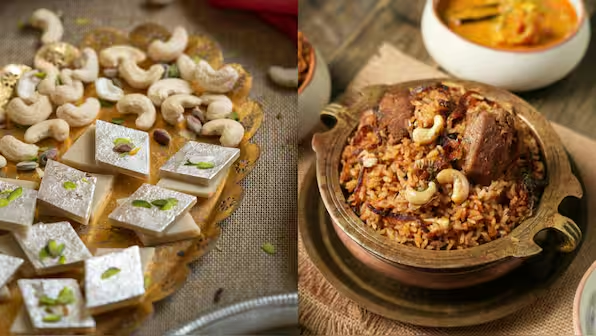

From royal tables to everyday plates: 8 Indian foods once considered luxury
It’s easy to assume that the food we eat every day has always been accessible. But across India, many familiar dishes were once shaped by privilege, tied to royal courts, expensive ingredients, or the sheer labour required to make them.
Luxury in Indian food wasn’t just about price. It often came down to ingredients as much as dishes: what you could source, store and afford to cook. Access to rare spices, surplus dairy, trade networks and skilled kitchens determined who could eat what.
Over the years, better supply chains, farming and urbanisation have changed that equation. What was once reserved for the few now sits on everyday plates, even if traces of that older prestige still linger. Here are eight Indian foods whose journeys tell that story.
Biryani
Few dishes capture the idea of culinary luxury like biryani. Emerging from Mughal and regional royal kitchens, it was built on slow cooking, layered spices and high-quality meat, all serving as markers of elite dining.
The use of ingredients like saffron and the labour-intensive dum technique meant biryani was never meant to be ordinary food. Today, it may be widely available, but its origins remain unmistakably aristocratic.
Kaju katli
Cashews were introduced to India through Portuguese trade, and for a long time, remained a premium ingredient.
Sweets like kaju katli, made almost entirely of cashew paste, were therefore associated with festive and elite consumption. Even today, it retains a sense of occasion, despite being widely available.
Saffron (kesar-based dishes)
Saffron has long been one of the most expensive spices in the world, and in India, it carried both culinary and cultural weight.
Used in desserts, pulaos and ceremonial foods, it was historically associated with royalty and temple offerings. Even now, dishes flavoured with saffron signal indulgence, an echo of its past.
Ghee
Before refrigeration and mass dairy production, ghee was not something every household could afford to use freely.
It required significant quantities of milk and careful preparation, making it a marker of abundance. Its presence in everyday cooking signalled prosperity, while in rituals it carried symbolic importance.

Kebabs
Kebabs, especially in their refined forms, were a product of royal kitchens where texture and technique mattered as much as taste.
From melt-in-the-mouth galoutis to slow-grilled seekh kebabs, these dishes required skilled cooks and time, both luxuries in themselves. What was once courtly cuisine is now a staple of street food culture.
Dry fruits
Almonds, pistachios and raisins were not always pantry staples.
Historically, many of these were imported or limited to certain regions, making them expensive additions to food. Their use in Mughal cuisine, in gravies, desserts and rice dishes, was as much about flavour as it was about displaying wealth.
Shahi tukda
The clue is in the name — shahi means royal.
Made with fried bread, sugar syrup, milk, and often garnished with saffron and dry fruits, shahi tukda brought together ingredients that were costly and preparation methods that were elaborate, placing it firmly in elite dining.
Kheer
Milk-based desserts like kheer sit somewhere between everyday and indulgence. They depended on surplus milk, sugar and often expensive additions like dry fruits or saffron, which meant they were closely tied to festivals, rituals and special occasions, between luxury and tradition.

It’s easy to assume that the food we eat every day has always been accessible. But across India, many familiar dishes were once shaped by privilege, tied to royal courts, expensive ingredients, or the sheer labour required to make them.
Luxury in Indian food wasn’t just about price. It often came...
It’s easy to assume that the food we eat every day has always been accessible. But across India, many familiar dishes were once shaped by privilege, tied to royal courts, expensive ingredients, or the sheer labour required to make them.
Luxury in Indian food wasn’t just about price. It often came down to ingredients as much as dishes: what you could source, store and afford to cook. Access to rare spices, surplus dairy, trade networks and skilled kitchens determined who could eat what.
Over the years, better supply chains, farming and urbanisation have changed that equation. What was once reserved for the few now sits on everyday plates, even if traces of that older prestige still linger. Here are eight Indian foods whose journeys tell that story.
Biryani
Few dishes capture the idea of culinary luxury like biryani. Emerging from Mughal and regional royal kitchens, it was built on slow cooking, layered spices and high-quality meat, all serving as markers of elite dining.
The use of ingredients like saffron and the labour-intensive dum technique meant biryani was never meant to be ordinary food. Today, it may be widely available, but its origins remain unmistakably aristocratic.
Kaju katli
Cashews were introduced to India through Portuguese trade, and for a long time, remained a premium ingredient.
Sweets like kaju katli, made almost entirely of cashew paste, were therefore associated with festive and elite consumption. Even today, it retains a sense of occasion, despite being widely available.
Saffron (kesar-based dishes)
Saffron has long been one of the most expensive spices in the world, and in India, it carried both culinary and cultural weight.
Used in desserts, pulaos and ceremonial foods, it was historically associated with royalty and temple offerings. Even now, dishes flavoured with saffron signal indulgence, an echo of its past.
Ghee
Before refrigeration and mass dairy production, ghee was not something every household could afford to use freely.
It required significant quantities of milk and careful preparation, making it a marker of abundance. Its presence in everyday cooking signalled prosperity, while in rituals it carried symbolic importance.
Kebabs
Kebabs, especially in their refined forms, were a product of royal kitchens where texture and technique mattered as much as taste.
From melt-in-the-mouth galoutis to slow-grilled seekh kebabs, these dishes required skilled cooks and time, both luxuries in themselves. What was once courtly cuisine is now a staple of street food culture.
Dry fruits
Almonds, pistachios and raisins were not always pantry staples.
Historically, many of these were imported or limited to certain regions, making them expensive additions to food. Their use in Mughal cuisine, in gravies, desserts and rice dishes, was as much about flavour as it was about displaying wealth.
Shahi tukda
The clue is in the name — shahi means royal.
Made with fried bread, sugar syrup, milk, and often garnished with saffron and dry fruits, shahi tukda brought together ingredients that were costly and preparation methods that were elaborate, placing it firmly in elite dining.
Kheer
Milk-based desserts like kheer sit somewhere between everyday and indulgence. They depended on surplus milk, sugar and often expensive additions like dry fruits or saffron, which meant they were closely tied to festivals, rituals and special occasions, between luxury and tradition.


Leave a Comment