

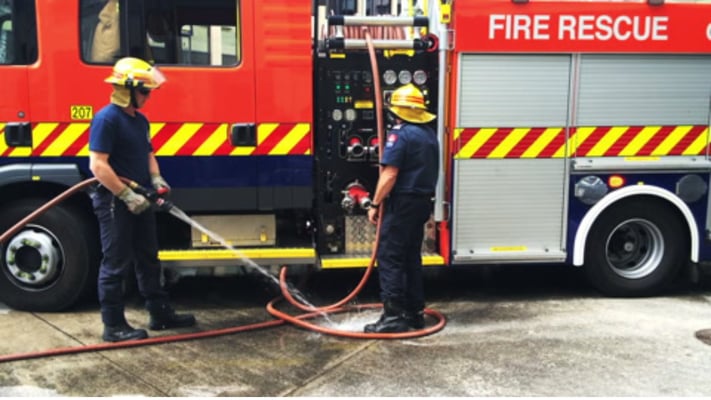

Firefighters Fear Ageing Fleet Failures
Firefighters across the country say their ageing fleet is now a major safety concern, warning that deteriorating trucks and mounting mechanical issues are compromising their ability to respond to emergencies.
According to a report by Evie Richardson of RNZ, many crews said they had grown used to “making do,” but feared the situation was reaching a breaking point as faults became more frequent and replacement vehicles remained inadequate.
Fire and Emergency New Zealand (FENZ) maintains that new appliances are on the way and that the current fleet is “well maintained.” Despite these assurances, the firefighters’ union is preparing more industrial action, saying far more needs to be done.
On Guy Fawkes night, traditionally one of the busiest shifts of the year, one of the country’s largest fire stations was already grappling with outdated equipment. Two hours into their 14-hour shift, the crew had attended three incidents, but their biggest worry wasn’t the workload. It was the truck they were operating.
The appliance they were using is 29 years old, temporarily filling in for their aerial truck, which is undergoing repairs. Unlike the aerial, the replacement has no mechanical ladder.
Cameron Graham, who has served as a firefighter for 16 years, said it was becoming routine to work in vehicles as old as the firefighters themselves. Their aerial truck, he said, had been out of action more often than not.
"The truck out there, it's not a one for one replacement for the truck it's come to replace, it's not a heavy aerial, it doesn't have a 32m reach, that is a single pumping appliance. Our relief aerial has been off the run for over a year, so it hasn't been replaced by adequate resourcing," as quoted by RNZ.
According to a report by Evie Richardson of RNZ, Graham said the ageing trucks had already hindered operations in the past.
"I've been on a hose in a fire in a house and the pumps stopped working and it was a 32-year-old truck like that. We have to have confidence in our gear, we have to have confidence that I'm going to go in to this fire and have no protection if it happens again, quoted RNZ.
"It might not be my life, it might be a fellow firefighter, it might be a member of the public," as quoted by RNZ.
Last month, firefighters staged a one-hour nationwide strike, and more action had been planned for Friday. The union has since paused the strike to resume bargaining.
Auckland local representative and station officer Toby Kerr, who has been a firefighter for 25 years, said the state of the fleet had never been worse.
"Last strike we were in what we call the fire crisis, where our fleet was horrendous, three years later, we're worse," RNZ quoted.
He said crews frequently relied on relief trucks while their main appliances were repaired, but now, even the relief vehicles were breaking down, RNZ reported.
Kerr said their newest truck was already nine years old, far older than what should be assigned to the country’s busiest station.
"We've got one of the newest trucks in the fleet, it's nine years old, we're supposed to have a truck no older than three years, we're supposed to be a tier one station we get a truck for three years when it's brand new, out of the box, under warranty, then it'll go to a tier two station which is a quieter station. We're about to tick into where that truck should be a tier three station, skip the tier two stations," quoted RNZ.
During a rare quiet moment at 8.30 pm, the crew sat down for dinner, a roast cooked by one of their own, but the conversation quickly turned back to equipment issues. Firefighter Ants said concerns over the failing fleet dominated most discussions.
"It's expected now, people have no confidence in any of our equipment because of the continual failings of our equipment," quoted RNZ.
"It's almost a daily occurrence that you'll have to take one of those trucks out to the workshops to get something on it repaired just to keep it on the run, it's sad, it's sad for us but it's also sad for the public, it's the public who are the ones at the end of the day are facing the consequences," as quoted by RNZ.
Their accounts stand in stark contrast to comments recently made in Parliament by David Seymour, who initially said he had been advised by FENZ that only one recent breakdown had delayed a fire response. He later withdrew the statement, saying FENZ had apologised for providing information based on “a miscommunication.”
Seymour said he had not received updated figures, as no specific count of breakdown-related delays existed.
FENZ deputy national commander Megan Stiffler said while faults were reported “most days,” that did not mean appliances were breaking down daily. She said 317 trucks had been replaced since 2017, with another 78 currently on order.
Auckland City, as one of the busiest stations, would receive a new appliance, while older trucks would be phased out to quieter stations, she said. FENZ also maintained that its maintenance programme remained thorough and regular.
Firefighters across the country say their ageing fleet is now a major safety concern, warning that deteriorating trucks and mounting mechanical issues are compromising their ability to respond to emergencies.
According to a report by Evie Richardson of RNZ, many crews said they had grown used to...
Firefighters across the country say their ageing fleet is now a major safety concern, warning that deteriorating trucks and mounting mechanical issues are compromising their ability to respond to emergencies.
According to a report by Evie Richardson of RNZ, many crews said they had grown used to “making do,” but feared the situation was reaching a breaking point as faults became more frequent and replacement vehicles remained inadequate.
Fire and Emergency New Zealand (FENZ) maintains that new appliances are on the way and that the current fleet is “well maintained.” Despite these assurances, the firefighters’ union is preparing more industrial action, saying far more needs to be done.
On Guy Fawkes night, traditionally one of the busiest shifts of the year, one of the country’s largest fire stations was already grappling with outdated equipment. Two hours into their 14-hour shift, the crew had attended three incidents, but their biggest worry wasn’t the workload. It was the truck they were operating.
The appliance they were using is 29 years old, temporarily filling in for their aerial truck, which is undergoing repairs. Unlike the aerial, the replacement has no mechanical ladder.
Cameron Graham, who has served as a firefighter for 16 years, said it was becoming routine to work in vehicles as old as the firefighters themselves. Their aerial truck, he said, had been out of action more often than not.
"The truck out there, it's not a one for one replacement for the truck it's come to replace, it's not a heavy aerial, it doesn't have a 32m reach, that is a single pumping appliance. Our relief aerial has been off the run for over a year, so it hasn't been replaced by adequate resourcing," as quoted by RNZ.
According to a report by Evie Richardson of RNZ, Graham said the ageing trucks had already hindered operations in the past.
"I've been on a hose in a fire in a house and the pumps stopped working and it was a 32-year-old truck like that. We have to have confidence in our gear, we have to have confidence that I'm going to go in to this fire and have no protection if it happens again, quoted RNZ.
"It might not be my life, it might be a fellow firefighter, it might be a member of the public," as quoted by RNZ.
Last month, firefighters staged a one-hour nationwide strike, and more action had been planned for Friday. The union has since paused the strike to resume bargaining.
Auckland local representative and station officer Toby Kerr, who has been a firefighter for 25 years, said the state of the fleet had never been worse.
"Last strike we were in what we call the fire crisis, where our fleet was horrendous, three years later, we're worse," RNZ quoted.
He said crews frequently relied on relief trucks while their main appliances were repaired, but now, even the relief vehicles were breaking down, RNZ reported.
Kerr said their newest truck was already nine years old, far older than what should be assigned to the country’s busiest station.
"We've got one of the newest trucks in the fleet, it's nine years old, we're supposed to have a truck no older than three years, we're supposed to be a tier one station we get a truck for three years when it's brand new, out of the box, under warranty, then it'll go to a tier two station which is a quieter station. We're about to tick into where that truck should be a tier three station, skip the tier two stations," quoted RNZ.
During a rare quiet moment at 8.30 pm, the crew sat down for dinner, a roast cooked by one of their own, but the conversation quickly turned back to equipment issues. Firefighter Ants said concerns over the failing fleet dominated most discussions.
"It's expected now, people have no confidence in any of our equipment because of the continual failings of our equipment," quoted RNZ.
"It's almost a daily occurrence that you'll have to take one of those trucks out to the workshops to get something on it repaired just to keep it on the run, it's sad, it's sad for us but it's also sad for the public, it's the public who are the ones at the end of the day are facing the consequences," as quoted by RNZ.
Their accounts stand in stark contrast to comments recently made in Parliament by David Seymour, who initially said he had been advised by FENZ that only one recent breakdown had delayed a fire response. He later withdrew the statement, saying FENZ had apologised for providing information based on “a miscommunication.”
Seymour said he had not received updated figures, as no specific count of breakdown-related delays existed.
FENZ deputy national commander Megan Stiffler said while faults were reported “most days,” that did not mean appliances were breaking down daily. She said 317 trucks had been replaced since 2017, with another 78 currently on order.
Auckland City, as one of the busiest stations, would receive a new appliance, while older trucks would be phased out to quieter stations, she said. FENZ also maintained that its maintenance programme remained thorough and regular.





Leave a Comment