




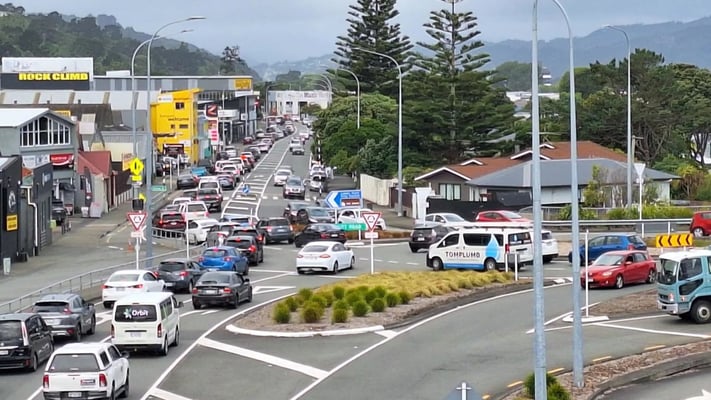



Explainer - Road rules are changing tomorrow. Here's what you need to know.
Four new rules that come into effect on 1 October include changes to overtaking, where e-scooters can travel and where children can ride their bikes.

"These changes are about fixing the basics: safer streets, clearer rules, and less bureaucracy getting in the way of everyday travel," Transport Minister Chris Bishop said in announcing the changes earlier this year.
Okay, what are the changes?
The new rules:
- require a minimum passing gap of 1.5 metres when drivers pass other road users who are not driving a motor vehicle
- allow children up to 12 years old to ride bikes on footpaths and allow parents or caregivers to ride with them
- allow people to ride e-scooters in cycle lanes
- require road users to give way to buses leaving bus stops

The Government sought feedback from the public on possible transport changes earlier this year, Bishop said, and received about 6000 responses.
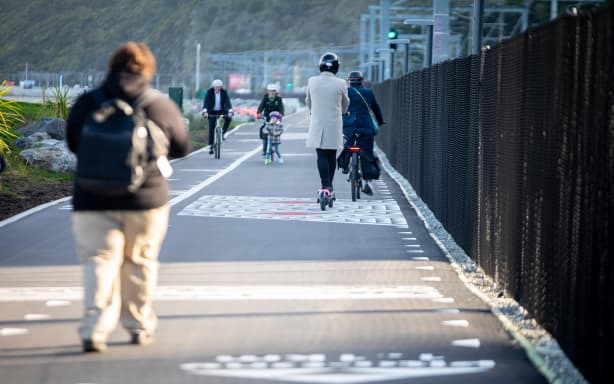
There are changes for bike lanes. RNZ / Mark Papalii
Changes for families biking together
One big change is for families who go cycling with young children.
Originally, it was proposed children 12 and under only could use footpaths, but that has been extended to allow their parents or caregivers to accompany them.
"One of the strongest messages we heard was that allowing children to ride on footpaths only solves half the problem if the grown-up riding with them still has to use the road," Bishop said.
"That's why we've adapted the proposal to allow parents and caregivers to ride alongside children on the footpath.
"Keeping kids safe while they're learning to ride is common sense. This change strikes the right balance between protecting young cyclists and ensuring footpaths remain safe for everyone who uses them."
Some submitters to the proposal have worried about possible impacts on pedestrian safety, especially for the elderly or disabled.
Overtaking gap rule simplified
The changes also simplified overtaking-gap rules when passing cyclists, pedestrians, horse riders and any other road users who are not driving a motor vehicle.
NZTA says that drivers must leave a distance of at least 1.5 metres when passing those other road users who are travelling in the same direction as them, in the same lane.
"If you can't pass safely, slow down and wait behind them until you can," NZTA notes on its website. "Take extra care when passing them as the wind gust from your vehicle could affect their balance."
"Instead of different distances in different circumstances, drivers will be required to leave a minimum gap of 1.5 metres when overtaking," Bishop said.
"That's clearer for drivers and safer for everyone."
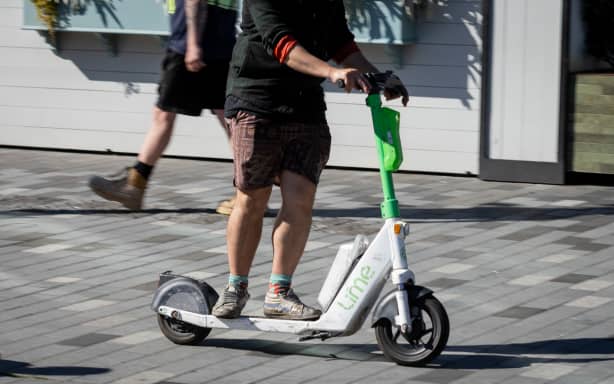
E-scooters can now use bicycle lanes. RNZ / Nate McKinnon
New rules for e-scooters and bus stops
E-scooters will now be allowed to use cycle lanes.
E-scooters have been allowed to ride on the footpath and the road, but it has been illegal to ride in the cycle lanes.
This only applies to e-scooters that are not considered a motor vehicle, NZTA says. (You can get in the weeds of the details about how exactly that is decided here.)
A fourth rule also clarifies when drivers must give way to buses, which hadn't previously been laid out.
On roads with a 60km/h or lower speed limit, if bus drivers are leaving a bus stop, the side of the road or moving out of a bus lane, other drivers must give way to the bus.
The bus driver must indicate their intention to move for at least three seconds, giving other drivers time to react and bus drivers time to check the way is clear, NZTA says.
One change that was mooted but did not go forward was to give councils more power to fine people for parking on grass berms.
"We also heard strong views on the proposal relating to parking on berms, which would have given councils greater powers to fine the owners of vehicles parked on berms," Bishop said.
"After considering the feedback, we've decided not to proceed because it became clear the proposal wouldn't solve the underlying problem."
The changes are part of the Government's overall land transport rules reform, which includes the introduction of digital drivers licenses in the near future.
-RNZ



ISSUE


Leave a Comment