




-Apr-16-2026-04-37-44-2325-AM.jpg?width=740&height=400&name=Break%20The%20Silence%20NZ%20Campaign%20Supports%20Asians%20Facing%20Gambling%20Harm%20(4)-Apr-16-2026-04-37-44-2325-AM.jpg)



Interview: Leader of the Opposition and Labour Party leader Chris Hipkins says he is waiting for answers from the government to his queries on the Free Trade Agreement (FTA) concluded between New Zealand and India.
“Given that New Zealand First have indicated that they're not going to support it, the only way the deal will get through is if the government can provide enough information to the Opposition to give us reassurance so that we can support it.”
In a candid and freewheeling conversation, Hipkins told this columnist on Wednesday that the Labour Party had made it a point to respond to the government “very quickly whenever they have come back to us.
“But it’s been very slow getting information out of the government. They’ve been very slow in responding to our request for information.”
The pending information focuses on some key areas.
One is the scale of the investment, how realistic that is and “what the consequences would be for not achieving it.”
The second concern is around international students and “the risks around exploitation of international students and an erosion of quality in the international education space.”
Third, there are concerns about the lack of clarity on family members being able to move to New Zealand under the skilled visas offered under the agreement.
Finally, there are a range of “smaller issues around biosecurity and other things.”
The upshot is that the Labour Party has not made a decision on whether or not to support the trade deal “because we just simply don’t have the information that we need to be able to make a sound decision.”
In particular, the NZD 33 billion investment spread over 15 years is especially problematic.
“We need to understand what the consequences of New Zealand not sending all of that money to India will be. Does that mean that any exporters who take up the opportunity to export to India will lose that market without really any recourse because New Zealand hasn’t met its commitment to target NZD 33 billion worth of investment?”
Hipkins' concerns are not allayed by the use of the word “aspirational” to justify the vast investment into the Indian market.
“Well, there is a real challenge here in the use of language. For example, [the Indian government] has said that it’s a commitment, and if New Zealand doesn’t meet [the target], then India will exercise the ability to claw back the concessions that have been granted to New Zealand.
“The New Zealand government is saying it’s only an aspiration and that it’s not going to be a problem if we don’t meet it.”
Hipkins is looking beyond the semantics around the deal. He wants to see the fine print.
“That is why we’ve asked to see all of the advice that they’ve received on that, to really understand New Zealand’s legal position.”
Can the FTA withstand legal scrutiny? That appears to be the litmus test for Hipkins.
“Is this commitment binding? If so, to what extent is it binding? If what the government are telling us is true, then they’ll have no problem in giving us the information and the legal advice that they’ve relied on informing that view.”
It’s the fickleness of the trade deal that makes Hipkins uneasy. All those concessions and reductions in tariff can go up like a puff of smoke if New Zealand defaults on its commitment.
“If India decides that New Zealand hasn’t fulfilled its end of the bargain, then it can revoke the concessions that they’ve given. So the reduction in tariffs and the increases in quota and so on that they have granted as part of the deal, they could reverse that if New Zealand doesn’t meet its target.”
The sheer scale of the investment - NZD 33 billion - fills Hipkins with stage fright.
“This is the first time that New Zealand has signed up to a commitment to invest New Zealand money in a country overseas, in the way that this agreement commits us to. We don’t have those large pools of capital in New Zealand.”
Hipkins thinks the NZ-India trade deal is an outright overreach by the National-led government.
“I don’t think the government have been in any way clear about where the money is going to come from or how we would even try to meet that commitment.”
But what about the huge surge of interest by New Zealand export businesses to invest in India and who are backing the trade deal?
Hipkins is scathing about the enthusiasm shown by the NZ business community keen to invest in India.
“I don’t think the business leaders are in a position to form a sound business judgement on an agreement that they haven’t seen.”
This strikes a chord with what New Zealand First leader Winston Peters has been saying about the open letter put out by Business NZ and 28 other businesses calling on political parties to back the FTA, but without ever setting eyes on the text.
Hipkins is wary of being compared with Peters.
“ I don’t agree with a lot of Winston Peters’ rhetoric around this deal, which I think is anti-migrant, and is causing a lot of harm in the community, and is emboldening a lot of racism, and I really object to that …… We absolutely condemn racism and the sort of racism that’s being stoked up by people like Winston Peters and Shane Jones at the moment.”
Hipkins is among the privileged few who have been shown the text of the NZ-India FTA. He is bound by secrecy and will not yield to pressure to share its contents with those who fall outside the circle of the “privileged few.”
“ We’ve been provided the text in confidence, and I’m respecting that confidence, so I’m not sharing the text publicly. But that’s really a question for the government.”
Pressed to rate the agreement he saw, Hipkins takes a stab at delivering a balanced view.
“Well, the concessions that New Zealand has gained under the agreement are very good, So the potential increase in market access, the reduction in tariffs, the reduction or the increase in quotas. Those are good things for New Zealand and we’re very supportive of those.”
So what’s the downside?
“There are issues around those concessions being taken away, and risks to New Zealand businesses that we’re trying to understand before we make a decision on whether to support the agreement or not.”
All eyes are on the Labour Party caucus meeting that will make that decision.
For now, Hipkins is waiting to hear back from Luxon on his request for clarification.
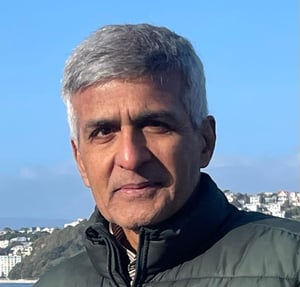
Venu Menon is a senior journalist based in Wellington. He was Consulting Editor of The Hindu in India prior to moving to New Zealand


ISSUE


Leave a Comment