




Nepal flood: Two men walked out of a tunnel alive, Nepal needs us to hold on with them
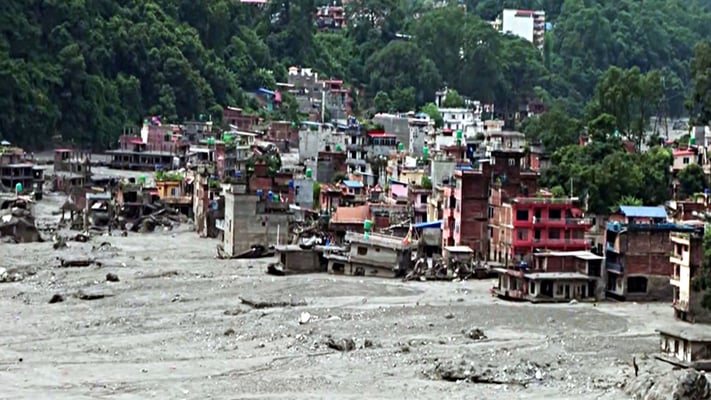
On Friday, nine days after the floods tore through Nepal’s Himalayan districts, rescuers reached two workers who were somehow still alive inside a hydropower tunnel in Rasuwa.
Sanjay Sah and Kabir Maharjan had spent more than a week in the dark, in mud and cold water, and they came out into daylight. The teams working the tunnel say they could still hear voices further inside. After days of nothing but bad news, that was the first thing in a long while that let the country breathe.
I want to hold on to that hope, and I am asking readers of Indian Weekender to hold on to it with us, because the need in Nepal is huge right now and it will not wait.
It began on 26 August, when a glacier collapsed near the Nepal-China border and sent ice, rock and water down the Bhotekoshi and Trishuli rivers. It hit so hard that instruments first read it as an earthquake. Villages, roads, bridges and power stations were gone within the hour. As of this week more than 1,280 people are confirmed dead and over 5,600 are still missing, hundreds of them foreign nationals. About 85,000 people have lost their homes. The United Nations says roughly 43,000 people, around 10,000 families, need food, clean water and shelter now.
It reached us here too. Five New Zealanders were among those reported missing after the disaster, including a Hamilton couple who had travelled to Nepal for a family celebration.
I have spent most of my working life studying the Himalaya, its wildlife and its ecosystems, and watching what a warming climate is doing to them, so I want to be honest about what this disaster is telling us. This is what a warming world looks like at high altitude.
Higher temperatures are melting glaciers and filling unstable lakes behind walls of ice and rock, and when one of those walls fails, the flood arrives with almost no warning. Early reports say this glacier had shown signs of instability in the days before it gave way. Nepal produces a tiny fraction of the world’s emissions, yet it sits right in the path of the harm. Nepalis are living that unfairness this week.
There is a quieter part of this that I keep coming back to as a conservation scientist. The same warming that killed people in Rasuwa is also pulling apart the habitats and threatening the species of the high Himalaya. We tend to treat the loss of a forest or a river system as a separate matter from the loss of a village, but they are not separate at all. You cannot protect the people of these mountains without protecting the mountains themselves.
This crisis has also shown what the Nepali diaspora can do when it pulls together. Within days, Nepali communities from New Zealand to the Gulf were organising and raising money.
Here in Aotearoa, NRNA New Zealand and other Nepali societies and community organisations have raised over NZD $27,000 in a short time, and we are putting it to work in the most direct way we can, by paying it straight into the Government of Nepal’s official relief fund. NRNA is the global body for Non-Resident Nepalis, and our International Coordination Council has teams on the ground in the affected districts, helping hand out relief alongside the government. Against billions of rupees in damage our contribution is small, but it moves fast and it reaches people who have lost nearly everything.
The urgent job is to save whoever can still be saved and to shelter the families with nowhere to go. The harder job comes after, and it gets far less attention. Nepal needs proper early-warning systems for its glacial lakes, infrastructure built for the risks we now know are real, and support from the rest of the world that treats mountain communities as partners in adapting, not as people who turn up in the news every couple of years. Emergency giving fades quickly once the cameras leave. Rebuilding, and facing the climate that caused this, will take years.
You do not need any tie to Nepal to help a family whose home is under mud. If you can give, please give now, while the need is at its worst. Every dollar goes to people who have lost their families, their homes and their way of making a living. You can donate through our appeal at https://givealittle.co.nz/cause/help-nepal-recover-from-devastating-floods, and any business or community group that wants to give together is welcome to contact NRNA New Zealand.
I hope we remember this flood for the two men who came out of that tunnel alive. I hope even more that we listen to what the falling ice was trying to tell us, because if we do not, we will be back here again before long.
Dr Achyut Aryal is President of the Non-Resident Nepali Association (NRNA) New Zealand and a climate and environmental scientist whose research covers climate change and conservation biology. Donate to the appeal: https://givealittle.co.nz/cause/help-nepal-recover-from-devastating-floodsa
On Friday, nine days after the floods tore through Nepal’s Himalayan districts, rescuers reached two workers who were somehow still alive inside a hydropower tunnel in Rasuwa. Sanjay Sah and Kabir Maharjan had spent more than a week in the dark, in mud and cold water, and they came out into...
On Friday, nine days after the floods tore through Nepal’s Himalayan districts, rescuers reached two workers who were somehow still alive inside a hydropower tunnel in Rasuwa.
Sanjay Sah and Kabir Maharjan had spent more than a week in the dark, in mud and cold water, and they came out into daylight. The teams working the tunnel say they could still hear voices further inside. After days of nothing but bad news, that was the first thing in a long while that let the country breathe.
I want to hold on to that hope, and I am asking readers of Indian Weekender to hold on to it with us, because the need in Nepal is huge right now and it will not wait.
It began on 26 August, when a glacier collapsed near the Nepal-China border and sent ice, rock and water down the Bhotekoshi and Trishuli rivers. It hit so hard that instruments first read it as an earthquake. Villages, roads, bridges and power stations were gone within the hour. As of this week more than 1,280 people are confirmed dead and over 5,600 are still missing, hundreds of them foreign nationals. About 85,000 people have lost their homes. The United Nations says roughly 43,000 people, around 10,000 families, need food, clean water and shelter now.
It reached us here too. Five New Zealanders were among those reported missing after the disaster, including a Hamilton couple who had travelled to Nepal for a family celebration.
I have spent most of my working life studying the Himalaya, its wildlife and its ecosystems, and watching what a warming climate is doing to them, so I want to be honest about what this disaster is telling us. This is what a warming world looks like at high altitude.
Higher temperatures are melting glaciers and filling unstable lakes behind walls of ice and rock, and when one of those walls fails, the flood arrives with almost no warning. Early reports say this glacier had shown signs of instability in the days before it gave way. Nepal produces a tiny fraction of the world’s emissions, yet it sits right in the path of the harm. Nepalis are living that unfairness this week.
There is a quieter part of this that I keep coming back to as a conservation scientist. The same warming that killed people in Rasuwa is also pulling apart the habitats and threatening the species of the high Himalaya. We tend to treat the loss of a forest or a river system as a separate matter from the loss of a village, but they are not separate at all. You cannot protect the people of these mountains without protecting the mountains themselves.
This crisis has also shown what the Nepali diaspora can do when it pulls together. Within days, Nepali communities from New Zealand to the Gulf were organising and raising money.
Here in Aotearoa, NRNA New Zealand and other Nepali societies and community organisations have raised over NZD $27,000 in a short time, and we are putting it to work in the most direct way we can, by paying it straight into the Government of Nepal’s official relief fund. NRNA is the global body for Non-Resident Nepalis, and our International Coordination Council has teams on the ground in the affected districts, helping hand out relief alongside the government. Against billions of rupees in damage our contribution is small, but it moves fast and it reaches people who have lost nearly everything.
The urgent job is to save whoever can still be saved and to shelter the families with nowhere to go. The harder job comes after, and it gets far less attention. Nepal needs proper early-warning systems for its glacial lakes, infrastructure built for the risks we now know are real, and support from the rest of the world that treats mountain communities as partners in adapting, not as people who turn up in the news every couple of years. Emergency giving fades quickly once the cameras leave. Rebuilding, and facing the climate that caused this, will take years.
You do not need any tie to Nepal to help a family whose home is under mud. If you can give, please give now, while the need is at its worst. Every dollar goes to people who have lost their families, their homes and their way of making a living. You can donate through our appeal at https://givealittle.co.nz/cause/help-nepal-recover-from-devastating-floods, and any business or community group that wants to give together is welcome to contact NRNA New Zealand.
I hope we remember this flood for the two men who came out of that tunnel alive. I hope even more that we listen to what the falling ice was trying to tell us, because if we do not, we will be back here again before long.
Dr Achyut Aryal is President of the Non-Resident Nepali Association (NRNA) New Zealand and a climate and environmental scientist whose research covers climate change and conservation biology. Donate to the appeal: https://givealittle.co.nz/cause/help-nepal-recover-from-devastating-floodsa




Related Posts
ISSUE


Leave a Comment