

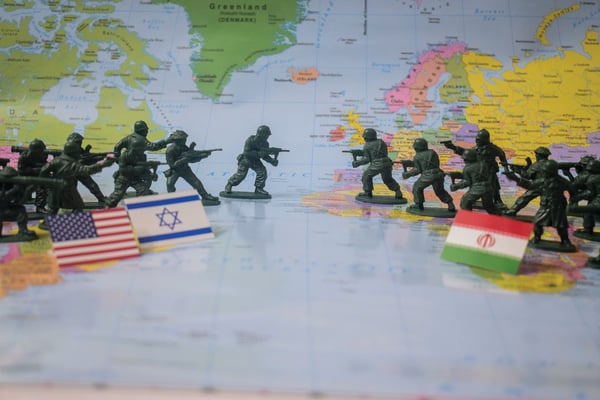

How the Iran-Israel conflict is redrawing middle eastern geopolitics
The latest confrontation involving Israel, Hezbollah, and the shadow of Iran has exposed a paradox at the heart of Middle Eastern geopolitics: military strength does not always translate into strategic independence.
Israel is widely regarded as the region's pre-eminent military power. According to the Global Firepower Index 2026, it ranks among the world's top twenty militaries.
Its defence expenditure crossed $24.4 billion in 2025, accounting for nearly 5 per cent of its GDP, one of the highest proportions globally.
It possesses advanced missile-defence systems such as Iron Dome, David's Sling, and Arrow, alongside an undeclared nuclear arsenal estimated by the Stockholm International Peace Research Institute (SIPRI) at around 90 nuclear warheads.
Yet, the recent episode in which Israel reportedly moderated its military intentions following pressure from U.S. President Donald Trump illustrates a persistent truth: even powerful allies operate within the boundaries set by their patrons.
The United States has been Israel's indispensable strategic partner. Since 1948, Washington has provided Israel with more than $310 billion in military and economic assistance, adjusted for inflation. Under the current framework, Israel receives $3.8 billion annually in military aid, making it the largest cumulative recipient of U.S. foreign assistance in modern history.
During the 1973 Yom Kippur War, American airlifts replenished Israeli military supplies. In the 1991 Gulf War, Israel refrained from retaliating against Iraqi missile attacks largely at Washington's request. The pattern is not new; what is new is its visibility.
The conflict's other actors further complicate the picture. Hezbollah emerged in the early 1980s with Iranian backing and has evolved into one of the world's most heavily armed non-state groups.
Estimates suggest it possesses more than 150,000 rockets and missiles, far exceeding the arsenal of many sovereign states. Beyond its military wing, Hezbollah holds parliamentary seats and exerts significant influence within Lebanon's political system.
The human cost of escalation remains staggering. The 2006 Israel-Hezbollah war resulted in approximately 1,200 Lebanese deaths, the majority civilians, while around 160 Israelis were killed, including civilians and soldiers. Nearly one million Lebanese and 300,000 Israelis were displaced. Reconstruction costs in Lebanon exceeded $3 billion.
Today, Lebanon is far more fragile. The World Bank has described its economic collapse as among the world's worst since the nineteenth century. The Lebanese pound has lost more than 95 per cent of its value since 2019, inflation has devastated purchasing power, and over 80 per cent of the population lives in multidimensional poverty. Another war would strike a society already on its knees.
Iran's role cannot be ignored. Through what analysts describe as the "Axis of Resistance"—comprising Hezbollah, Iraqi militias, the Houthis in Yemen, and Palestinian factions—Tehran projects influence across the region without direct conventional confrontation. This strategy enables Iran to pressure adversaries while maintaining plausible deniability.
The broader lesson is sobering. The Middle East is often portrayed as a chessboard of sovereign states pursuing independent interests. In reality, it resembles a web of dependencies: Iran relies on proxies, Gulf monarchies depend on American security guarantees, and Israel—despite its military prowess—must calibrate its actions against Washington's geopolitical priorities.
Whether American intervention prevents catastrophe or merely postpones it remains contested. What is undeniable, however, is that the mythology of absolute sovereignty has been punctured. In the twenty-first century, alliances increasingly reveal an uncomfortable truth: power is rarely exercised alone. Even the strongest regional actors must negotiate their ambitions through the approval, interests, and red lines of greater powers
The latest confrontation involving Israel, Hezbollah, and the shadow of Iran has exposed a paradox at the heart of Middle Eastern geopolitics: military strength does not always translate into strategic independence.
{% module_block module "widget_06811c5d-f1bc-4f7b-9324-3c51a3e0a0df" %}{%...The latest confrontation involving Israel, Hezbollah, and the shadow of Iran has exposed a paradox at the heart of Middle Eastern geopolitics: military strength does not always translate into strategic independence.
Israel is widely regarded as the region's pre-eminent military power. According to the Global Firepower Index 2026, it ranks among the world's top twenty militaries.
Its defence expenditure crossed $24.4 billion in 2025, accounting for nearly 5 per cent of its GDP, one of the highest proportions globally.
It possesses advanced missile-defence systems such as Iron Dome, David's Sling, and Arrow, alongside an undeclared nuclear arsenal estimated by the Stockholm International Peace Research Institute (SIPRI) at around 90 nuclear warheads.
Yet, the recent episode in which Israel reportedly moderated its military intentions following pressure from U.S. President Donald Trump illustrates a persistent truth: even powerful allies operate within the boundaries set by their patrons.
The United States has been Israel's indispensable strategic partner. Since 1948, Washington has provided Israel with more than $310 billion in military and economic assistance, adjusted for inflation. Under the current framework, Israel receives $3.8 billion annually in military aid, making it the largest cumulative recipient of U.S. foreign assistance in modern history.
During the 1973 Yom Kippur War, American airlifts replenished Israeli military supplies. In the 1991 Gulf War, Israel refrained from retaliating against Iraqi missile attacks largely at Washington's request. The pattern is not new; what is new is its visibility.
The conflict's other actors further complicate the picture. Hezbollah emerged in the early 1980s with Iranian backing and has evolved into one of the world's most heavily armed non-state groups.
Estimates suggest it possesses more than 150,000 rockets and missiles, far exceeding the arsenal of many sovereign states. Beyond its military wing, Hezbollah holds parliamentary seats and exerts significant influence within Lebanon's political system.
The human cost of escalation remains staggering. The 2006 Israel-Hezbollah war resulted in approximately 1,200 Lebanese deaths, the majority civilians, while around 160 Israelis were killed, including civilians and soldiers. Nearly one million Lebanese and 300,000 Israelis were displaced. Reconstruction costs in Lebanon exceeded $3 billion.
Today, Lebanon is far more fragile. The World Bank has described its economic collapse as among the world's worst since the nineteenth century. The Lebanese pound has lost more than 95 per cent of its value since 2019, inflation has devastated purchasing power, and over 80 per cent of the population lives in multidimensional poverty. Another war would strike a society already on its knees.
Iran's role cannot be ignored. Through what analysts describe as the "Axis of Resistance"—comprising Hezbollah, Iraqi militias, the Houthis in Yemen, and Palestinian factions—Tehran projects influence across the region without direct conventional confrontation. This strategy enables Iran to pressure adversaries while maintaining plausible deniability.
The broader lesson is sobering. The Middle East is often portrayed as a chessboard of sovereign states pursuing independent interests. In reality, it resembles a web of dependencies: Iran relies on proxies, Gulf monarchies depend on American security guarantees, and Israel—despite its military prowess—must calibrate its actions against Washington's geopolitical priorities.
Whether American intervention prevents catastrophe or merely postpones it remains contested. What is undeniable, however, is that the mythology of absolute sovereignty has been punctured. In the twenty-first century, alliances increasingly reveal an uncomfortable truth: power is rarely exercised alone. Even the strongest regional actors must negotiate their ambitions through the approval, interests, and red lines of greater powers


Leave a Comment