

Gold Is the Original Flex
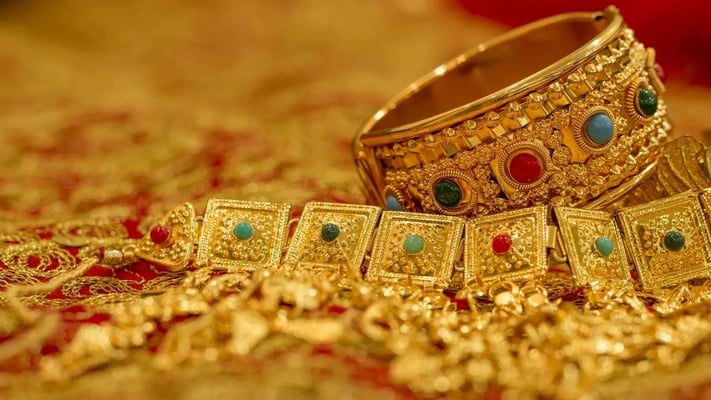
While the world, especially the West, seems to be turning quickly to the ephemeral attractions of fast fashion and synthetic jewellery, the Indian bride still remains strongly committed to real gold in a way that serves as an extravagant counterargument against the very culture of impermanence.
In Indian culture, gold is a magical and vibrant force — the carrier of good fortune, the most intense representation of purity, and the tangible manifestation of parental blessing.
For some, replacing it with imitation ornaments is as sacrilegious as the analogy of jettisoning the sanctity of a Vedic hymn for the frivolity of a chart-topping jingle.
It holds a privileged place in the Indian psyche precisely because it sits at the confluence of three formidable forces — economics, emotion, and ethos.
It is the wealth that you can wear, the memory that you can inherit, and the custom that you can literally hold.
The country is one of the biggest consumers of gold, with yearly national demand fluctuating between 700 and 800 tons and almost half of it being consumed by the wedding industry, so the country’s infatuation with gold is not a coincidence or random.
The bridal gold is a double-edged sword, and the diamond one is simply not sharp enough to match its brilliance. Real gold will always be with the bride as her possession, and it may sometimes even deepen her connection with the family.
The bride, with her adorned beauty, is the bearer of a wellspring of economic security, something that no amount of gold-plated trinkets can ever come close to.
Strangely enough, even the modern, world-conscious, Instagram-optimized Gen Z bride, who is supposedly freed from all ties to the past, still can’t resist the lasting charm of gold.
Today’s goldsmiths, aware of the changes in taste, have skilfully adjusted their art to provide more modern, light, and edgy designs in 14K, 18K, and 22K gold, so the metal's importance stays shining bright.
Gold was once only for the royals and the temples but can nowadays be found even in the most casual and the most fashionable settings. It has, indeed, transformed into a new being without losing its essence — a triumph that very few cultural artifacts have been able to achieve with such grace.
As per the World Gold Council, India's overall gold consumption increased to 802.8 tonnes in 2024, which is a rise of 5% compared to 761 tonnes in 2023; the total value of gold demand increased to about ₹5,15,390 crore — a yearly increase of 31%. Nevertheless, the demand for jewellery in quantity went down slightly — from 575.8 tonnes in 2023 to 563.4 tonnes in 2024 — but its value rose by 22% which shows that despite the increasing prices, customers still prefer to buy jewellery made of real gold.
By the year 2025, the WGC assumes that the total gold demand will be between 700 and 800 tonnes as a result of high gold prices and the expected volatility in prices.
Therefore, when choosing gold — be it for weddings or as an investment — couples, parents, and families are not simply acquiring decorations, but they are purchasing a metal that is still one of the most secure and sought-after assets in India.
Gold still manages to attract demand even in a year of record high prices and monetary tightening, which proves its function as being both heritage and hedge, thereby combining emotional value and financial security.
While the world, especially the West, seems to be turning quickly to the ephemeral attractions of fast fashion and synthetic jewellery, the Indian bride still remains strongly committed to real gold in a way that serves as an extravagant counterargument against the very culture of impermanence.
In...
While the world, especially the West, seems to be turning quickly to the ephemeral attractions of fast fashion and synthetic jewellery, the Indian bride still remains strongly committed to real gold in a way that serves as an extravagant counterargument against the very culture of impermanence.
In Indian culture, gold is a magical and vibrant force — the carrier of good fortune, the most intense representation of purity, and the tangible manifestation of parental blessing.
For some, replacing it with imitation ornaments is as sacrilegious as the analogy of jettisoning the sanctity of a Vedic hymn for the frivolity of a chart-topping jingle.
It holds a privileged place in the Indian psyche precisely because it sits at the confluence of three formidable forces — economics, emotion, and ethos.
It is the wealth that you can wear, the memory that you can inherit, and the custom that you can literally hold.
The country is one of the biggest consumers of gold, with yearly national demand fluctuating between 700 and 800 tons and almost half of it being consumed by the wedding industry, so the country’s infatuation with gold is not a coincidence or random.
The bridal gold is a double-edged sword, and the diamond one is simply not sharp enough to match its brilliance. Real gold will always be with the bride as her possession, and it may sometimes even deepen her connection with the family.
The bride, with her adorned beauty, is the bearer of a wellspring of economic security, something that no amount of gold-plated trinkets can ever come close to.
Strangely enough, even the modern, world-conscious, Instagram-optimized Gen Z bride, who is supposedly freed from all ties to the past, still can’t resist the lasting charm of gold.
Today’s goldsmiths, aware of the changes in taste, have skilfully adjusted their art to provide more modern, light, and edgy designs in 14K, 18K, and 22K gold, so the metal's importance stays shining bright.
Gold was once only for the royals and the temples but can nowadays be found even in the most casual and the most fashionable settings. It has, indeed, transformed into a new being without losing its essence — a triumph that very few cultural artifacts have been able to achieve with such grace.
As per the World Gold Council, India's overall gold consumption increased to 802.8 tonnes in 2024, which is a rise of 5% compared to 761 tonnes in 2023; the total value of gold demand increased to about ₹5,15,390 crore — a yearly increase of 31%. Nevertheless, the demand for jewellery in quantity went down slightly — from 575.8 tonnes in 2023 to 563.4 tonnes in 2024 — but its value rose by 22% which shows that despite the increasing prices, customers still prefer to buy jewellery made of real gold.
By the year 2025, the WGC assumes that the total gold demand will be between 700 and 800 tonnes as a result of high gold prices and the expected volatility in prices.
Therefore, when choosing gold — be it for weddings or as an investment — couples, parents, and families are not simply acquiring decorations, but they are purchasing a metal that is still one of the most secure and sought-after assets in India.
Gold still manages to attract demand even in a year of record high prices and monetary tightening, which proves its function as being both heritage and hedge, thereby combining emotional value and financial security.





Leave a Comment