






There are moments in life when a person doesn’t need your money, your advice, or your solutions. They just need you, your presence, your understanding, your heart. Sympathy says, “I feel bad for you.” Empathy says, “I am with you.”

And in a world that is becoming louder, faster, and more distracted, the rarest gift we can offer another human being is the gift of truly feeling with them, not just feeling for them. Empathy is not softness. It is a strength.
It is the courage to step into someone else’s world, even when it is uncomfortable. It is the discipline to listen without judging, to understand without interrupting, and to care without conditions. Sympathy creates distance. Empathy builds bridges. Empathy is not weakness. It is emotional courage.
Sympathy only touches the heart… BUT EMPATHY TOUCHES THE SOUL. Sympathy may comfort for a moment, but empathy heals for a lifetime. In our homes, workplaces, friendships, and communities, the question is not:
“Do I care ?” The real question is: “Do I care enough to step into their shoes?” Because what truly matters in life is not how much we achieve, but how deeply we connect. And empathy is the bridge that turns strangers into family, pain into strength, and moments into miracles. Sharing 3 Powerful stories from history reflecting- How empathy touches the soul.
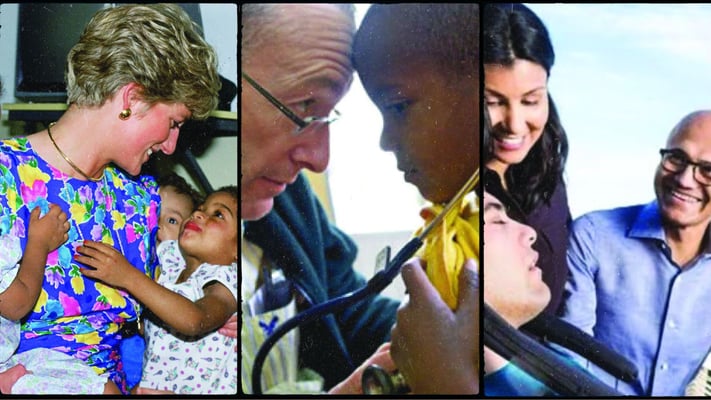
Story 1: An unforgettable example comes from the life of Princess Diana.
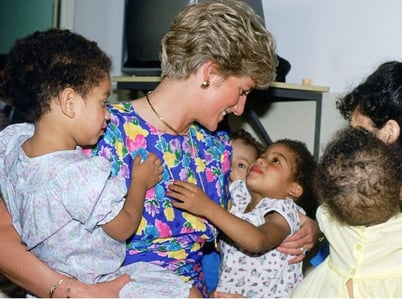
In the 1980s and 90s, when HIV/AIDS patients were feared and isolated, many leaders spoke kind words from afar. Diana did something radical, she touched them. She sat beside them, held their hands, hugged children dying of the disease, and visited hospitals quietly without cameras. At a time when misinformation made people believe AIDS could spread through touch, her simple act shattered stigma across the world. Sympathy would have been a speech. Empathy was her presence. Millions did not just see a princess; they felt a human heart.
Story 2: My second story is a powerful story of Satya Nadella.
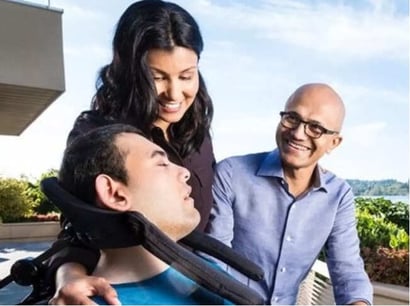
How empathy reshaped corporate leadership. After becoming CEO of Microsoft, he spoke openly about how raising his son with severe disabilities changed him. He realised leadership is not about proving intelligence but understanding people’s experiences. He transformed Microsoft’s culture from internal competition to collaboration and compassion. Employees were encouraged to listen deeply, respect diverse perspectives, and design products that empower people with disabilities. The company’s revival was not driven by technology alone, it was driven by empathy at the top. You can listen to him
Third story is about Dr Rick Hodes, an American physician working in Ethiopia, who met thousands of children suffering from severe spinal deformities.

Many could not walk, many were abandoned, and most had no hope of treatment. He didn’t just treat them medically. He adopted several of them, lived with them, raised them, and personally arranged life‑saving surgeries for hundreds. When asked why he went so far, he said: “If we don’t stand with them, who will?” This is empathy at its highest form, not pity, but partnership. Not distance, but devotion. You can see his touching video https://youtu.be/QzRlCyN7YoI
Friends, these powerful stories reveal a profound truth: sympathy looks at pain; empathy looks from within pain. Sympathy says, “Stay strong.” Empathy says, “You don’t have to be strong right now.” Sympathy may send flowers. Empathy sits through the night. And in our homes, workplaces, friendships, and communities, it is empathy that builds unbreakable bonds.
Today, people are not starving only for success or recognition; they are starving to be understood. A child wants a parent who listens, not lectures. A friend wants presence, not solutions. A colleague wants respect, not comparison. When we practice empathy, we permit others to be human.
If we truly want a kinder world, we don’t need more opinions; we need deeper connections. The next time someone shares their struggle, resist the urge to fix, judge, or minimise. Simply listen. Feel. Stand beside them. Because sometimes the most powerful thing you can say is nothing at all, just a sincere, “I am with you.”
Friends, instead of just wiping someone’s tears, learn to feel their pain. Because people may forget your words…But they never forget how you made them feel. Friends, from today, try to understand people… not just explain things to them.
In the end, sympathy may ease suffering for a moment, but empathy transforms hearts for a lifetime. And perhaps, what truly matters in life is not how much we achieve… but how deeply we understand one another.


Dear reader, for most life queries, you can find me on my YouTube channel, @Ravinandatalks, where I share most LIFE VALUES in short messages. Thank You


ISSUE

Leave a Comment