







The challenge of modern life is that we often know facts about people before we know their stories. We see actions but not struggles. The colleague who appears rude may be carrying immense stress.

The child who performs poorly may be struggling silently. The neighbour who seems distant may be dealing with loneliness. When we choose understanding over judgement, we begin to see people not as problems to criticize but as human beings to appreciate and support. And that is what truly matters.
Judgement is easy as it requires no effort, no patience, no compassion. It is a reflex. Understanding is different as it asks us to pause, to listen, to step into someone else’s shoes. In a world that rushes to label, the rarest courage is to say: “Let me try to understand before I decide who you are.”
Judgement is fast. Understanding takes time. Judgement closes doors. Understanding opens hearts. Judgement asks: "What's wrong with this person?" Understanding asks: "What might this person be going through?" When we judge, we create distance. When we understand, we build connection.

The strongest relationships, the best leaders, the greatest teachers, and the most respected human beings all possess one common quality—they seek to understand before they evaluate. Understanding does not mean agreeing with every action. It means seeing the whole person before forming an opinion.
Sharing 3 beautiful stories which will prove , why UNDERSTANDING IS WEIGHED OVER JUDGEMENT in life.
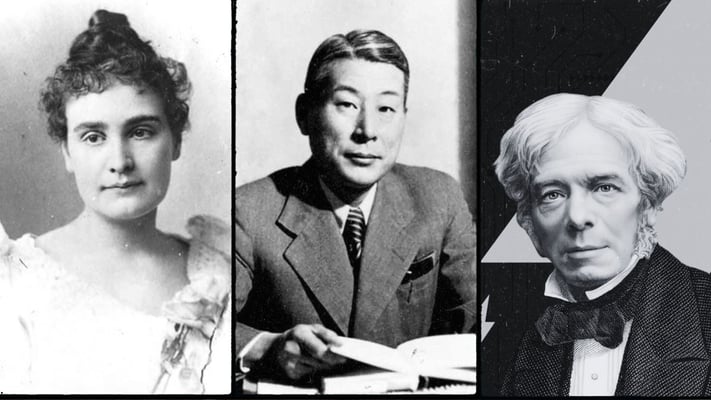
Story 1: The Teacher Who Refused to Label a Child – Anne Sullivan and Helen Keller When Helen Keller was a young child, she lost both her sight and hearing due to illness. Unable to communicate, she became frustrated and often behaved in ways that others considered uncontrollable.
Many people judged her as impossible to teach. But Anne Sullivan, her teacher, chose understanding over judgement. Instead of seeing a difficult child, she saw a bright mind trapped behind barriers. She patiently worked with Helen day after day, helping her connect words with objects and eventually unlocking her ability to communicate.
The breakthrough came when Helen understood that the signs Anne was making in her hand represented words. That moment changed history. Helen Keller went on to become a renowned author, speaker, and advocate for people with disabilities.
Had Anne Sullivan judged Helen by her behaviour, the world might never have known her extraordinary potential. Lesson: Behind difficult behaviour often lies an unmet need, not a lack of ability.
Story 2: The Factory Worker Who Became a Scientific Genius – Michael Faraday : Michael Faraday was born into poverty in England and received very little formal education. As a young man, he worked as a bookbinder's apprentice.
Many educated people of his time viewed him as an ordinary labourer with little future in science. But one scientist, Sir Humphry Davy, chose to understand his passion rather than judge his background. Davy noticed Faraday's curiosity and love for learning and gave him an opportunity to work in a laboratory.
Faraday seized the chance. He later became one of the greatest scientists in history, making groundbreaking discoveries in electricity and electromagnetism that paved the way for modern technology. The world judged his circumstances. One mentor understood his potential.
Lesson: Never judge people by where they start; understand what they are capable of becoming.
Story 3: The Japanese Diplomat Who Saw Human Beings, Not Labels - Chiune Sugihara: During World War II, thousands of Jewish families were desperately trying to escape persecution in Europe. Many governments turned them away.
Chiune Sugihara, a Japanese diplomat stationed in Lithuania, faced a difficult choice. Official rules limited the visas he could issue. Many saw refugees as political problems. Sugihara chose to see them as human beings.
Understanding their fear and suffering, he spent long hours writing transit visas by hand, often working late into the night. Even after being ordered to leave his post, he continued issuing visas until the last possible moment. His actions helped save thousands of lives.
Years later, those survivors and their descendants numbered in the tens of thousands. He was not guided by judgement of nationality, religion, or circumstance. He was guided by understanding and compassion. Lesson: When we look beyond labels and see humanity, we can change countless lives.
Always remember : History remembers those who looked deeper, listened longer, and cared enough to understand."


ISSUE

Leave a Comment