

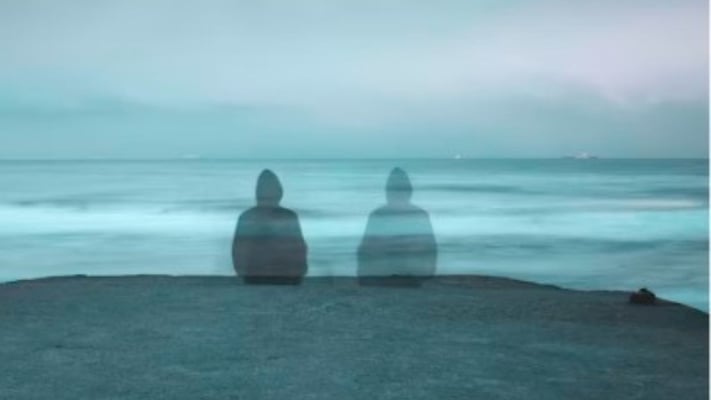

Vanishing without a trace: inside the global phenomenon of “Johatsu”
Johatsu means to “disappear” (as in evaporation). In Japan, it describes a real situation in which people will actually disappear from their lives.
People choose to disappear from their families, jobs, debts—and, basically, their lives—so they can start over with no one knowing who they are. Johatsu started in Japan, but people disappear from all around the world every year.
In Japan, johatsu usually happens due to financial stress and/or pressure from society. Though the estimates of how many people Johatsu outnumber vary, it is estimated that 80,000-100,000 people disappear in Japan each year—and at least some of them are expected to be voluntary.
People disappear mainly due to Jōsokush—working culture, financial stress, and fear of social shame—and a large network exists to help these people move without anyone knowing (i.e., “night” moving companies), and they charge between Y50,000 and Y300,000 (approximately $350-$2000).
The same trends can be seen outside of Japan. In the U.S., over 600,000 people go missing each year, but while most of those are resolved quickly; approximately 1-2% of those people voluntarily disappear. In Europe, over 250,000 people go missing each year; while many of those cases are resolved, a number of people voluntarily disappear due to personal or financial issues.
Another example comes from India, where more than 500,000 people go missing each year. Many of those people disappear due to migration, crime, or familial issues; however, a small number of people also voluntarily disappear to avoid debt, social pressures, or other difficult situations.
Voluntarily disappearing occurs in some areas of Latin America (Mexico and Brazil) too; in those countries, many people voluntary disappear due to a fear of violence or attack.
People NORMALLY disappear due to very human reasons. People do things to escape debt, domestic violence, and stigma of being a failure. For some people, it is a way to regain control of their lives; for others, it is a last-ditch effort for either emotional or physical survival.
The impact of johatsu is significant. Families left behind by a loved one experience a loss of uncertainty and have no way of knowing if their loved one is alive...or dead.
Legal systems also struggle because of the aftermath of a voluntary disappearance, creating complications regarding assets, ability to remarry, and identification issues.
The modern day world of instantaneous-communication and tracking of digital life has made the total erasure of one’s life almost impossible, but johatsu continues to exist and remind everyone that the desire to start over is even strong enough to take away an entire life.

Johatsu means to “disappear” (as in evaporation). In Japan, it describes a real situation in which people will actually disappear from their lives.
People choose to disappear from their families, jobs, debts—and, basically, their lives—so they can start over with no one knowing who they are....
Johatsu means to “disappear” (as in evaporation). In Japan, it describes a real situation in which people will actually disappear from their lives.
People choose to disappear from their families, jobs, debts—and, basically, their lives—so they can start over with no one knowing who they are. Johatsu started in Japan, but people disappear from all around the world every year.
In Japan, johatsu usually happens due to financial stress and/or pressure from society. Though the estimates of how many people Johatsu outnumber vary, it is estimated that 80,000-100,000 people disappear in Japan each year—and at least some of them are expected to be voluntary.
People disappear mainly due to Jōsokush—working culture, financial stress, and fear of social shame—and a large network exists to help these people move without anyone knowing (i.e., “night” moving companies), and they charge between Y50,000 and Y300,000 (approximately $350-$2000).
The same trends can be seen outside of Japan. In the U.S., over 600,000 people go missing each year, but while most of those are resolved quickly; approximately 1-2% of those people voluntarily disappear. In Europe, over 250,000 people go missing each year; while many of those cases are resolved, a number of people voluntarily disappear due to personal or financial issues.
Another example comes from India, where more than 500,000 people go missing each year. Many of those people disappear due to migration, crime, or familial issues; however, a small number of people also voluntarily disappear to avoid debt, social pressures, or other difficult situations.
Voluntarily disappearing occurs in some areas of Latin America (Mexico and Brazil) too; in those countries, many people voluntary disappear due to a fear of violence or attack.
People NORMALLY disappear due to very human reasons. People do things to escape debt, domestic violence, and stigma of being a failure. For some people, it is a way to regain control of their lives; for others, it is a last-ditch effort for either emotional or physical survival.
The impact of johatsu is significant. Families left behind by a loved one experience a loss of uncertainty and have no way of knowing if their loved one is alive...or dead.
Legal systems also struggle because of the aftermath of a voluntary disappearance, creating complications regarding assets, ability to remarry, and identification issues.
The modern day world of instantaneous-communication and tracking of digital life has made the total erasure of one’s life almost impossible, but johatsu continues to exist and remind everyone that the desire to start over is even strong enough to take away an entire life.


Leave a Comment