

South Asian Football Ferns hope to inspire next generation
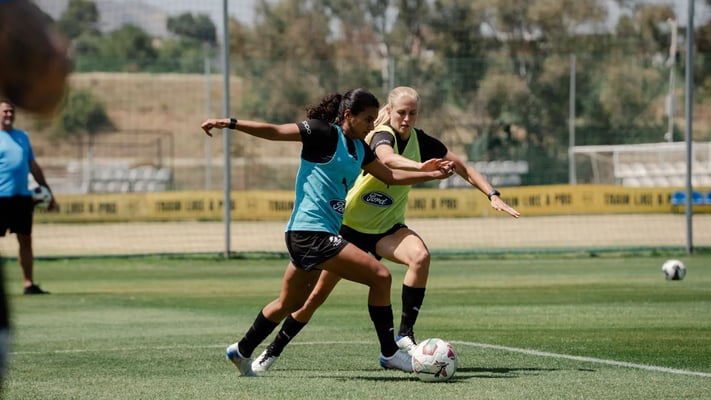
Having reached the international stage, New Zealand footballers Maya Hahn and Emma Pijnenburg want to see more South Asian girls following in their footsteps.
The two midfielders, who both have South Asian heritage, said greater visibility and representation were helping to open doors for the next generation of players.
Pijnenburg, 21, returned home late last year after a stint in Europe with Dutch club Feyenoord before signing with Wellington Phoenix in December.
"[The] Netherlands is such a football country," Pijnenburg said.
"They have a lot of legacy and heritage, and history in football. They have a more structured set-up in football, [whereas] in New Zealand it's like still growing and it's relatively new."
Pijnenburg was born in Amsterdam, moving to Auckland with her parents when she was 1 year old.
Her father, Rob, is Dutch and a keen footballer, while her mother, Sharon, is of Malaysian Indian descent.
"He put my brother and I into [football] when we were quite young," she said.
Pijnenburg believed more awareness was needed around women's football in New Zealand.
"Growing up, I didn't really see a lot of football fans [in New Zealand] and I wasn't super aware of the [Football Ferns]," she said.
"I saw a lot more about the All Whites."
However, she said things have improved significantly in recent years.
According to New Zealand Football, the game is the country's biggest team participation sport, with more than 180,000 registered players nationwide.
Players of Asian heritage are among the fastest growing groups in the game, increasing 10 percent over the past year.
Youth players of Indian heritage recorded even stronger growth, increasing 16 percent over the same period.
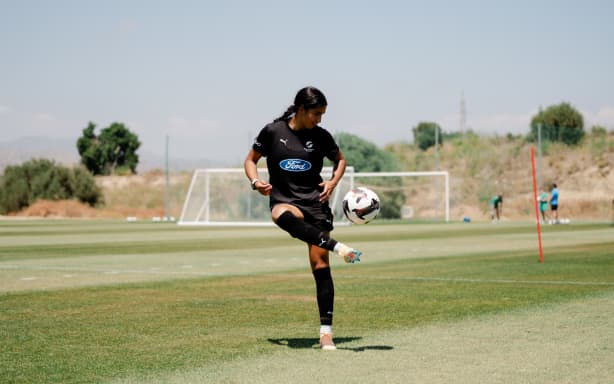
Born in India, Maya Hahn moved to New Zealand when she was 3 years old. Photo: Supplied
Hahn shared similar views about the visibility of women's football and the importance of representation.
"I didn't have anyone who looked like me playing or know anyone with Indian descent playing," Hahn said.
"I'm always used to there not being really anyone else of Asian descent playing."
Hahn said representation played a crucial role in encouraging more young women to take up the sport.
"A lot of girls are used to not play football and now we have a lot of girls playing football because you kind of have shown that like it's a pathway and I think that's probably the main issue that you don't see the other people doing it so you don't really even think style parents don't think to enroll their kids in football or encourage it," she said.
Born in India, Hahn moved to New Zealand when she was 3 years old.
Her father is German and mother is from India.
Unlike Pijnenburg, Hahn did not get into football through her father but, instead, found the sport naturally.
She started playing at the age of 8 and was part of New Zealand's historic bronze medal-winning campaign at the FIFA U-17 Women's World Cup in 2018.
Hahn also represented Germany at the U-20 Women's World Cup in 2020 before switching allegiance and committing to the Football Ferns last year.
The 25-year-old currently plays for German club FC Viktoria Berlin.
"In Europe, it's very football mad and it's a football world really, whereas [in] New Zealand rugby is the main sport and there's a lot of other different sports," she said.
"So, I think the level of intensity and understanding and volume of players is a lot higher in Europe, which means I think the technical level of the tactical understanding is very high," she said.
Despite those differences, Hahn believed the women's game in New Zealand was growing rapidly.
"I think all over the world, the overall technical level and speed of the game have improved a lot and I think we're noticing that in New Zealand now," she said.
"Maybe it's a bit of a step behind the pace that it has gone in Europe with the change, but I think we're getting there," Hahn said.
Asked which teams they supported in the 2026 FIFA World Cup in the United States, Canada and Mexico, both said New Zealand came first.
Hahn also follows Germany, while Pijnenburg supports the Netherlands.
Both players wanted to see more South Asian girls taking up football and believed there was now a clear pathway for those wanting to pursue the sport professionally.
"I think there's a pathway now and you can see more and more women taking up the sport," she said.
-RNZ
Having reached the international stage, New Zealand footballers Maya Hahn and Emma Pijnenburg want to see more South Asian girls following in their footsteps.
The two midfielders, who both have South Asian heritage, said greater visibility and representation were helping to open doors for the...
Having reached the international stage, New Zealand footballers Maya Hahn and Emma Pijnenburg want to see more South Asian girls following in their footsteps.
The two midfielders, who both have South Asian heritage, said greater visibility and representation were helping to open doors for the next generation of players.
Pijnenburg, 21, returned home late last year after a stint in Europe with Dutch club Feyenoord before signing with Wellington Phoenix in December.
"[The] Netherlands is such a football country," Pijnenburg said.
"They have a lot of legacy and heritage, and history in football. They have a more structured set-up in football, [whereas] in New Zealand it's like still growing and it's relatively new."
Pijnenburg was born in Amsterdam, moving to Auckland with her parents when she was 1 year old.
Her father, Rob, is Dutch and a keen footballer, while her mother, Sharon, is of Malaysian Indian descent.
"He put my brother and I into [football] when we were quite young," she said.
Pijnenburg believed more awareness was needed around women's football in New Zealand.
"Growing up, I didn't really see a lot of football fans [in New Zealand] and I wasn't super aware of the [Football Ferns]," she said.
"I saw a lot more about the All Whites."
However, she said things have improved significantly in recent years.
According to New Zealand Football, the game is the country's biggest team participation sport, with more than 180,000 registered players nationwide.
Players of Asian heritage are among the fastest growing groups in the game, increasing 10 percent over the past year.
Youth players of Indian heritage recorded even stronger growth, increasing 16 percent over the same period.
Born in India, Maya Hahn moved to New Zealand when she was 3 years old. Photo: Supplied
Hahn shared similar views about the visibility of women's football and the importance of representation.
"I didn't have anyone who looked like me playing or know anyone with Indian descent playing," Hahn said.
"I'm always used to there not being really anyone else of Asian descent playing."
Hahn said representation played a crucial role in encouraging more young women to take up the sport.
"A lot of girls are used to not play football and now we have a lot of girls playing football because you kind of have shown that like it's a pathway and I think that's probably the main issue that you don't see the other people doing it so you don't really even think style parents don't think to enroll their kids in football or encourage it," she said.
Born in India, Hahn moved to New Zealand when she was 3 years old.
Her father is German and mother is from India.
Unlike Pijnenburg, Hahn did not get into football through her father but, instead, found the sport naturally.
She started playing at the age of 8 and was part of New Zealand's historic bronze medal-winning campaign at the FIFA U-17 Women's World Cup in 2018.
Hahn also represented Germany at the U-20 Women's World Cup in 2020 before switching allegiance and committing to the Football Ferns last year.
The 25-year-old currently plays for German club FC Viktoria Berlin.
"In Europe, it's very football mad and it's a football world really, whereas [in] New Zealand rugby is the main sport and there's a lot of other different sports," she said.
"So, I think the level of intensity and understanding and volume of players is a lot higher in Europe, which means I think the technical level of the tactical understanding is very high," she said.
Despite those differences, Hahn believed the women's game in New Zealand was growing rapidly.
"I think all over the world, the overall technical level and speed of the game have improved a lot and I think we're noticing that in New Zealand now," she said.
"Maybe it's a bit of a step behind the pace that it has gone in Europe with the change, but I think we're getting there," Hahn said.
Asked which teams they supported in the 2026 FIFA World Cup in the United States, Canada and Mexico, both said New Zealand came first.
Hahn also follows Germany, while Pijnenburg supports the Netherlands.
Both players wanted to see more South Asian girls taking up football and believed there was now a clear pathway for those wanting to pursue the sport professionally.
"I think there's a pathway now and you can see more and more women taking up the sport," she said.
-RNZ





Leave a Comment